In 1967 a Houston jury took just 21 minutes to convict Muhammad Ali of refusing the draft — then he got the maximum: 5 years.
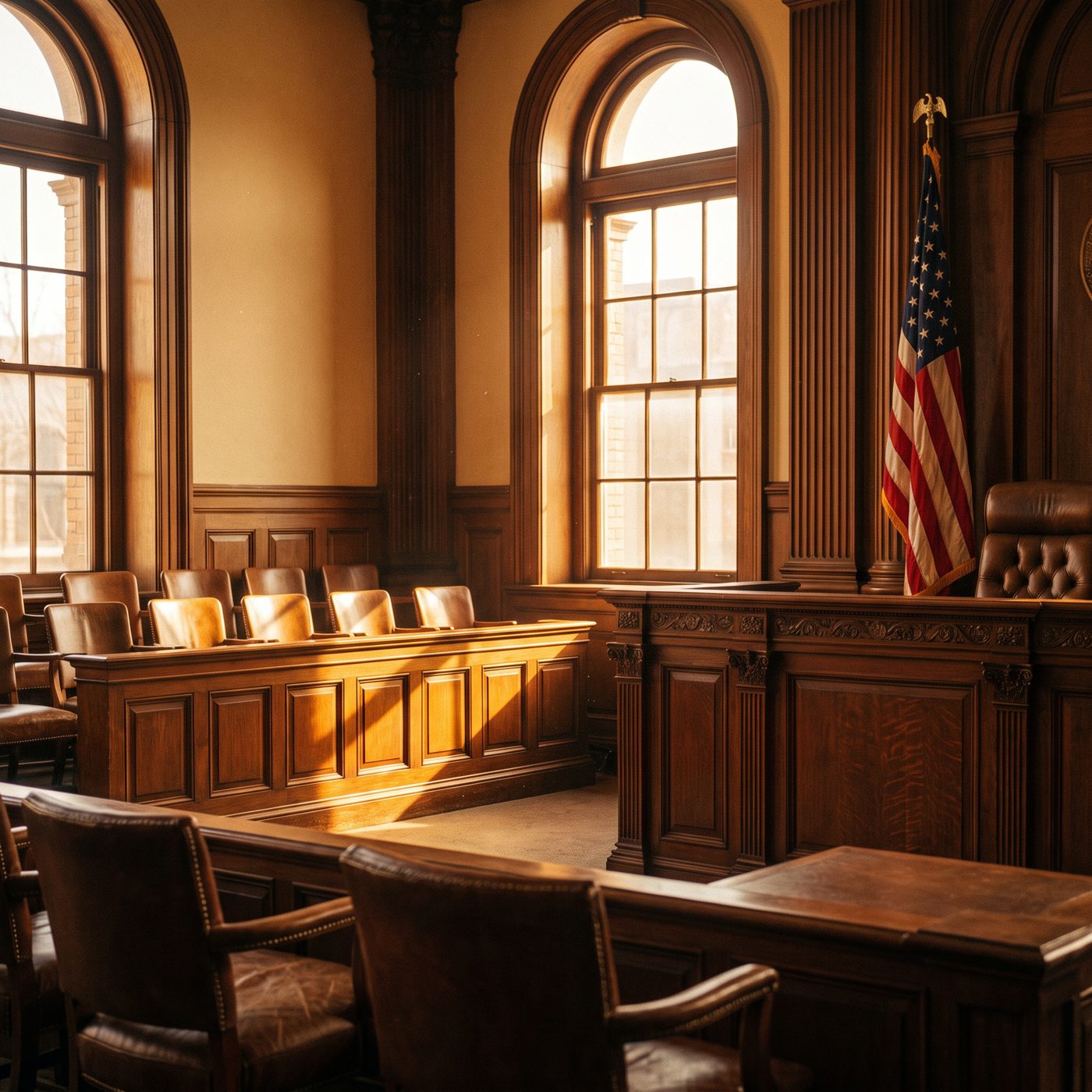 ILLUSTRATION · AI
On June 20, 1967, a federal jury in Houston convicted Muhammad Ali of refusing military induction after deliberating 21 minutes, and Judge Joe Ingraham handed down the maximum: five years in prison and a $10,000 fine.
The deliberation took less time than a round of sparring. On June 20, 1967, in the U.S. District Court for the Southern District of Texas, an all-white jury in Houston heard the case against Muhammad Ali — the reigning heavyweight champion of the world — and returned a guilty verdict on charges of refusing induction into the armed forces. The Associated Press, filing from the courtroom that day, clocked the jury's deliberation at 21 minutes. Judge Joe M. Ingraham then imposed the maximum penalty the law allowed: five years in prison and a $10,000 fine.
Why Ali refused induction
Ali had been reclassified 1-A and ordered to report for induction in Houston on April 28, 1967. He appeared, but when his name was called he declined to step forward. His objection was religious: as a member of the Nation of Islam, he claimed conscientious-objector status, famously framing the war in Vietnam against his faith. His draft board rejected that claim, and the government prosecuted.
The trial itself was brief, and the verdict briefer. The AP dispatch — preserved in a Michigan Daily reprint held at the University of Michigan's Bentley Historical Library — reported the 21-minute deliberation and the sentence in plain wire-service prose. Later legal accounts match it. SCOTUSblog, in its 2016 history of the case under its formal name, *Cassius Clay v. United States*, records the same June 20 verdict, the same 21 minutes, the same five years and $10,000 from Judge Ingraham. The ABA Journal, writing in 2017, gives the identical figures.
The punishment landed outside the ring long before any prison term could. Ali's passport was effectively stripped and his boxing license pulled; state athletic commissions refused to sanction his fights. He did not serve the sentence while he appealed, but he lost roughly three and a half years of his athletic prime — from age 25 to 29 — unable to fight for the title he had never lost in the ring.
How the conviction was overturned
The case climbed to the Supreme Court. In 1971, in *Clay v. United States*, the justices reversed the conviction unanimously, 8–0 (Justice Thurgood Marshall recused himself, having been Solicitor General when the government handled the matter). The reversal did not vindicate Ali's broader stance on the war; it turned on a narrower, almost technical point. The Justice Department had argued to the appeal board that Ali's objection failed three legal tests for conscientious-objector status. The Court found that the government had conceded two of those tests were in fact met — meaning the board might have rejected his claim on a legally invalid ground, and no one could tell which. Because the record didn't show the denial rested on a valid basis, the conviction couldn't stand.
One vivid detail from the deliberations, later made public through the papers of the justices, is how close the Court came to ruling the other way. An initial vote reportedly leaned toward upholding the conviction before Justice John Marshall Harlan II, after reading Nation of Islam writings, changed his position — and the narrow procedural escape hatch was found that let the Court rule for Ali without endorsing his politics.
A note on the record: while the AP wire and SCOTUSblog both report a 21-minute deliberation, secondary accounts of the trial occasionally cite slightly different figures, a reminder that even contemporaneous reporting can drift as stories are retold. The documented primary source is the 1967 AP dispatch.
That is where the argument still lives. Ali's conviction was erased on a procedural technicality, not on a finding that his refusal was right — and the country has been debating ever since whether the law caught up to him, or merely got out of his way.
More facts

Congress promised public broadcasting $9 million in 1967, then paid out only $5 million in 1968 — before Fred Rogers ever reached the Senate.

In 2019 Emma Haruka Iwao calculated pi to 31.4 trillion digits — a number so vast it took 170 terabytes to store, matching the Library of Congress.