In 2010 only about 3,200 wild tigers remained on Earth. By July 2023 the count had climbed back to roughly 5,574.
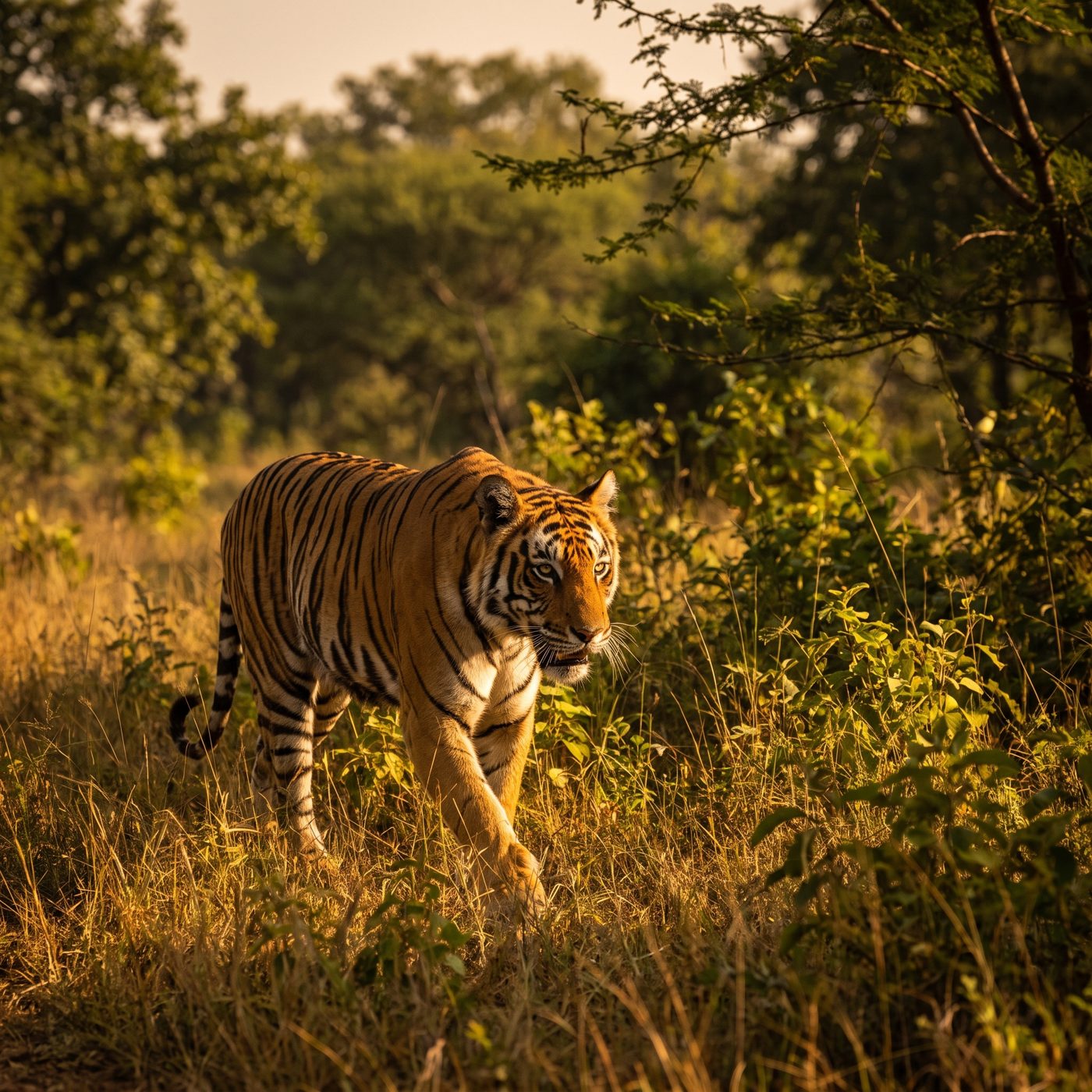 ILLUSTRATION · AI
On Global Tiger Day 2023, the Global Tiger Forum put the world's wild tiger population at roughly 5,574—up about 74% from the historic low of around 3,200 in 2010.
In 2010, the wild tiger looked like an animal running out of time. The best available estimate put the global population at about 3,200 individuals—an all-time low, scattered across shrinking forests from India to the Russian Far East. On Global Tiger Day, July 29, 2023, the Global Tiger Forum announced a very different number: roughly 5,574 wild tigers. WWF, reporting the same figure, framed it plainly as about a 74% increase since that 2010 low.
That is one of the more hopeful comeback stories in modern conservation. It is also a number that needs reading carefully.
Why the tiger count rose so sharply
Two things happened at once, and the honest version keeps both in view.
The first is real recovery. In 2010, alarmed by the collapse, tiger-range governments met in St. Petersburg and signed a declaration committing to double wild tiger numbers. The Global Tiger Forum notes that India and Nepal essentially did exactly that. India, home to the majority of the world's wild tigers, ran successive national surveys showing steady growth. Nepal announced in 2022 that it had nearly tripled its tiger population since 2009. Bhutan, China, and Russia also reported gains, driven by anti-poaching patrols, protected corridors, and prey-base recovery.
The second factor is less dramatic but just as important: we got better at counting. Camera-trap grids expanded across huge new areas, and statistical methods for estimating populations improved. Some of the jump from 3,200 to 5,574 reflects tigers that were always there but had never been surveyed. WWF and the Global Tiger Forum both stress this—the 2023 figure is not a pure like-for-like measurement against 2010.
That distinction matters. The word to avoid is "counted." No one lined up 3,200 tigers in 2010 or 5,574 in 2023. Both are compiled estimates, built from national surveys of varying quality across more than a dozen countries. The 3,200 was a low-water mark; the 5,574 is a headline aggregate.
How reliable is the 5,574 figure
A useful check comes from an independent source. The 2022 IUCN Red List assessment, with work led by the wild-cat conservation group Panthera, ran its own numbers and landed on a wider, more cautious range: between 3,726 and 5,578 wild tigers, with an average near 4,500 and roughly 3,140 mature, breeding adults. That team estimated about a 40% rise between 2015 and 2022.
So the Global Tiger Forum's 5,574 sits at the optimistic top of the credible range rather than in its center. Both assessments agree on the direction—up—and both agree the trend is genuine. They disagree on magnitude, and on how many of those animals are breeding adults versus cubs and transient young that inflate a raw total.
The vivid detail behind all of this lives in India's forests, where the country's tiger census now relies on tens of thousands of camera traps producing millions of images. Individual tigers are identified by their stripe patterns, which are as unique as fingerprints—no two match. That is how a survey can say a specific tiger photographed in one reserve is the same animal seen fifty miles away, and how a national estimate gets assembled tiger by tiger rather than guessed.
What's still open to argue
The recovery is real, but it is lopsided. India, Nepal, Bhutan, Russia, and China account for most of the gains. Across much of Southeast Asia—Cambodia, Vietnam, Laos—tigers have been functionally lost, wiped out by snaring and habitat loss even as the global total climbs.
That is the live argument. A world with 5,574 tigers concentrated in a handful of strongholds is not the same as a world with 5,574 tigers spread across their historic range. The number went up. Whether the species is actually more secure—or simply better protected in fewer places—is the question the census can't answer on its own.
More facts

Congress promised public broadcasting $9 million in 1967, then paid out only $5 million in 1968 — before Fred Rogers ever reached the Senate.

In 2019 Emma Haruka Iwao calculated pi to 31.4 trillion digits — a number so vast it took 170 terabytes to store, matching the Library of Congress.