On Jan 1, 1995, a 25.6 m wave hit Norway's Draupner platform — and dented equipment 18.5 m up, exactly where its laser said the crest peaked.
 ILLUSTRATION · AI
On January 1, 1995, a laser on Norway's Draupner platform recorded a 25.6-meter rogue wave, and equipment dented below the deck — right where the 18.5-meter crest said the water reached — confirmed the reading was no glitch.
For most of the twentieth century, rogue waves belonged to the same category as sea monsters: sailors swore they existed, and scientists shrugged. A single wave two or three times the height of its neighbors, rising out of an ordinary storm to swallow a ship — it sounded like the kind of tale that grows in the retelling. Then a laser on a gas platform in the North Sea caught one in the act, and there was no arguing with the instrument.
The wave hit Statoil's Draupner platform, an unmanned support structure in Norwegian waters, on New Year's Day 1995. A downward-pointing laser altimeter mounted under the deck was measuring the distance to the sea surface many times a second. That afternoon, in a storm whose significant wave height was about 12 meters, the laser recorded a single wave 25.6 meters from trough to peak, with a crest that rose 18.5 meters above the still-water level. Peter Janssen of the European Centre for Medium-Range Weather Forecasts laid out those numbers again in the ECMWF Newsletter in 2016, and they have held up.
Why the Draupner wave convinced skeptics
A laser reading, on its own, could be dismissed as a spike — an electronic hiccup, spray fooling the sensor, a decimal in the wrong place. What made Draupner different was that the platform itself kept a record. When crews inspected the structure, they found minor damage to robust equipment mounted below the main deck, at an elevation that matched the crest the laser had reported. The water really had climbed 18.5 meters and struck steel that, under normal storm conditions, sits comfortably above the reach of the sea.
That corroboration is what turned a curious data point into a landmark. Thomas Adcock and Paul Taylor of Oxford, writing with colleagues in the Proceedings of the Royal Society A in 2011, noted the minor structural damage below the main-deck level "at an elevation consistent with the size of the large crest," citing Sverre Haver's 2004 account of the event. William Bateman, Vasiliki Katsardi, and Chris Swan of Imperial College had already described the same detail in Applied Ocean Research in 2005: a 12-meter storm, a measured crest of 18.5 meters, and equipment damaged below the deck. Two independent witnesses — a laser and a bent bracket — told the same story.
How a wave gets that big
The trouble is that a wave of 18.5 meters simply should not appear in a sea whose typical waves run around 12 meters. Standard engineering models of ocean waves, built on the assumption that a wave field is a linear sum of many smaller waves, make such an event so rare it should almost never be seen. Draupner happened. So the physics needs more than linear addition.
Adcock and Taylor's 2011 paper argued that the answer may lie in a crossing sea — two wave systems arriving from different directions at once, meeting at an angle. When such systems intersect, nonlinear effects can briefly focus energy into a single towering crest far steeper than either system alone would produce. Their analysis of the surrounding conditions suggested the North Sea that day may have carried exactly that kind of crossing swell.
Here is the seam still open to argument: researchers do not fully agree on which mechanism made the Draupner wave, or how often each one operates in the real ocean. Was it a crossing sea, as the Oxford team proposed? Ordinary nonlinear focusing along one direction? Some combination shaped by the local wind? Laboratory tanks have since reproduced Draupner-like walls of water, but reproducing a wave is not the same as predicting one. The instrument settled whether rogue waves are real. It did not settle why the sea, now and then, decides to stand up and reach for the deck.
More facts

Arches National Park in Utah has over 2,000 documented natural stone arches, from sliver-thin cracks to spans greater than 300 feet, the National Park Service says.
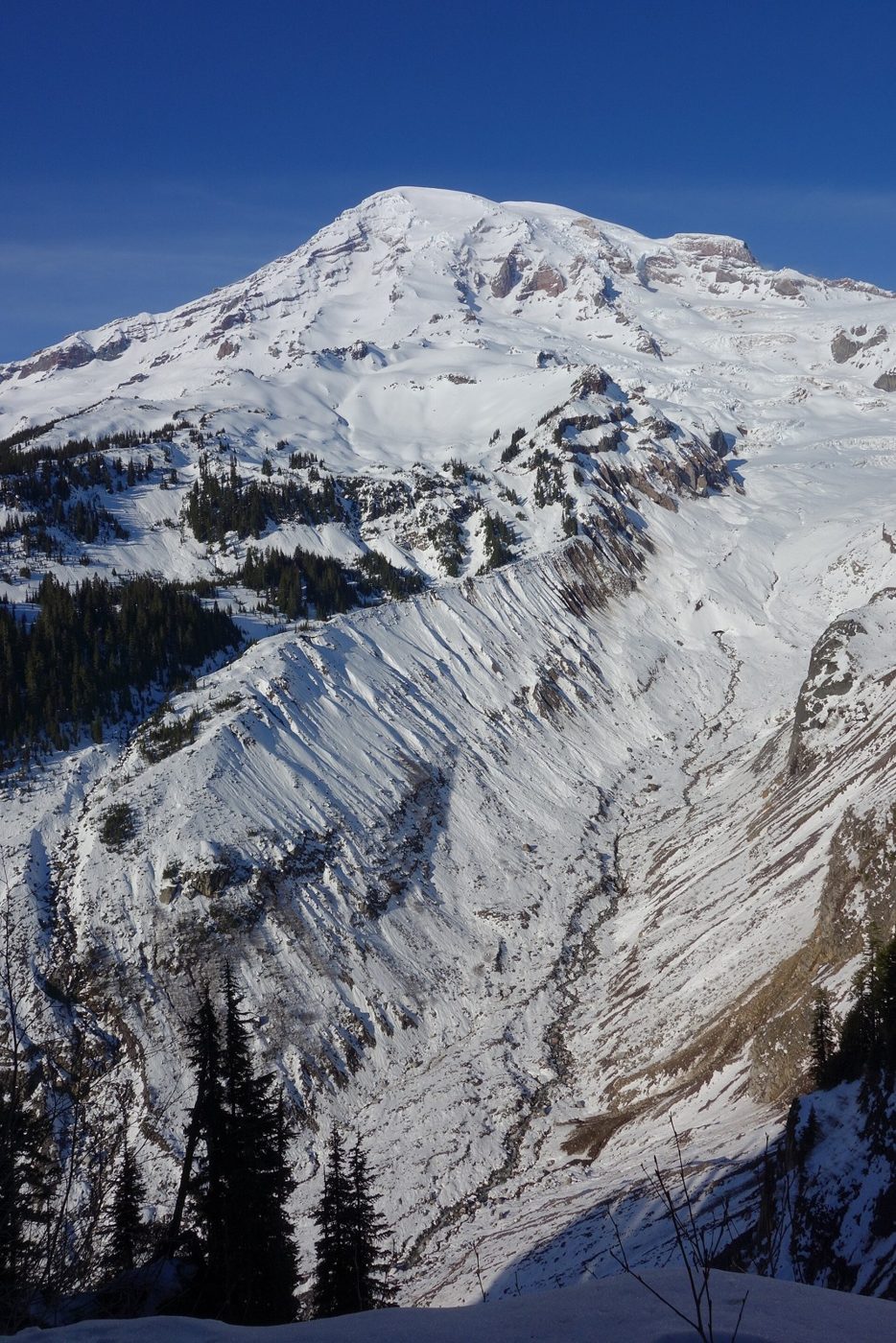
Mount Rainier carries 28 major glaciers. Together with its smaller snow and ice patches, they cover about 30 square miles and feed five major river systems.