The 1947 moth taped into Harvard's logbook didn't coin 'bug'—Thomas Edison used it for hidden defects in the 1870s, 70 years earlier.
 ILLUSTRATION · AI
The word "bug" for a hidden technical defect was in use by Thomas Edison in the 1870s, roughly seventy years before the famous moth was taped into Harvard's Mark II logbook in 1947.
The moth is real, and it is famous for good reason. On September 9, 1947, operators of the Harvard Mark II relay computer found a moth caught in a relay, taped it into the logbook, and wrote beside it "First actual case of bug being found." That page survives today at the Smithsonian's National Museum of American History, which has held and photographed the original. It is a wonderful artifact—and a good joke, because the team clearly already knew the word.
What the moth did not do was invent the term. By 1947 "bug," meaning a maddening, hard-to-find defect in a machine, had been part of the engineer's vocabulary for the better part of a century.
Why Edison, not the moth, gets the credit
The trail runs back to Thomas Edison and his telegraph work. Historians Alexander B. Magoun and Paul Israel, writing for IEEE Spectrum in 2013, traced Edison's use of "bug" to his quadruplex telegraph experiments around 1873, including a device he called a "bug trap" meant to catch the intermittent faults plaguing the system. In an 1878 letter to William Orton, president of Western Union, Edison used "bug" the same way—for an elusive flaw that had to be hunted down.
The Edison Papers Project at Rutgers laid out the documentary case in detail in 2020. They point to the Oxford English Dictionary's earliest technical citation, an 1875 letter published in the journal *Operator* describing a "U.S. Hotel Electric Annunciator," and they follow the word into the reference literature. Edwin Houston defined "bug" in an electrical dictionary in 1889; Thomas Sloane did the same in 1892. By the end of the 1880s, in other words, the term was settled enough to appear in the dictionaries engineers reached for.
The attribution to Edison was made in his own lifetime. Magoun and Israel quote the telegraph writer William Maver, who noted in 1888 that a fault of this kind "was first so called by Edison." That is not a modern reconstruction; it is a contemporary crediting the source while Edison was still working.
How the moth story took over
If the word was already old, why does everyone believe a moth coined it? Partly because the logbook line is so vivid—the insect is right there, wings pressed flat under a strip of tape—and partly because the entry itself is winking at an existing phrase. "First actual case of bug being found" only works as a joke if "bug" already meant something. The humor depends on the metaphor being familiar enough to be literalized for once.
Grace Hopper, who worked on the Mark II and often told the story, helped spread it, and over decades the retelling flattened into a myth of origin. The moth became the birth of a word rather than a pun on a word that predated it by generations. A tidy story beat an accurate one.
Even the usual telling of the myth gets its own facts wrong. The incident is frequently dated to 1944—the year Hopper joined Howard Aiken's staff—when the logbook plainly reads September 9, 1947. The moth is genuine; the chronology around it is not.
What remains open is the earlier edge of the word. The OED's 1875 citation is the current documented first appearance in print, and Edison's letters push the working usage back into the early 1870s, but "bug" for a defect may have circulated in shop talk before anyone bothered to write it down. Whether Edison truly minted the term or simply popularized something already muttered on the telegraph floor is the part still worth arguing about—the seam where the paper trail runs out and the spoken record we can never recover begins.
More facts
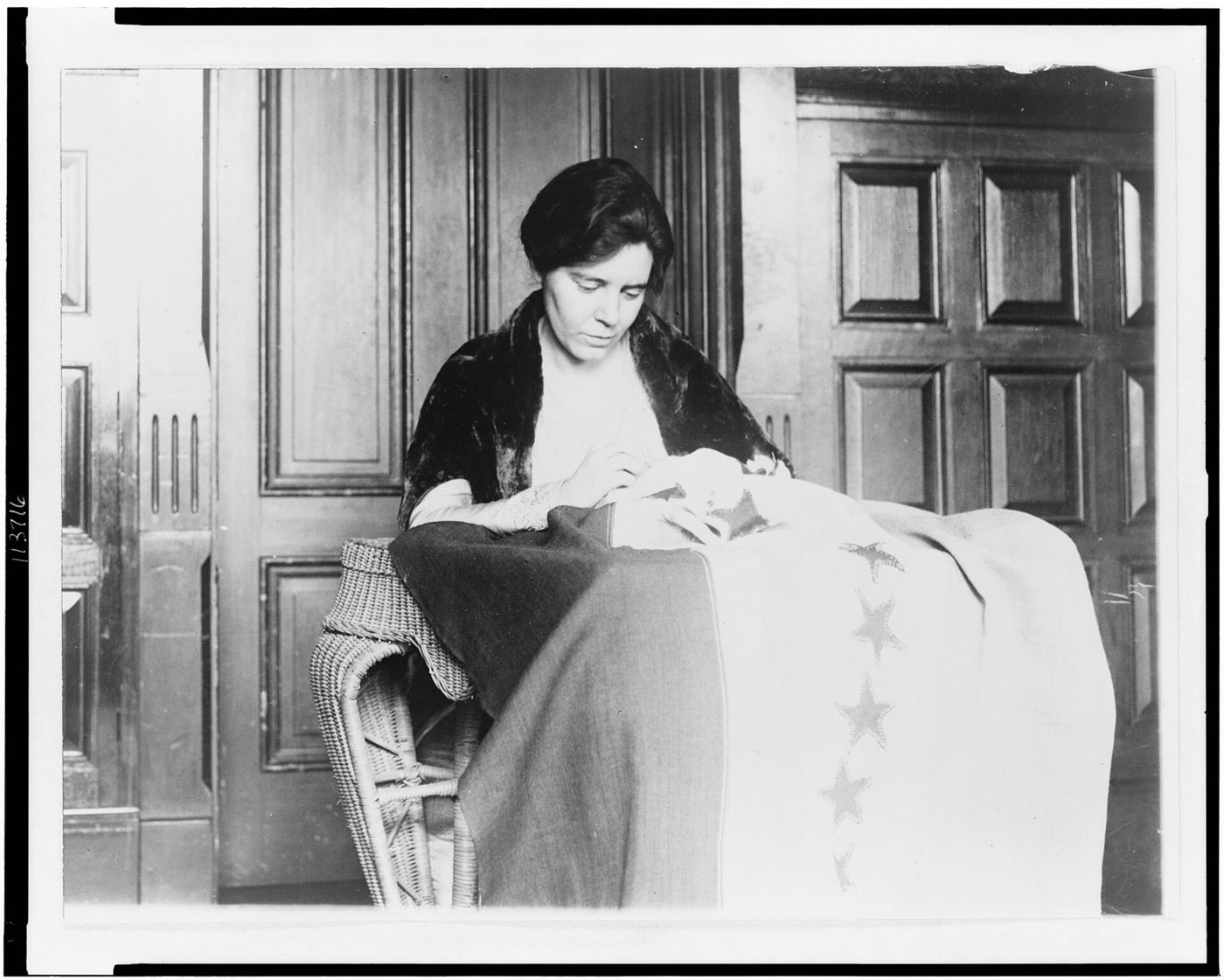
The 19th Amendment, barring denial of the vote on account of sex, was first introduced in Congress in 1878. It was not ratified until August 18, 1920.

On May 23, 1934, Bonnie and Clyde were killed in a police ambush near Sailes, Louisiana, ending one of the biggest manhunts the nation had seen, the FBI says.