The Amazon rainforest is fed by the Sahara: 27.7 million tons of desert dust drift across the Atlantic and settle on it every year.
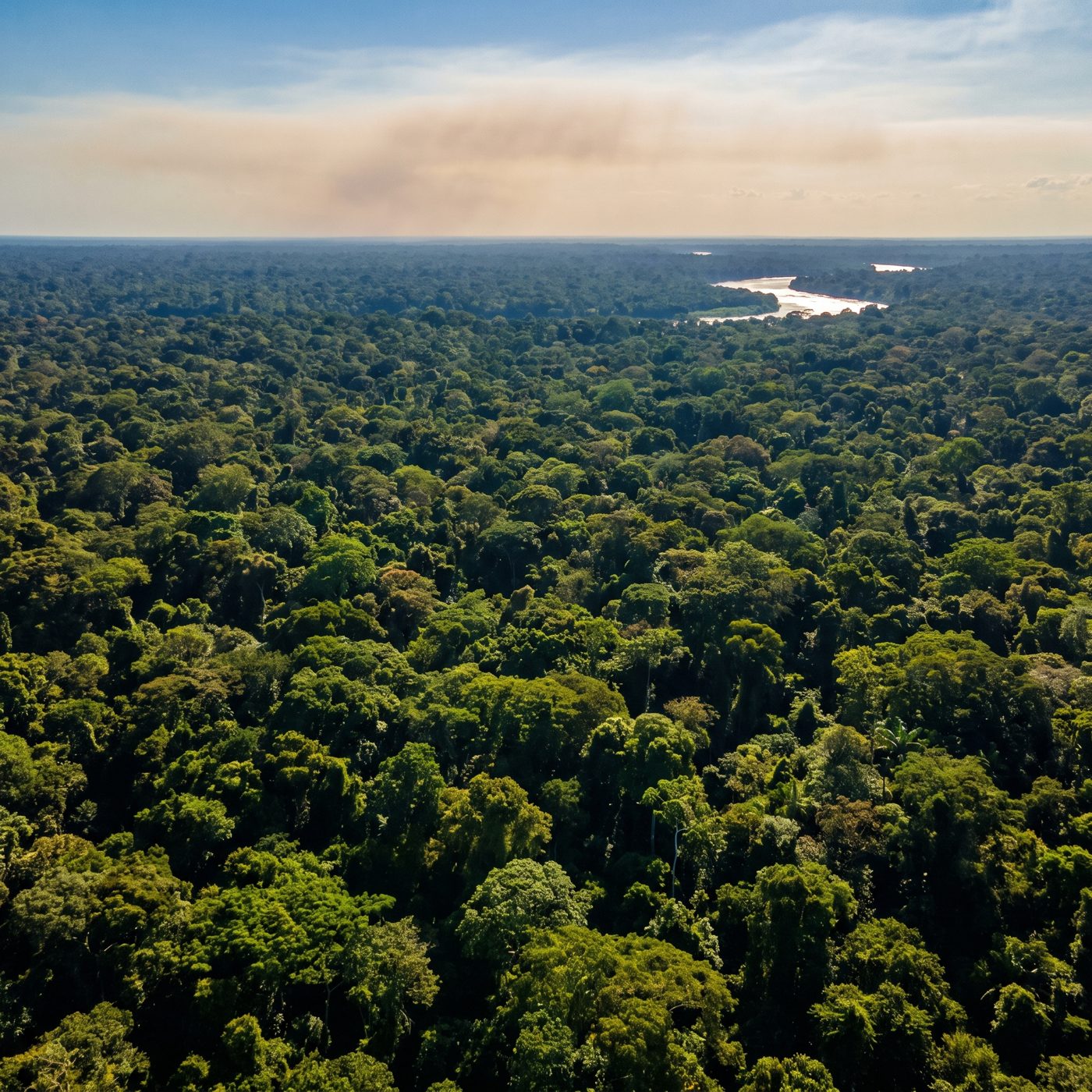 ILLUSTRATION · AI
NASA satellite data show that roughly 27.7 million tons of Saharan dust settle on the Amazon each year, delivering about the same amount of phosphorus the rainforest loses to rain and flooding.
The greenest place on Earth is fed, in part, by the driest. Every year, wind lifts dust off the Sahara, carries it thousands of miles across the Atlantic, and drops a fraction of it onto the Amazon basin — and that dust carries phosphorus, a nutrient the rainforest cannot easily do without.
The numbers come from a 2015 study led by Hongbin Yu of the University of Maryland and NASA's Goddard Space Flight Center, published in *Geophysical Research Letters*. Using seven years of satellite data, Yu and his colleagues put the average delivery at about 27.7 million tons of dust reaching the Amazon each year, carrying roughly 22,000 tons of phosphorus. That phosphorus figure is close to what the rainforest is estimated to lose annually as rain and floodwater wash nutrients out of the soil — meaning the desert dust roughly balances the ledger.
How do we know the Sahara feeds the Amazon?
The measurement came from an instrument called CALIOP, a lidar aboard NASA's CALIPSO satellite. Lidar works by firing laser pulses downward and timing the light that bounces back off particles in the air. That let the researchers do something earlier estimates couldn't: measure dust not just as a smear across a flat map, but in three dimensions, layer by layer through the atmosphere. From those vertical profiles, collected between 2007 and 2013, they could estimate how much dust was actually moving across the ocean and coming down over South America.
It's worth being honest about the range. The 27.7-million-ton figure is a multiyear average, and the real amount swings widely from year to year — the study found it varied from about 8 million tons in one year to 48 million in another, an 86 percent difference. The phosphorus estimate carries the same uncertainty. This is a satellite-derived approximation, not a figure weighed on a scale, and the scientists said as much.
Where the phosphorus comes from
Part of that phosphorus traces back to a single, strange place: the Bodélé Depression in Chad, an ancient dried lakebed at the southern edge of the Sahara. Thousands of years ago it held water, and that water held life. The fine sediments left behind are rich in the mineral remains of dead microorganisms — diatoms and other freshwater creatures whose bodies concentrated phosphorus. Wind funnels between mountains and scours that lakebed, launching some of the most nutrient-loaded dust on the planet into the sky.
So the chain runs like this: a prehistoric lake dies, its microscopic inhabitants settle to the bottom, the lake dries out, and millennia later the wind sends their mineral remains across an ocean to fertilize trees on another continent. The Bodélé is one important source and sampling point, not the sole origin of every gram of Amazonian phosphorus — but it is a vivid illustration of how deep in time this supply line reaches.
The vivid part is the scale of a single link in the chain. NASA framed the annual dust transport as roughly the equivalent of 689,000 fully loaded semi-trucks — a caravan of trucks stretching far beyond the horizon, made instead of invisible airborne grains.
What's still open is whether this balance holds. The wide year-to-year swings hint that the dust pipeline is sensitive to conditions in the Sahel — rainfall, drought, and land use south of the Sahara that scientists are still working to connect to the amount of dust that ends up airborne. If climate change alters those wind and rainfall patterns, the amount of phosphorus reaching the Amazon could rise or fall, with consequences no one has fully mapped. The dust has been crossing for a very long time. Whether it keeps arriving in the same quantity is a question the satellites are still helping us answer.
- Tier 2 · Secondary2015
More facts
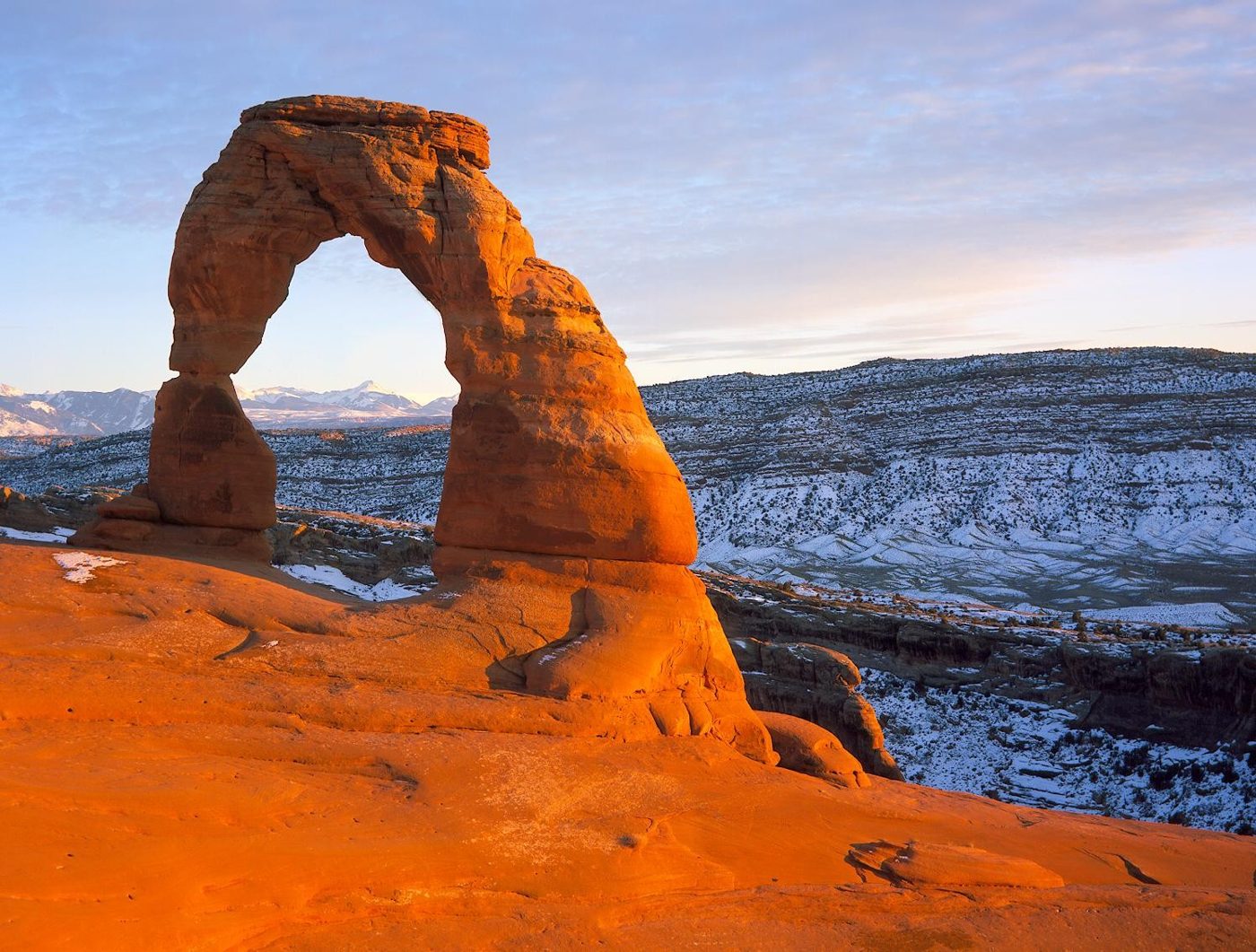
Arches National Park in Utah has over 2,000 documented natural stone arches, from sliver-thin cracks to spans greater than 300 feet, the National Park Service says.
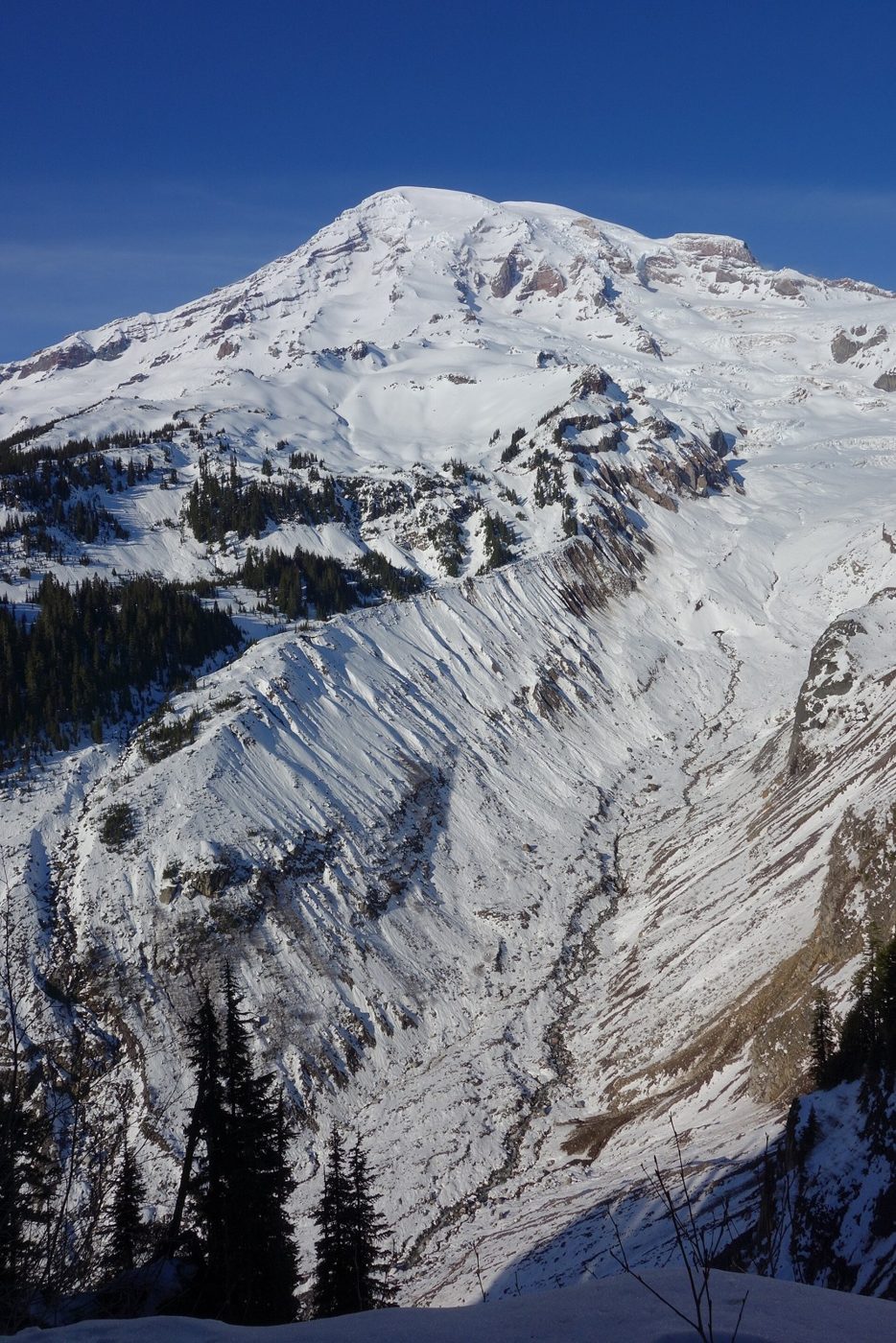
Mount Rainier carries 28 major glaciers. Together with its smaller snow and ice patches, they cover about 30 square miles and feed five major river systems.