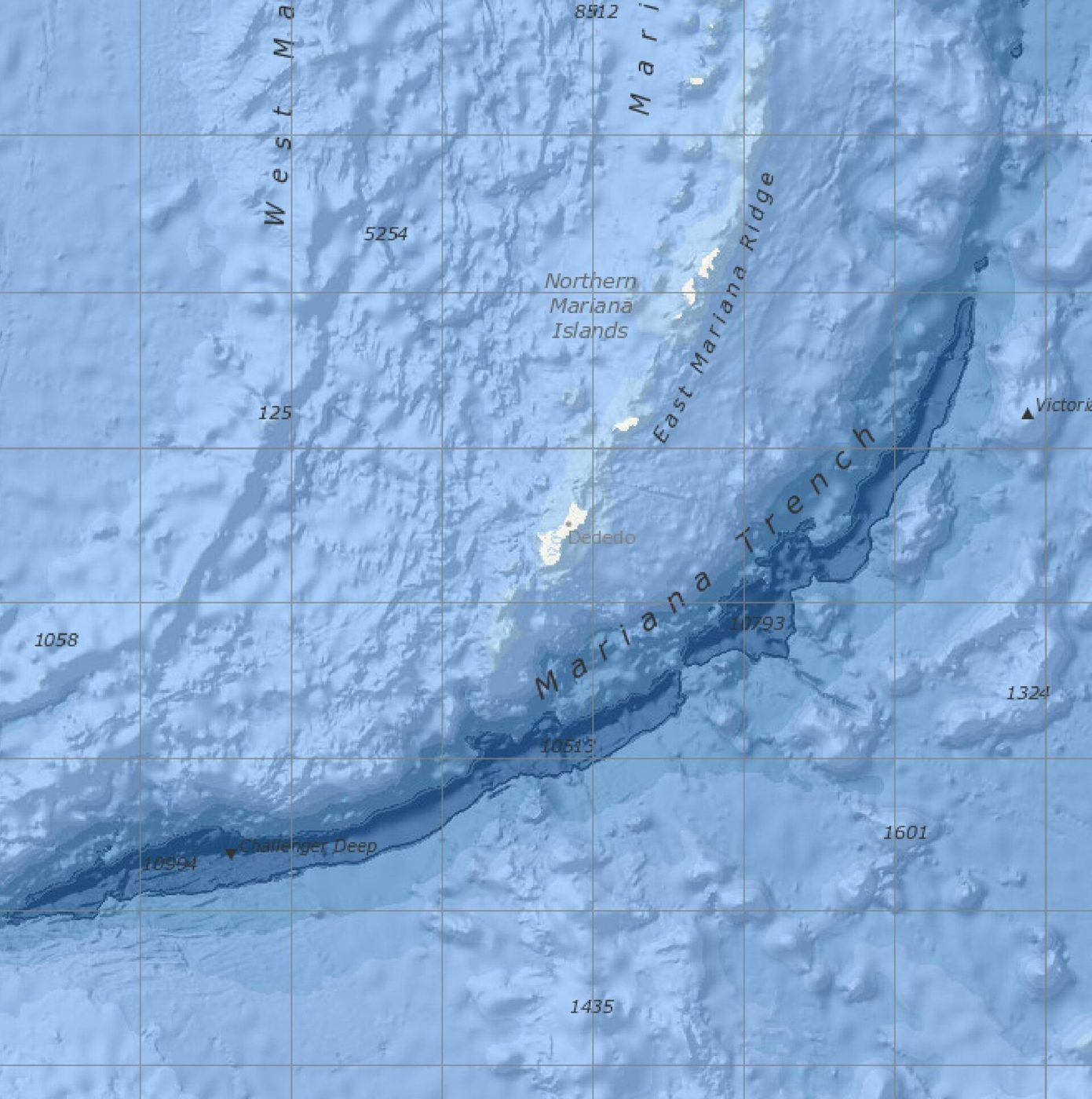
The deepest point of Challenger Deep isn't 10,994 m — that's a 2011 press figure. The peer-reviewed 2022 survey measured 10,924 m.
 ILLUSTRATION · AI
The most-cited depth for Challenger Deep, 10,994 meters, was a preliminary press figure from 2011; the peer-reviewed 2022 sonar survey measured 10,924 ± 15 meters.
The number in most textbooks and trivia posts — 10,994 meters, or 36,070 feet — was never a peer-reviewed result. James V. Gardner and Andrew Armstrong of the University of New Hampshire announced it at the American Geophysical Union meeting in December 2011 as a preliminary value from a 2010 survey. When their full analysis passed peer review in the journal *Marine Geodesy* in 2014, the published figure had settled to 10,984 ± 25 meters. The rounder, deeper number stuck in popular memory anyway.
The most recent peer-reviewed sonar survey lands shallower still. During the Five Deeps Expedition of 2018–2019, Cassandra Bongiovanni, Heather Stewart, and Alan Jamieson mapped the trench with a Kongsberg EM 124 multibeam echosounder and published their bathymetry in the *Geoscience Data Journal* in 2022. Their deepest measured point in Challenger Deep was 10,924 ± 15 meters.
Why the numbers disagree
Part of the answer is that Challenger Deep is not a single hole. It is a long, narrow depression at the southern end of the Mariana Trench with three distinct sub-basins — eastern, central, and western — each a candidate for "the deepest point." Gardner's 10,984-meter reading came from the western basin, measured with a EM122 echosounder aboard the USNS *Sumner* in 2010. Bongiovanni's 10,924 came from the eastern basin. The two figures are separated by roughly 60 meters, but they are also describing different parts of the trench, so they aren't strictly measuring the same thing.
The other part is physics. Sonar depth is not a ruler dropped to the bottom; it is a travel-time measurement of a sound pulse, and converting that time into meters requires knowing the speed of sound through the entire water column. In water more than 10 kilometers deep, small errors in the assumed temperature, salinity, and pressure profile compound into meters of uncertainty. That is why every credible depth comes with a ± attached, and why two careful teams can honestly differ.
How we know the deep is getting shallower on paper
The trench isn't rising. Our estimates are converging as instruments improve. A 2021 review by Samuel Greenaway and colleagues in *Deep-Sea Research Part I* laid the modern figures side by side: Gardner's 10,984 meters, Hans van Haren's 10,925, the Five Deeps expedition's 10,924 ± 15, and Greenaway's own submersible-transect value of 10,935 ± 6 meters. Notice how tightly the recent numbers cluster once you set the 2011 press figure aside. The 36,070-foot headline is an outlier not because the trench changed, but because it was an early estimate that later work refined.
The vivid detail here is that the Five Deeps figure came from the same 2018–2019 expedition that carried Victor Vescovo's submersible *Limiting Factor* to the bottom — the same dives that, incidentally, photographed a plastic bag and candy wrappers on the seafloor of the deepest place on Earth. The mapping sonar and the human descent happened on the same voyage, which is part of why the bathymetry is unusually well-documented.
So the best current answer to "how deep is Challenger Deep?" is: about 10,920 to 10,935 meters, depending on which basin you mean and whose sound-velocity model you trust — with 10,994 meters retired as a preliminary number that outlived its evidence.
What's still open to argue is which sub-basin actually holds the true low point, and by how much. Greenaway's team and the Five Deeps team measured different basins with different methods and landed within about ten meters of each other, which is remarkable — but it also means the title of "single deepest spot" hasn't been definitively awarded. The next high-resolution survey, or the next submersible transect, could still nudge the record a few meters in either direction. In the deepest place on the planet, precision is measured in the width of a swimming pool, and the last word hasn't been written.
More facts
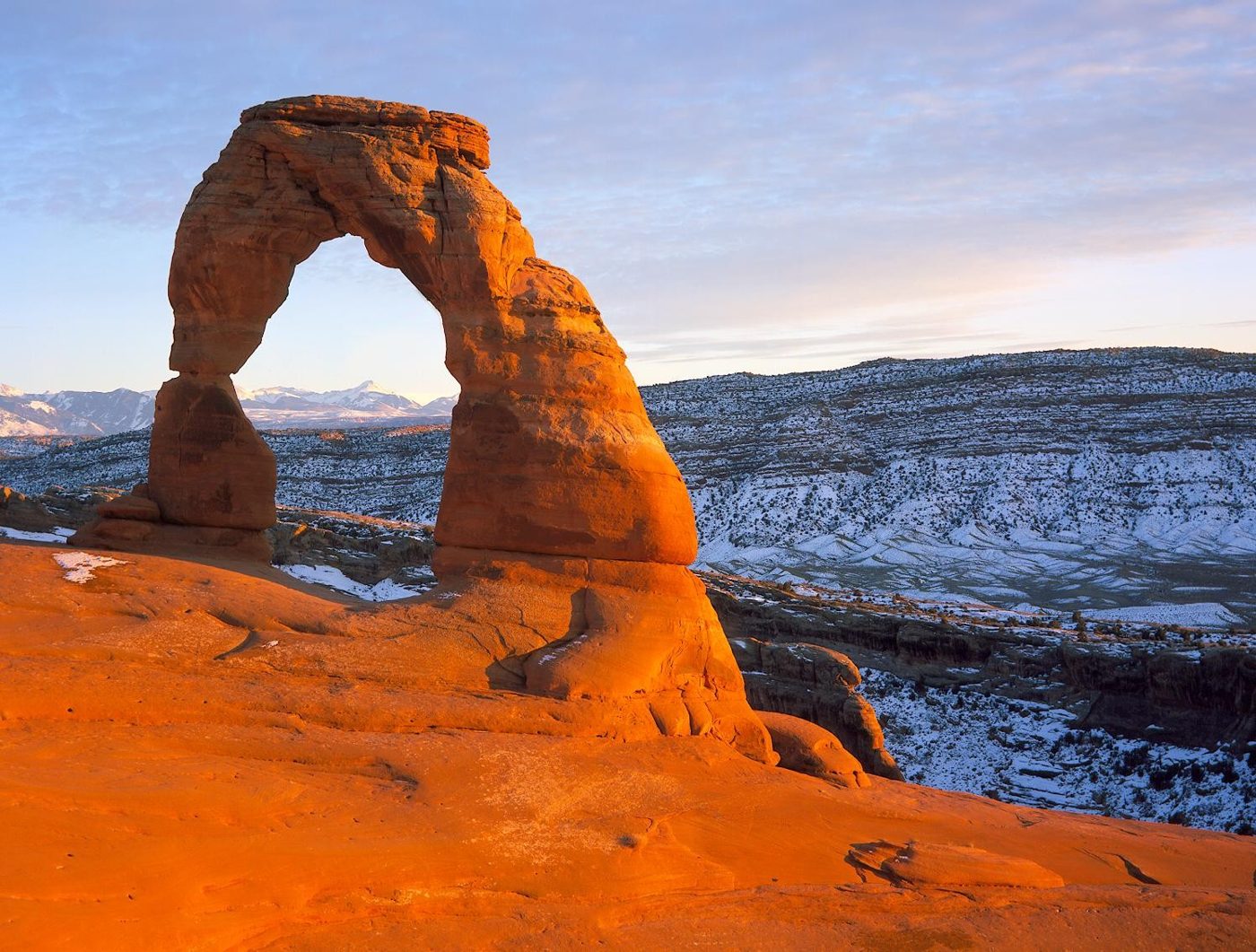
Arches National Park in Utah has over 2,000 documented natural stone arches, from sliver-thin cracks to spans greater than 300 feet, the National Park Service says.
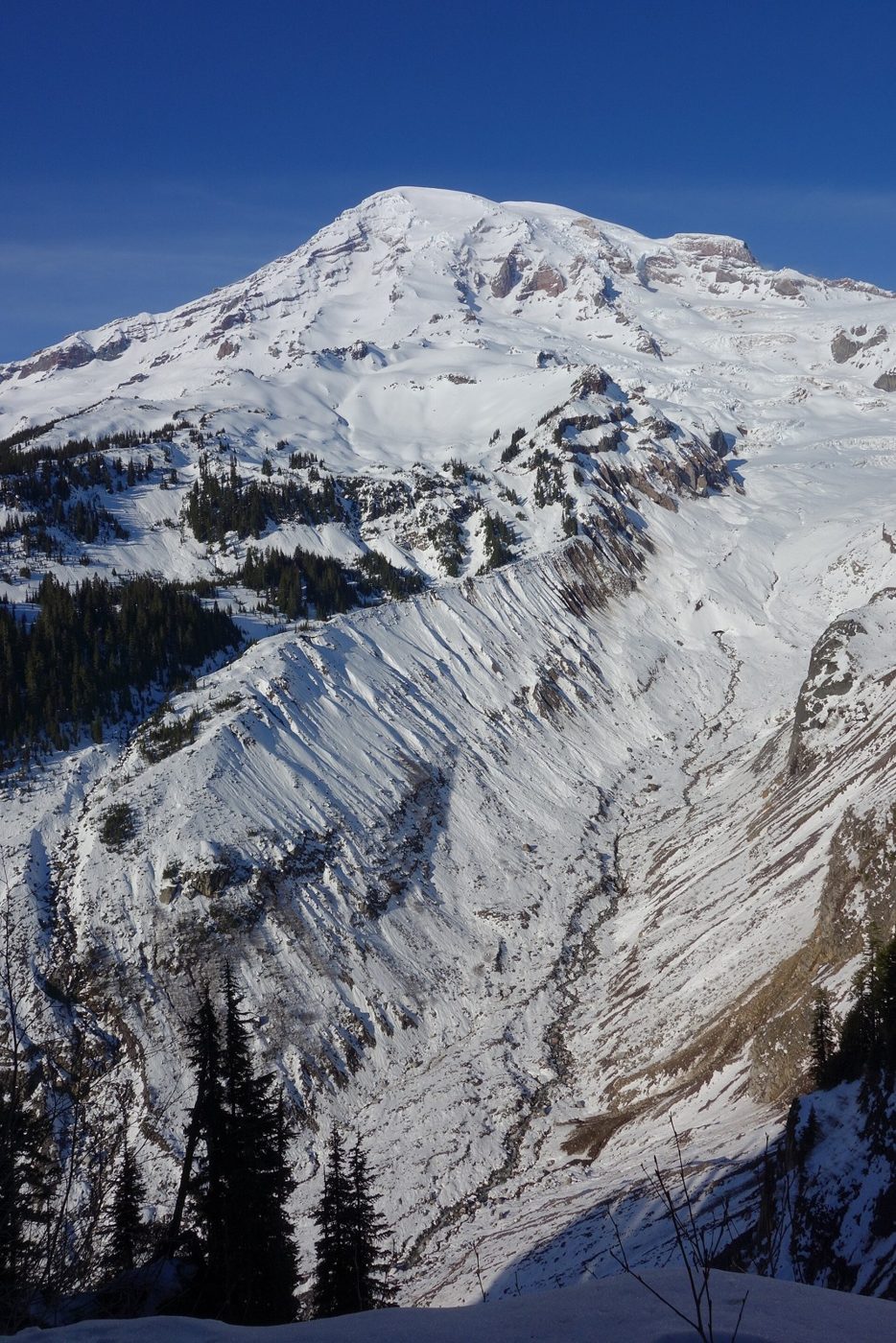
Mount Rainier carries 28 major glaciers. Together with its smaller snow and ice patches, they cover about 30 square miles and feed five major river systems.