The oldest written customer complaint on Earth is 3,770 years old: a furious Babylonian named Nanni raging at merchant Ea-nasir over bad copper.
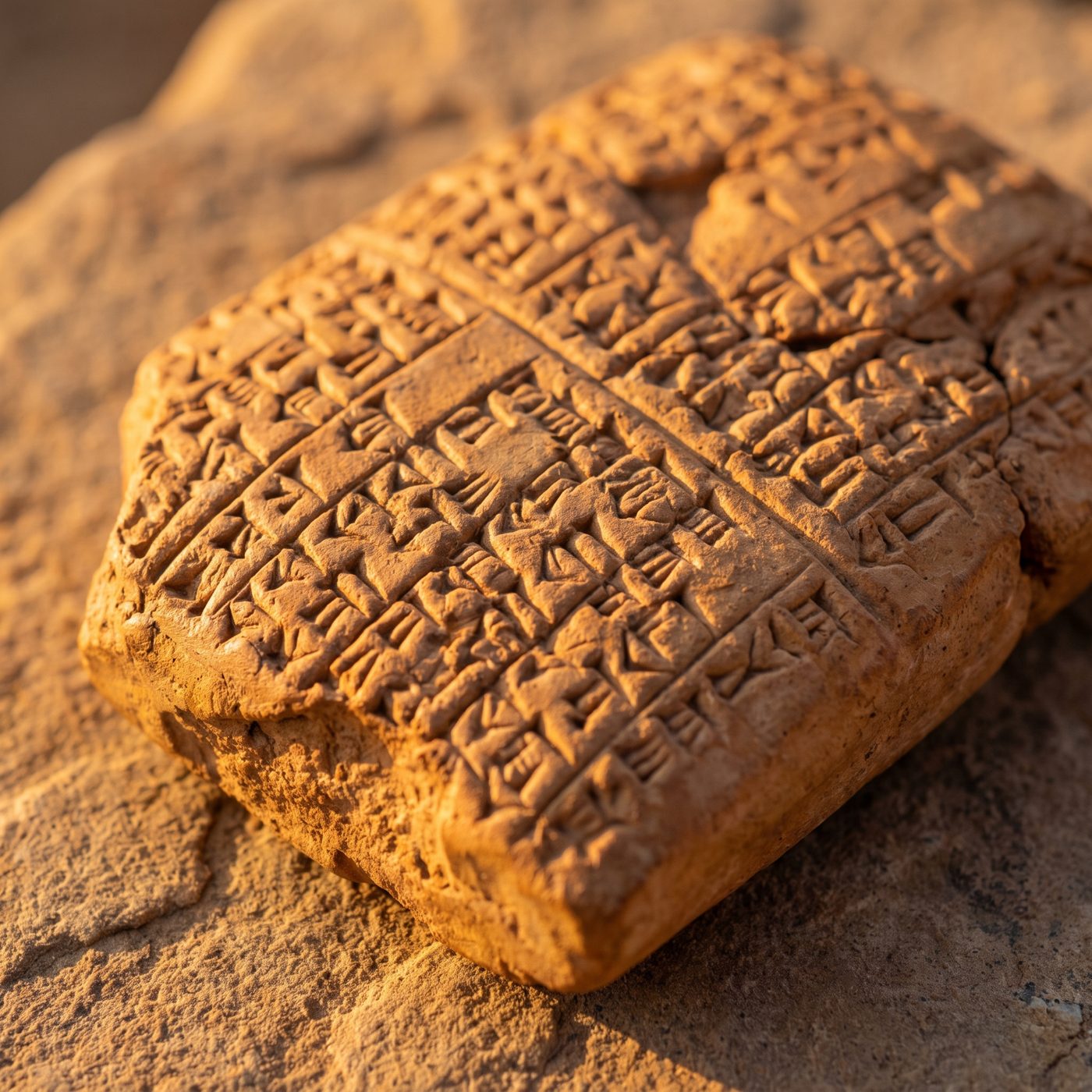 ILLUSTRATION · AI
A roughly 3,770-year-old clay tablet from the city of Ur records a Babylonian customer named Nanni furiously berating a copper merchant, Ea-nasir, over shoddy goods.
Nearly four thousand years before Yelp, a man named Nanni sat down—or more likely dictated to a scribe—and unloaded on a merchant who had sold him bad copper. The result is a palm-sized clay tablet, impressed with cuneiform around 1750 BC, that Guinness World Records now recognizes as the oldest known written customer complaint on Earth. It lives today in the British Museum, and its subject is depressingly familiar: a customer who feels ripped off and wants everyone to know it.
The complaint is aimed at Ea-nasir, a copper trader who has, thanks to this tablet, become the most reviled businessman of the ancient world. Nanni had sent a servant with money to buy copper ingots, expecting quality goods. What he got, in his telling, was inferior metal and contempt. He accuses Ea-nasir of treating his messenger with disdain, of breaking promises, of forcing him to sort through junk ingots and take what was left. "What do you take me for," runs the gist of his outrage, "that you treat somebody like me with such contempt?"
Why an angry customer became a modern meme
The tablet's real charm is how petty and human it is. This is not a royal decree or an epic poem—it is a businessman-to-businessman grievance, the ancient equivalent of a scathing one-star review, complete with wounded pride and demands for satisfaction. National Geographic, in its profile "Meet Ea-Nasir, a shady ancient merchant—and modern meme," traces how this obscure complaint went viral: the idea that a guy in 1750 BC was already writing furious letters about a lousy vendor collapses the distance between us and the Bronze Age. Humanity, it turns out, has been demanding to speak to the manager for millennia.
What makes it more than a joke is the archaeological context. The tablet was pulled from the ground by the British archaeologist Sir Leonard Woolley during his excavations at Ur in what is now southern Iraq. As the Penn Museum recounts in its blog "The Man Behind the Meme," Woolley dug up a house—address, more or less, No. 1 Old Street—that appears to have belonged to Ea-nasir himself. And Nanni's letter was not the only complaint found there. The merchant seems to have kept an archive of grievances against him, which is either a sign of a man determined to keep his records straight or, less charitably, evidence that a lot of people were unhappy with his copper.
How we know the details
The physical object is small and specific. The University of Liverpool's Department of Archaeology, Classics and Egyptology, in a 2025 post titled "The oldest complaint in the world," identifies it as British Museum object W_1953-0411-71, measuring about 11.6 by 5 centimeters—a slab you could hold in one hand. It is written in Akkadian, the Semitic language of Babylonia, in the wedge-shaped cuneiform script pressed into wet clay with a reed stylus, then hardened. That durability is exactly why we still have it: paper rots, but fired clay can survive burial for four thousand years.
One caveat runs through the careful sourcing. The date of roughly 1750 BC is an estimate, and the Penn Museum notes that dating tablets like this from their archaeological layers involves real uncertainty. The word "oldest" carries a hedge too—it is the oldest *known* written complaint, the record Guinness has certified, not proof that no earlier gripe was ever scratched into clay and lost.
And that is the seam still open to argument. Was Ea-nasir genuinely a fraud, or just an unlucky trader whose one surviving customer happened to be a spectacular complainer? We have Nanni's side, preserved in vivid, self-righteous detail. Ea-nasir's rebuttal, if he ever wrote one, has not turned up. The merchant has been convicted, across four thousand years, on the strength of a single furious review.
More facts

In a 2015 wire-fraud trial, a judge let the defense argue the numbers were innocent using a 1938 law of how often digits start with 1.

In real-world data, the number 1 leads about 30% of the time—and the IRS uses that skew to flag faked tax returns as fraud.