The world's first feature-length movie premiered in Melbourne on December 26, 1906 — an hour-long film about outlaw Ned Kelly.
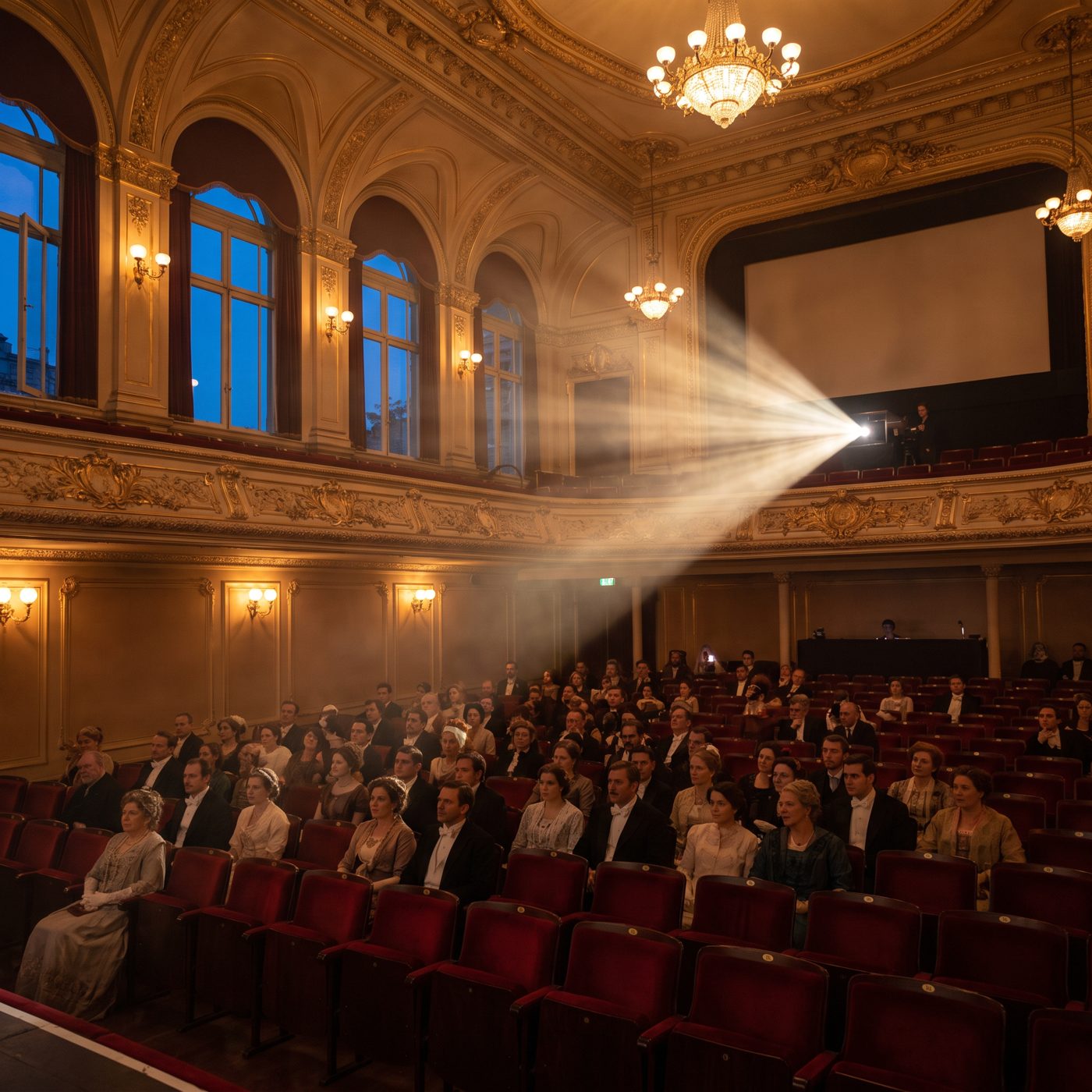 ILLUSTRATION · AI
The world's first feature-length narrative film was an Australian production about the bushranger Ned Kelly, and it premiered in Melbourne on Boxing Day, 1906.
Nine years before D.W. Griffith and long before Hollywood had a name for the format, Australians were already sitting through a movie that ran the better part of an hour. On December 26, 1906 — Boxing Day — audiences filed into the Melbourne Athenaeum on Collins Street to watch *The Story of the Kelly Gang*, a dramatized retelling of the notorious bushranger's last stand. It ran roughly six reels, close to sixty minutes, and the National Film and Sound Archive of Australia considers it the world's first feature-length narrative film.
That claim is not just national pride. In 2007, UNESCO's Memory of the World program inscribed the film on its Australian register, describing it flatly as "the first full-length narrative feature film produced anywhere in the world." Until then, movies were short — a single reel, a few minutes, a novelty. *The Story of the Kelly Gang* asked people to sit and follow a story the way they would a stage play, and that was the leap.
Why an outlaw was the obvious subject
Ned Kelly had been hanged in 1880, but a generation later he was still Australia's most electric folk figure — armored, defiant, either a murderer or a working-class hero depending on who you asked. The subject guaranteed an audience. The film was directed by Charles Tait, whose family theatrical business partnered with the firm Johnson & Gibson to finance and shoot it, according to the NFSA's curator's notes on Australian Screen Online. The Taits knew showbusiness, and they gambled that a familiar legend could carry an unusually long picture.
The gamble paid off. The film toured Australia and Britain, and different editions circulated at different lengths — the National Museum of Australia notes prints running seventy to eighty minutes. Real locations near Melbourne stood in for Kelly country, and the production leaned on the kind of outdoor action that would later become the language of the Western.
How we know, and how little survives
Here is the melancholy detail: almost none of it is left. Of a film that once ran over an hour, only fragments survive — roughly seventeen minutes' worth, held today at the NFSA in Canberra, painstakingly assembled from scraps recovered over decades, some found in a rubbish tip, some in a Melbourne film exchange. Early film stock was nitrate, unstable and flammable, and the world of 1906 saw no reason to preserve a commercial entertainment. What remains is grainy, jumpy, and precious precisely because it so nearly vanished.
The institutional record is unusually solid for something this old. The premiere date and the Collins Street venue appear consistently across the NFSA, the National Museum of Australia, and the UNESCO inscription. There is a minor wobble in the naming — the NFSA and UNESCO refer to the "Athenaeum Hall," while the National Museum calls it the "Athenaeum Theatre" — but both point to the same building, the Melbourne Athenaeum, still standing on Collins Street.
The runtime carries the same small imprecision. "About an hour" is the honest answer; "six reels, or close to 60 minutes" is how the NFSA's curators put it, while later touring editions stretched toward eighty. Silent films were projected at variable speeds, and reels could be added or cut for different markets, so a single definitive figure was never really possible.
What's still open to argue
The title of "first feature" depends on where you draw the line, and film historians genuinely do argue about it. If "feature" simply means a long narrative meant to fill an evening, *The Story of the Kelly Gang* has the earliest strong claim on record. But some point to earlier multi-reel productions elsewhere, or to films whose exact lengths and dates are murky. With most of the actual footage gone, the case rests on advertisements, reviews, and surviving fragments rather than a complete print anyone can screen. The record favors Melbourne — but it does so, fittingly, on the strength of scraps.
More facts
In a 2015 wire-fraud trial, a judge let the defense argue the numbers were innocent using a 1938 law of how often digits start with 1.

In real-world data, the number 1 leads about 30% of the time—and the IRS uses that skew to flag faked tax returns as fraud.