Your skin emits visible light right now, peaking around 4 p.m. — but it's 1,000 times dimmer than your eyes can ever detect.
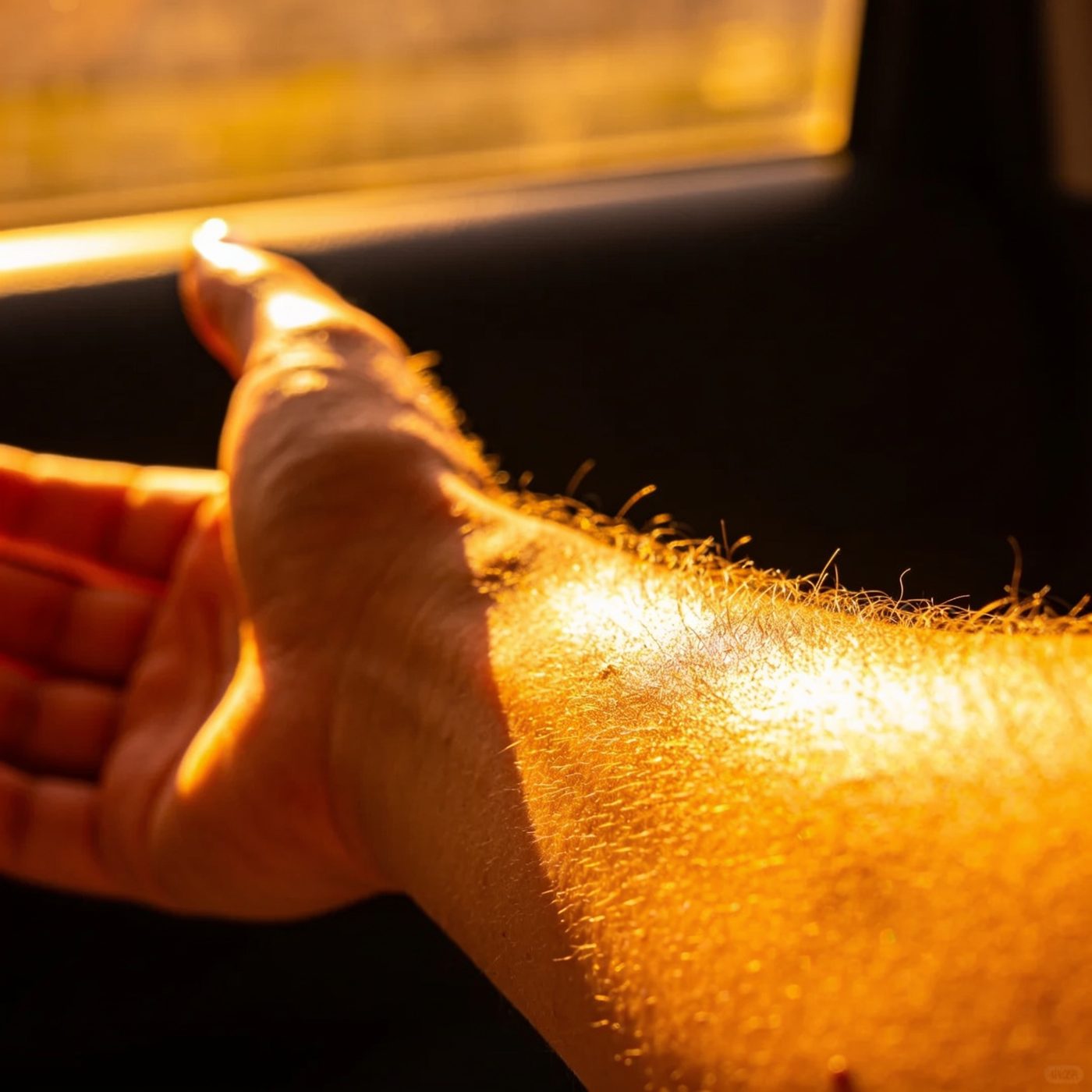 ILLUSTRATION · AI
Human skin gives off a faint visible glow that rises and falls over the day and peaks in the late afternoon, but it is about 1,000 times too dim for the human eye to see.
You are glowing right now. Not metaphorically — your skin is emitting real, visible-wavelength light, and it is brightest in the late afternoon, around 4 p.m. The catch is that the emission runs roughly a thousand times below the threshold your eyes can register, so no amount of squinting in a dark room will ever reveal it. The only way anyone knows is because a camera saw what you cannot.
In July 2009, Masaki Kobayashi, Daisuke Kikuchi, and Hitoshi Okamura published "Imaging of Ultraweak Spontaneous Photon Emission from Human Body Displaying Diurnal Rhythm" in the open-access journal PLOS ONE. Working in Japan, they put five healthy male volunteers, stripped to the waist, in front of a specialized camera and recorded their bodies over three days. The images showed a faint luminous outline of each person — brightest across the face and upper torso — that brightened and dimmed on a daily cycle, cresting in the late afternoon and falling to its lowest at night.
How you can photograph light no eye can see
The trick is the detector. Kobayashi's team used a cryogenic CCD camera — an imaging chip cooled to −120°C. Cameras generate their own faint electronic "noise," and warmth makes it worse; a sensor left at room temperature would drown a signal this weak in its own static. Chilling the chip to well below freezing quiets that noise enough that the handful of photons drifting off human skin can actually accumulate into a picture over a long exposure.
That is why the glow stays invisible to you. The paper states plainly that the intensity of this light is roughly 1,000 times lower than the sensitivity of the naked eye. Your retina is a superb instrument, but it was never built to catch a signal this dim. The camera wins only because it is colder, more patient, and willing to stare far longer than you can hold your eyes open.
Why your body glows at all
The light is a byproduct of ordinary living. As your cells burn fuel, they run reactions involving oxygen that produce reactive molecules — free radicals — and when those collide with proteins and fats, a tiny fraction of the energy is released as a single photon. This is not the deliberate, chemical bioluminescence of a firefly or an anglerfish, which evolved dedicated light-making machinery. It is spontaneous, incidental leakage from your metabolism, sometimes called biophoton emission.
That connection to metabolism is what makes the daily rhythm so interesting. Human metabolic activity follows the body's internal clock, and the glow appears to track it — dimmest in the small hours, climbing through the day, peaking in the late afternoon before easing off again. The ScienceAlert science writer Josh Hrala, summarizing the same PLOS ONE work in 2016, underscored the point that stuck with most readers: humans really do have their own faint form of light, we simply can't perceive it.
The concrete image worth holding onto is that face. In the researchers' pictures, the brightest region wasn't a fingertip or a fold of skin but the cheeks and forehead — the parts most exposed, most metabolically busy, quietly the most luminous part of you at four in the afternoon.
What remains open is what, if anything, the glow is good for as information. Because the emission rises and falls with metabolic state, some researchers have wondered whether mapping it could someday reveal something about health or oxidative stress without a single needle. But the 2009 study rested on just five men over three days, and the signal is maddeningly faint. Whether the glow is a diagnostic window or merely the exhaust of being alive is the argument still waiting for a bigger camera and a larger crowd of volunteers to settle.
More facts
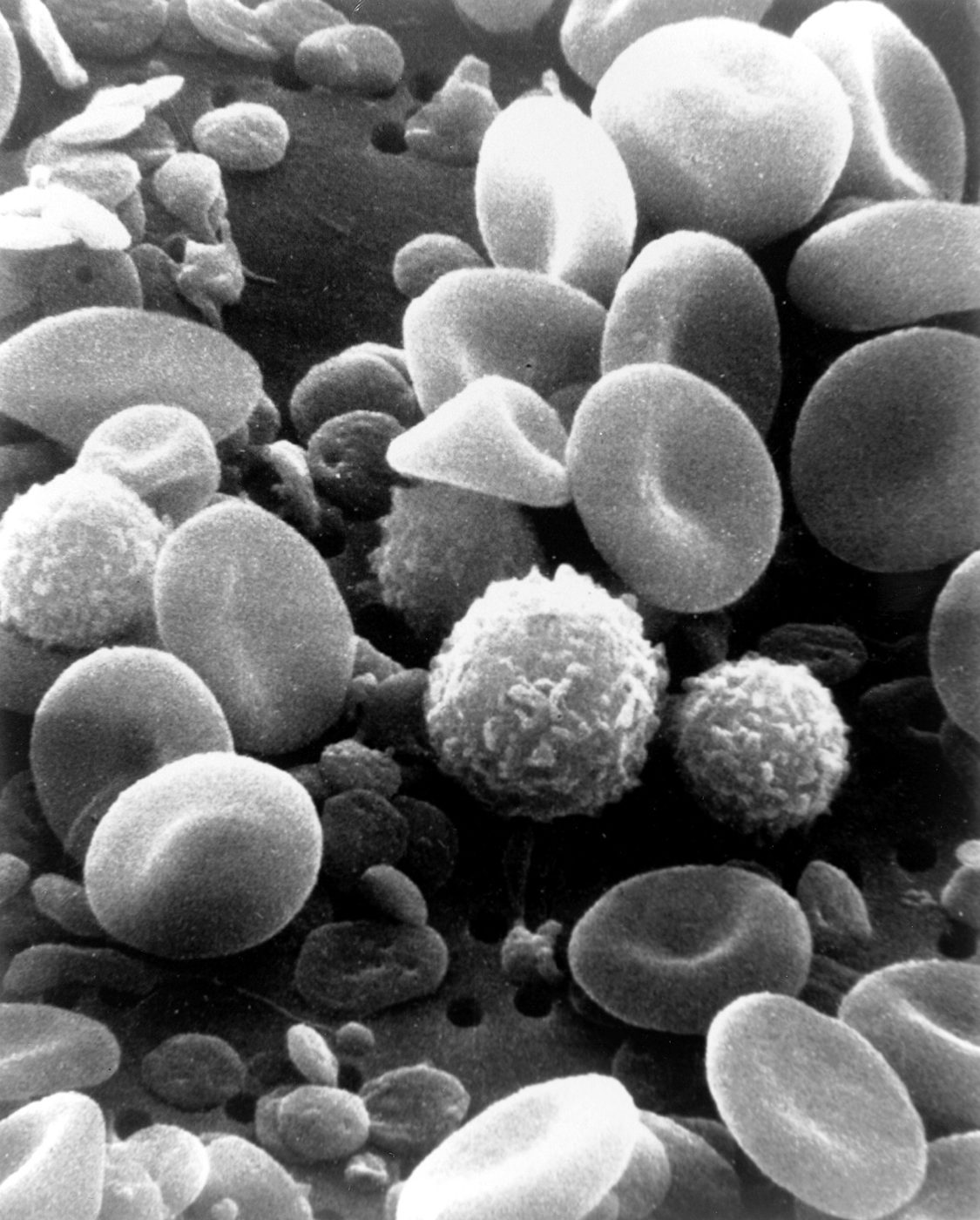
In a healthy person, a red blood cell usually survives for about 120 days, a 2023 review notes. Mature human red blood cells also have no nucleus.
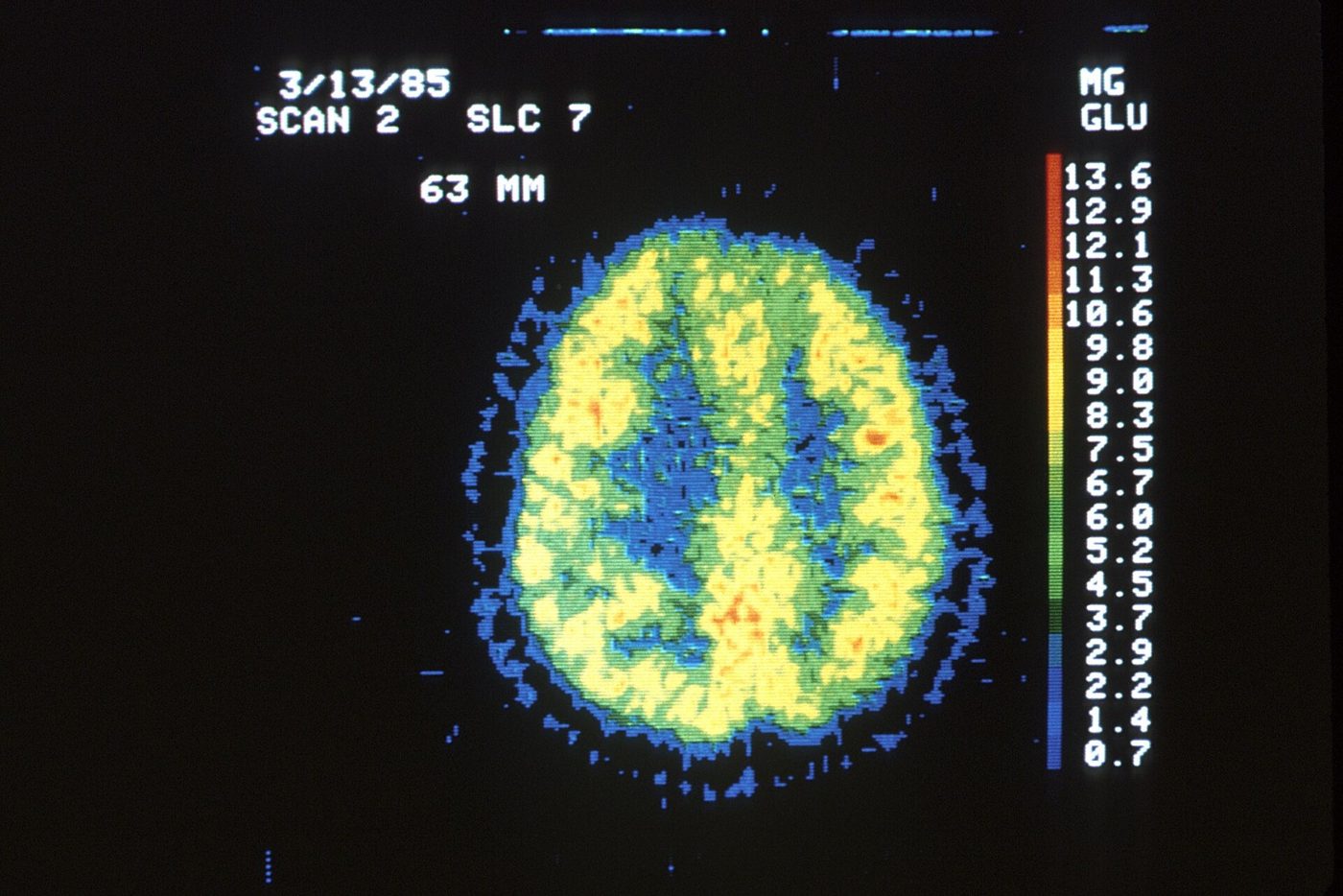
In the average adult at rest, the brain is only about 2% of body weight, yet it uses about 20% of the oxygen and calories the body consumes.