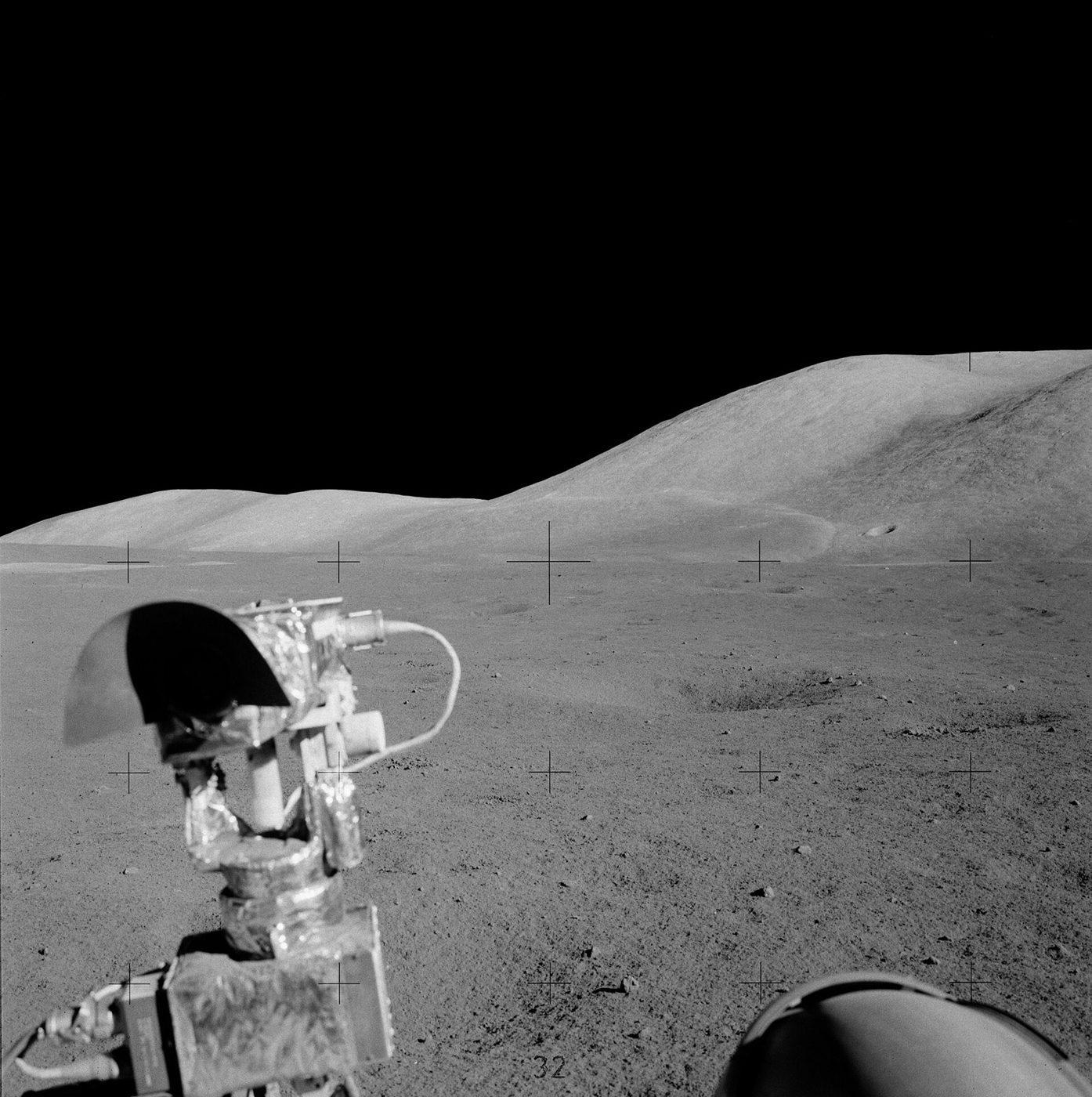
A SpaceX Falcon 9 upper stage slammed into the Moon on August 5, 2026, gouging a fresh 18-meter crater near the Einstein crater.
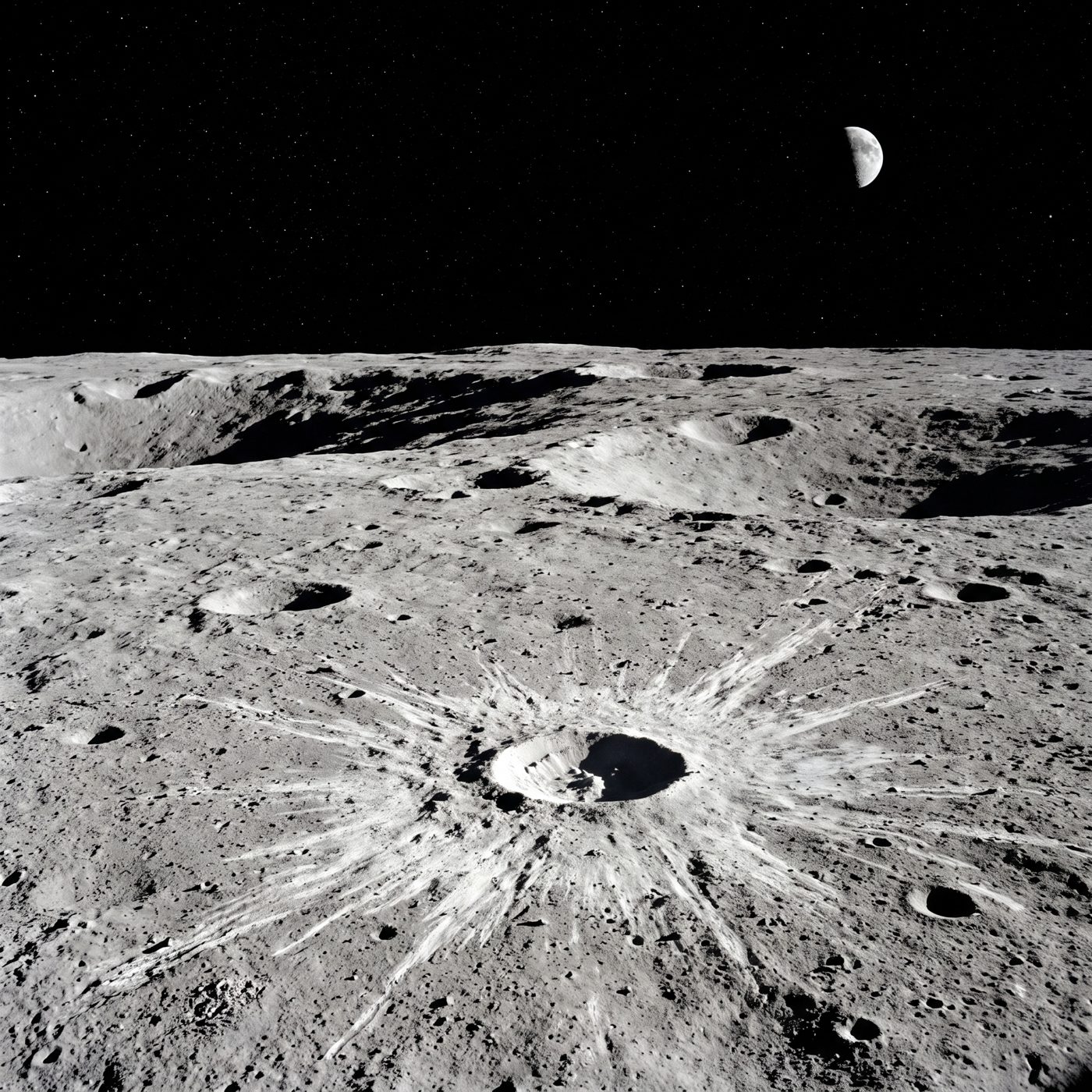 ILLUSTRATION · AI
A spent SpaceX Falcon 9 upper stage crashed into the Moon on August 5, 2026, punching an 18-meter crater near the Einstein crater that NASA's Lunar Reconnaissance Orbiter photographed six days later.
There is now a fresh scar on the far western edge of the Moon's near side that no natural process put there. On August 5, 2026, a discarded SpaceX Falcon 9 upper stage struck the lunar surface near the Einstein crater, gouging a hole about 18 meters (60 feet) across and less than 3 meters (10 feet) deep. NASA's Lunar Reconnaissance Orbiter caught it in a photo taken six days after the strike, on August 11–12.
The stage was not on any mission when it hit. It was space junk. According to NASA Science's write-up, "NASA's LRO Images Falcon 9 Crater on Moon," the object was the spent upper stage from a Falcon 9 that launched in January 2025 to send Firefly's Blue Ghost 1 lander—and ispace's Resilience lander—toward the Moon. Cataloged as COSPAR 2025-010D, it kept drifting through cislunar space for more than a year and a half before finally intersecting the Moon.
How NASA found the fresh crater
Locating a new hole roughly the size of a basketball court on a body 2,159 miles wide sounds impossible, but the method is straightforward: compare before and after. The Lunar Reconnaissance Orbiter has been mapping the surface since 2009, and the LROC team—run out of Arizona State University with NASA's Goddard Space Flight Center and Intuitive Machines—had older images of the same terrain. When they targeted the predicted impact zone and pulled down frame M1541091337R, a small dark blemish appeared where nothing had been before.
The crater sits at 19.4759 degrees north, 266.7138 degrees east. Mark Robinson, the LROC principal investigator, told Space.com the pit is about 60 feet wide and less than 10 feet deep—modest, as impacts go, because the stage was mostly hollow aluminum tanks, not a dense slug of metal.
That depth figure is worth pausing on, because you cannot measure a crater's depth directly from an orbiter looking straight down. The LROC team, and independently the authors of an arXiv preprint titled "Assessment of the 5 August 2026 Falcon 9 Upper-Stage Lunar Impact," derived it from shadows. A crater rim casts a shadow across its own floor, and the length of that shadow, combined with the known angle of the Sun at the moment the picture was taken, gives you the depth by simple trigonometry. Measure the shadow, know the light, and the geometry does the rest.
Why a hollow rocket digs a shallow hole
The physics here is quieter than the word "slammed" suggests. The stage hit at several thousand miles per hour, but it was a lightweight, largely empty structure, so it delivered a fraction of the energy a compact meteoroid of the same size would carry. The arXiv analysis models the energetics and concludes the resulting 18-meter crater is consistent with a low-density, hollow impactor striking the western limb near Einstein crater. In plain terms: the rocket crumpled and spread its punch, rather than driving deep.
That makes this crater a rare calibration point. Most lunar craters are anonymous—we know neither the mass nor the speed nor the moment of the thing that made them. This one we know almost completely: the object, its launch date, its likely impact time near 06:00 UTC, and the picture taken days later. It is a controlled experiment nobody meant to run.
Which leaves the argument that hasn't closed. This is at least the second known human rocket body to hit the Moon—a mystery upper stage struck in March 2022 and made a strange double crater—and as commercial launches multiply, so will these accidental impacts. There is no binding international rule requiring anyone to track a spent stage all the way to its grave, or to keep it from hitting the Moon at all. We are now marking the Moon with hardware we've stopped steering, and no one has decided who, if anyone, is responsible for the scars.
More facts
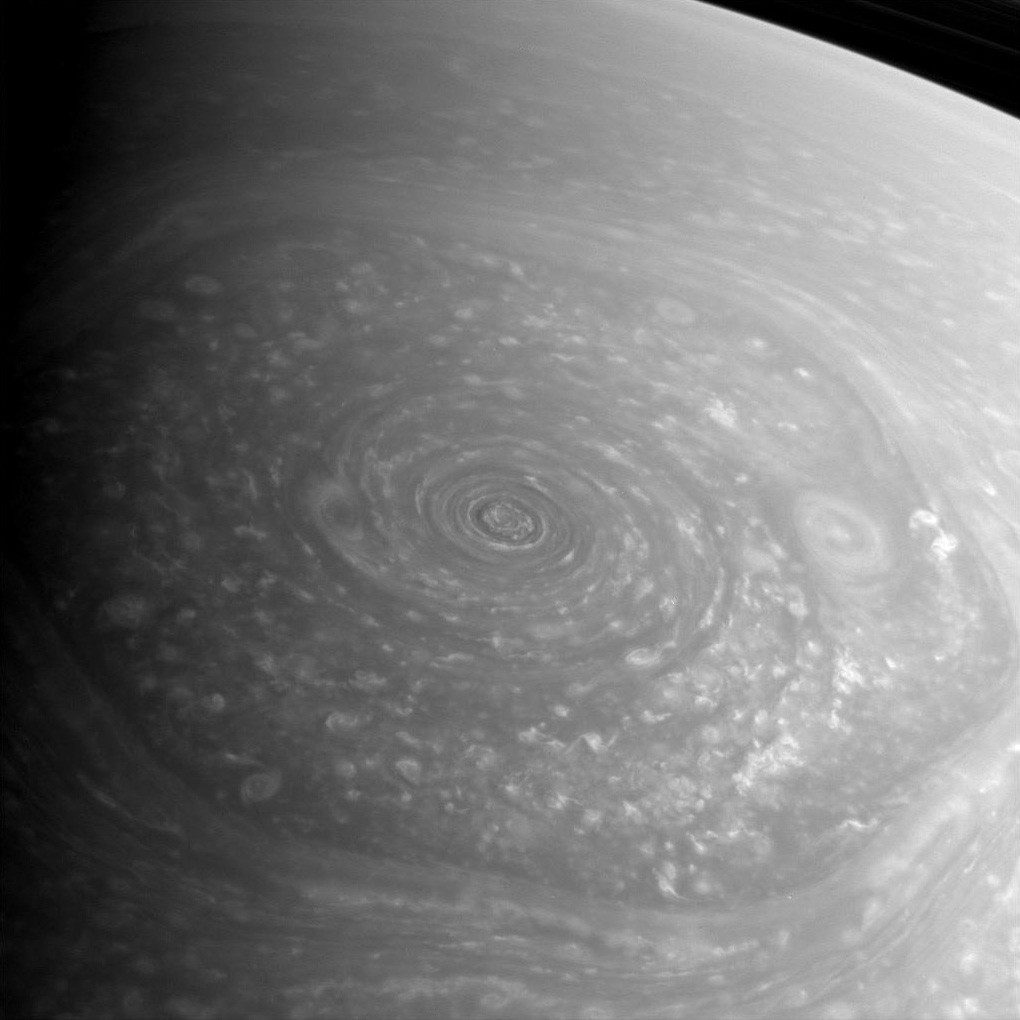
A six-sided storm pattern circles Saturn's north pole. The hexagon spans about 20,000 miles and is a jet stream of 200-mile-per-hour winds, NASA says.
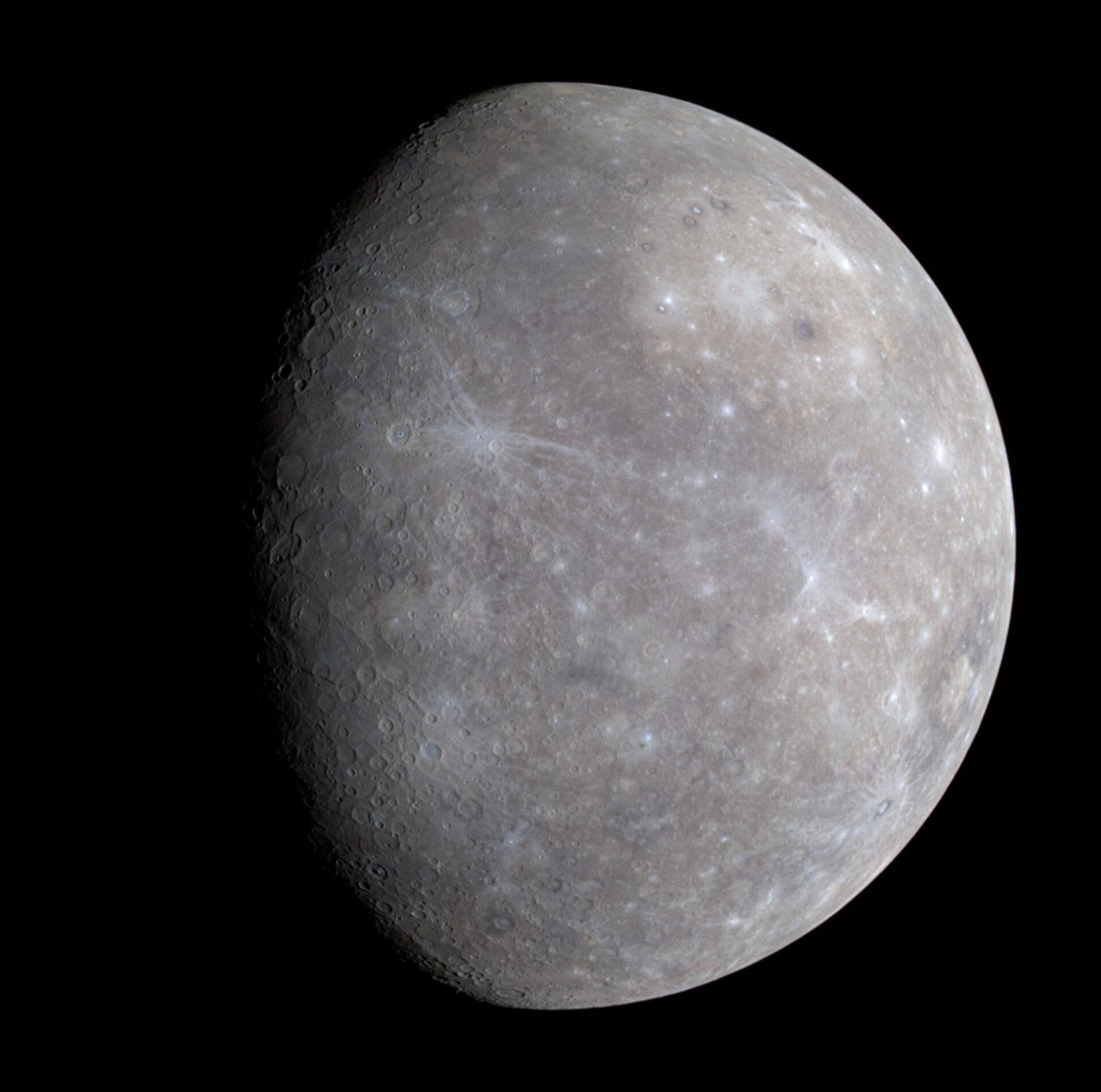
Daytime on Mercury can reach 800 degrees Fahrenheit. With no substantial atmosphere to hold that heat, nights can plunge to minus 290 degrees, NASA says.