Cloud-9 is a galaxy that never turned on: a gas cloud near Messier 94 with zero stars, held together by dark matter alone.
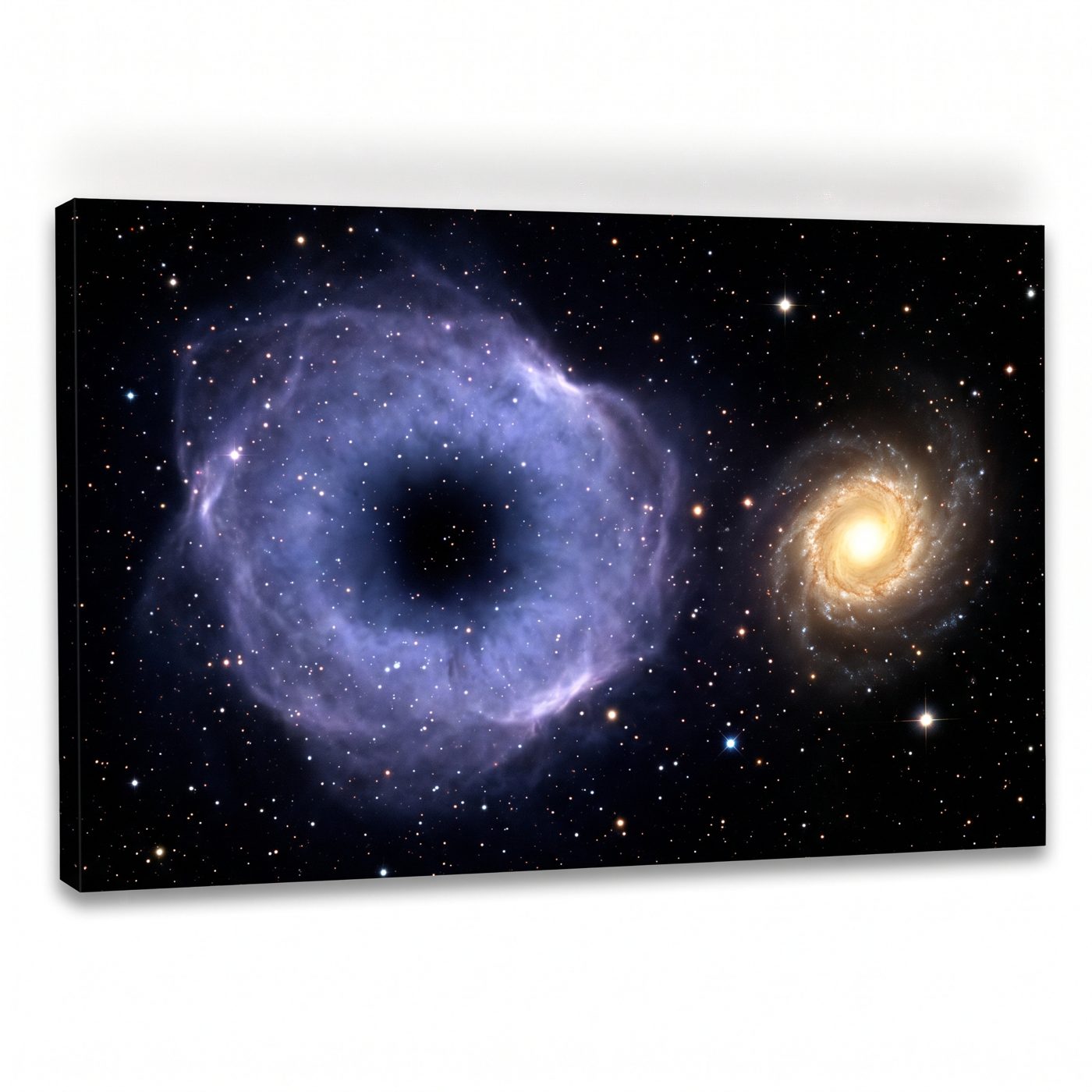 ILLUSTRATION · AI
Astronomers have confirmed Cloud-9, a gas cloud near the galaxy Messier 94 that contains no stars at all and is held together entirely by dark matter—a galaxy that never lit up.
Roughly 16 million light-years away, in the neighborhood of the galaxy Messier 94, sits a clump of hydrogen gas that should have become a galaxy and never did. It has no stars—not a faint scattering, not a handful, but zero. What holds it together is dark matter, the invisible mass that outweighs the gas many times over. On January 5, 2026, an ESA/NASA Hubble Space Telescope team announced they had confirmed it, giving astronomers their first solid example of an object cosmologists had predicted but never actually seen: a Reionization-Limited HI Cloud, or RELHIC. Its nickname is Cloud-9.
Why a galaxy would never turn on
The prediction is decades old and follows from how the early universe worked. In the standard cold dark matter picture, small halos of dark matter pull in hydrogen gas everywhere. But not every halo manages to convert that gas into stars. When the first galaxies and quasars flooded the cosmos with ultraviolet light—an event called reionization—they heated the surrounding gas. In the smallest, lowest-mass halos, that heating was enough to keep the gas from ever collapsing and igniting. The gas just sits there, warm and inert, cradled by dark matter, star formation permanently switched off.
Theorists including Alejandro Benítez-Llambay and Julio F. Navarro had worked out what such an object should look like: a compact, round pocket of neutral hydrogen with a very specific density profile set by the balance between dark-matter gravity and gas pressure. The problem was finding one. A cloud with no stars gives off no starlight—the usual way we spot galaxies—so it can only be detected in the radio glow of its hydrogen.
How Cloud-9 was found and confirmed
That radio detection came first, in 2023, from China's Five-hundred-meter Aperture Spherical Telescope (FAST), the largest single-dish radio telescope on Earth. FAST picked up the faint 21-centimeter signal of neutral hydrogen where no galaxy was cataloged. Follow-up observations with the Green Bank Telescope and the Very Large Array pinned down the cloud's structure and confirmed it was a real, coherent object rather than noise or foreground contamination.
But a radio detection alone couldn't rule out a very faint dwarf galaxy hiding a few dim stars. That is where Hubble came in. Gagandeep S. Anand, Rachael Beaton, Andrew J. Fox, Elena D'Onghia, and colleagues pointed Hubble's Advanced Camera for Surveys at the exact spot and looked, deeply, for any stellar light. They found none. The result was published as "The First RELHIC? Cloud-9 is a Starless Gas Cloud" in *The Astrophysical Journal Letters* in 2025, and the imaging was announced by the Space Telescope Science Institute and ESA/Hubble on January 5, 2026.
The vivid part is what the null result means in practice. Hubble is sensitive enough to resolve individual stars in galaxies at this distance. Turning that power on Cloud-9 and coming back with an empty frame is the confirmation: the gas is there, the gravity is there, the stars are not. It is a galaxy's raw material, frozen at the stage before anything happened.
What is still open to argue
The paper's title ends in a question mark, and that is deliberate. Cloud-9 fits the RELHIC prediction well—its size, its gas content, its position in a dark-matter halo near Messier 94—but a single object cannot settle a class. Astronomers still want to know whether its measured properties match the theoretical density profile precisely enough to exclude other explanations, and whether more of these clouds are scattered through the nearby universe waiting for FAST-style surveys to catch their hydrogen whisper.
If they are common, they would be direct fossils of reionization, small experiments in what happens when a galaxy is starved of star formation from birth. If Cloud-9 turns out to be unusual, the theory needs another look. Either way, the object that never turned on has given cosmologists something they can finally test against the sky rather than a simulation.
- Tier 2 · Secondary2026
More facts
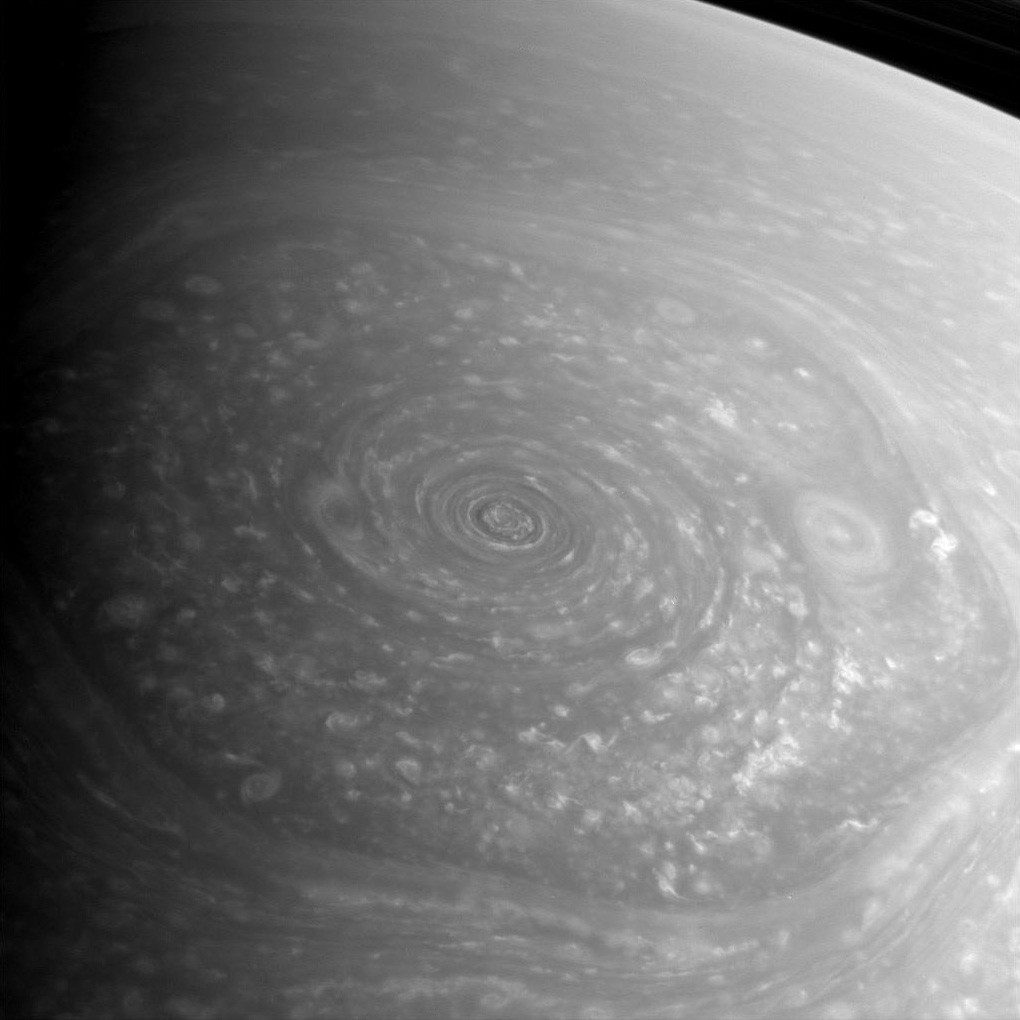
A six-sided storm pattern circles Saturn's north pole. The hexagon spans about 20,000 miles and is a jet stream of 200-mile-per-hour winds, NASA says.
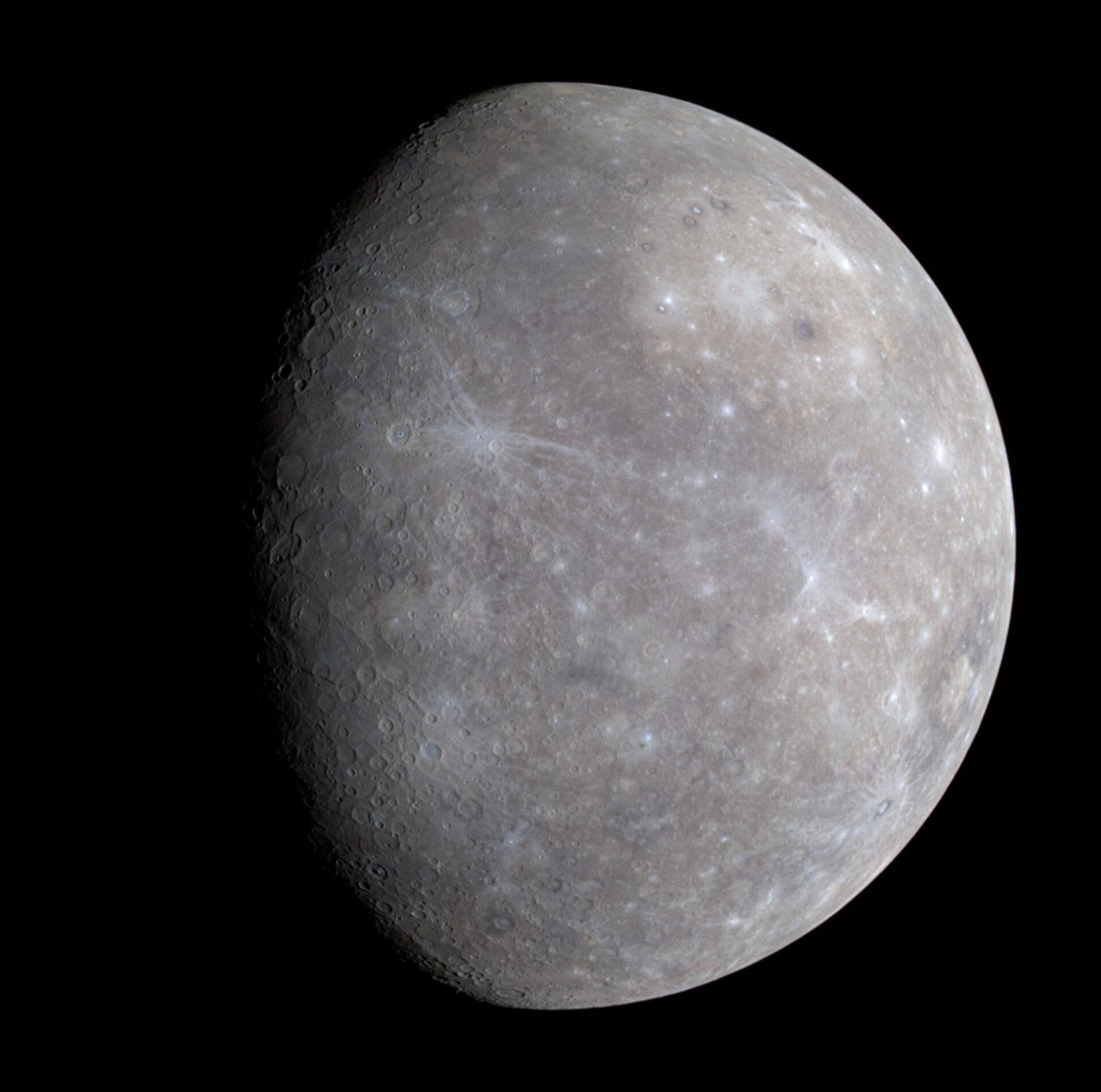
Daytime on Mercury can reach 800 degrees Fahrenheit. With no substantial atmosphere to hold that heat, nights can plunge to minus 290 degrees, NASA says.