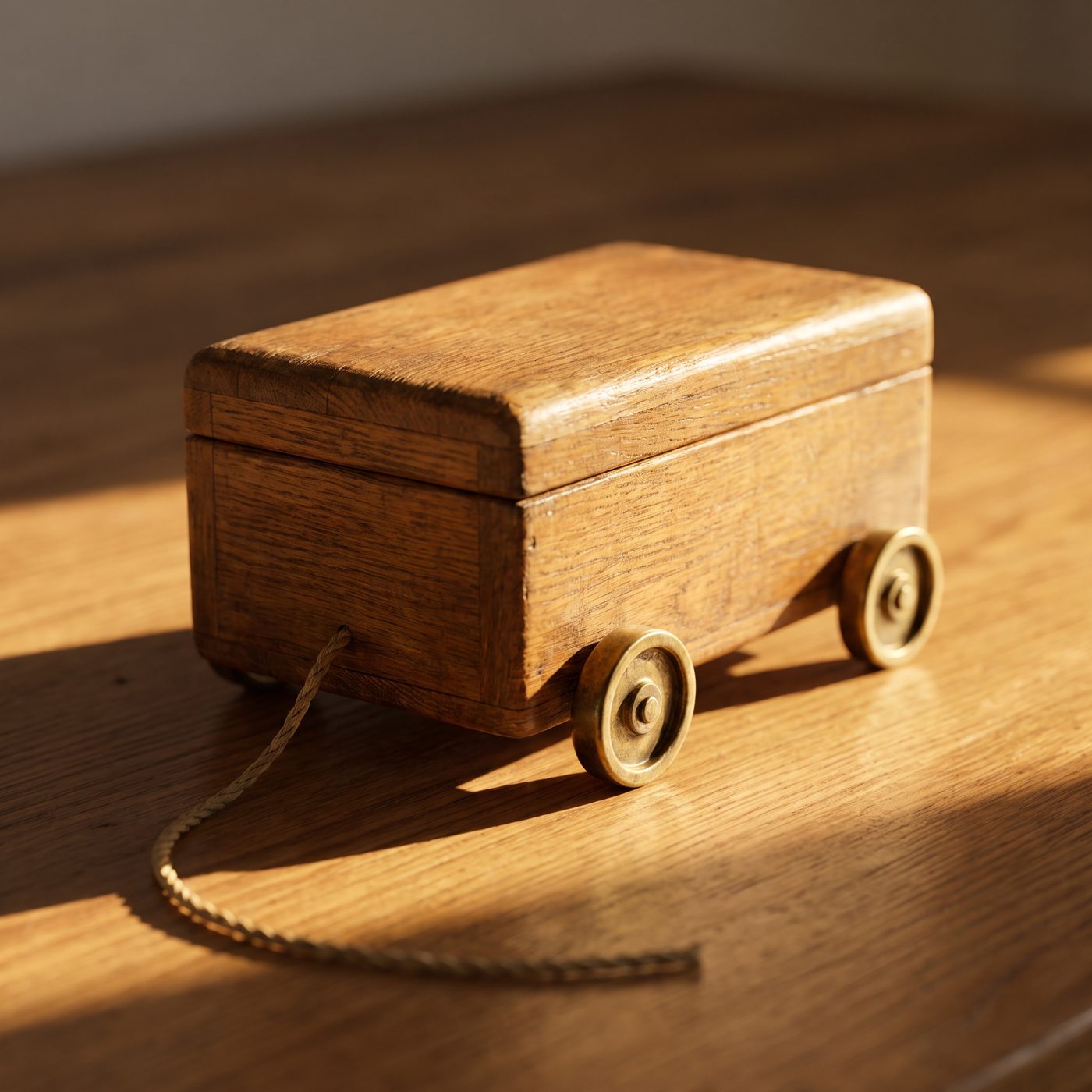
Douglas Engelbart's 1967 patent for the computer mouse, granted in 1970, never once uses the word 'mouse' — not on any of its pages.
 ILLUSTRATION · AI
The U.S. patent that first described the computer mouse calls it an "X-Y Position Indicator for a Display System" and never uses the word "mouse" anywhere in its pages.
Search the full text of U.S. Patent 3,541,541 and you will not find the word that made the device famous. The document that gave the world the computer mouse calls it, dryly, an "X-Y Position Indicator for a Display System." Douglas C. Engelbart, of Palo Alto, California — listed on the patent as an assignor to Stanford Research Institute in Menlo Park — filed it on June 21, 1967, under serial number 647,872. It was granted on November 17, 1970. The animal never appears.
Why the patent never says "mouse"
The nickname was a lab word, not a legal one. Engelbart and his colleagues at SRI's Augmentation Research Center had been testing a handful of pointing devices — a light pen, a knee-operated lever, even a device you steered with your head — and the little wheeled block earned its name because the cord trailing out the back looked like a tail. The name stuck among the researchers, but a patent application is a formal engineering document. It describes what a thing does and how it does it, not what the team happened to call it around the bench.
So the patent describes the mechanism instead of the metaphor. Engelbart's device used two wheels set at right angles, one for the X axis and one for the Y, each turning a potentiometer as the box rolled across a surface. The changing electrical resistance told the display where to move a marker on the screen. That is the whole idea of the mouse, rendered in the vocabulary of variable resistors and coordinate axes — which is exactly why the title reads the way it does.
The Computer History Museum, in its CHM Revolution exhibit documenting Engelbart's patent drawings, notes plainly that the word "mouse" does not appear anywhere in the patent. That is a cleaner claim than it might first sound: not just missing from the title or the abstract, but absent from the entire document, drawings and all. Smithsonian Magazine, writing in 2013, confirmed the same paper trail — Patent No. 3,541,541, filed in 1967 for an "X-Y position indicator for a display system."
How we know Engelbart got so little for it
The vivid detail is in what the patent bought him: almost nothing. Engelbart held the rights through Stanford Research Institute, and the patent's roughly seventeen-year life ran out before the personal computer turned the mouse into a household object. By the time Apple's Macintosh and its imitators put a mouse on every desk in the 1980s, the protection had expired. As Smithsonian reported in that 2013 piece, Engelbart never received any royalties for the invention. SRI had at one point licensed the technology — the figure often cited is around $40,000 — for a device that would go on to sell in the hundreds of millions.
There is a small irony buried in the timing. Engelbart demonstrated the mouse publicly in December 1968, at what has come to be called "The Mother of All Demos," where he moved a cursor around a live screen in front of a San Francisco audience more than a year before the patent was even granted. The demo made the device visible to the field; the patent, quietly issued in 1970, made it legally his — for a window that closed too early to matter commercially.
What remains open to argue is whether the naming even matters. A patent protects a mechanism, not a word, so the absence of "mouse" cost Engelbart nothing legally. But it is a reminder that the thing we point with every day entered the record as a coordinate indicator, and that the man who described it in that careful, unglamorous language watched other people build fortunes on the object he'd sketched with two little wheels. The document is exact about how the mouse works. It is silent about what to call it — and about who should have profited.
More facts

The world's first feature film, 1906's The Story of the Kelly Gang, had no printed words — live actors behind the screen supplied every gunshot and hoofbeat.
Every Rubik's Cube position — all 43,252,003,274,489,856,000 of them — can be solved in 20 moves or fewer. Zero need 21.