Saturn's rings stretch 175,000 miles across, yet the main rings are just 30 feet thick — thinner than a three-story house is tall.
 ILLUSTRATION · AI
Saturn's ring system spans up to 175,000 miles from the planet, but the main rings are typically only about 30 feet thick — roughly the height of a three-story house.
Picture the most photographed structure in the solar system: a disk so wide you could line up more than twenty Earths across it. Now imagine that same disk is, at most points, thinner than a suburban house is tall. According to NASA's Saturn fact sheet, the ring system extends up to 175,000 miles (282,000 kilometers) from the planet, while the main rings measure only about 30 feet (10 meters) from top to bottom. Stretched out across space, they are proportionally flatter than a sheet of paper.
That ratio is the part that breaks intuition. Set the numbers side by side — 282,000 kilometers across, 10 meters deep — and you get a structure roughly 28 billion times wider than it is thick. If you shrank the rings to the width of a football field, they would be thinner than a strand of human hair laid flat across it.
Why are Saturn's rings so incredibly thin?
The flatness isn't an accident of how the rings formed — it's the outcome of billions of years of collisions. The rings are not solid. They're made of countless particles of water ice, ranging from grains of dust to chunks the size of houses, each on its own orbit around Saturn. Any particle that strays above or below the average plane keeps bumping into its neighbors. Over time, those gentle collisions cancel out the up-and-down motion, grinding the whole swarm into a single, razor-flat sheet aligned with Saturn's equator. Gravity pulls them in; collisions flatten them out. What survives is a disk that is enormous in two dimensions and almost nonexistent in the third.
That's why "typically" matters. The 10-meter figure describes the main rings across most of their span, but it isn't uniform everywhere. In 2018, the European Space Agency released findings from the Cassini mission showing that the edge of the B ring — one of the brightest, densest rings — is far from calm. There, gravitational tugs from nearby moons pull the ring material into vertical structures that peak as high as 2.5 kilometers above the ring plane. In other words, the same rings that are 30 feet thick almost everywhere can rear up more than a mile at a single dramatic edge.
How do we actually know the rings are only 30 feet thick?
You can't measure something this thin by looking at it straight on. The answer came from watching the rings edge-on. When Saturn's tilt brings the rings level with our line of sight — which happens roughly every fifteen years — they nearly vanish, dwindling to a faint line of light. That disappearing act tells astronomers the rings have almost no depth. Cassini, the NASA-ESA spacecraft that orbited Saturn from 2004 to 2017, sharpened the picture enormously, flying close enough to resolve the ring plane and the shadows cast at its edges. Both NASA's stated 10-meter thickness and ESA's independent confirmation trace back to that campaign of direct observation.
One vivid detail sticks with you: those towering 2.5-kilometer walls at the B ring's edge cast shadows across the rings themselves. Cassini photographed them, dark fingers stretching over an otherwise flat plain of ice — the only place in the entire ring system tall enough to throw a shadow worth seeing.
What remains genuinely open is where all this ice came from, and how long it will last. Some researchers argue the rings are ancient, forming alongside Saturn; others, citing how clean and bright the ice still looks, contend they're startlingly young, perhaps only 100 million years old — meaning the dinosaurs may have looked up at a ringless Saturn. That debate is unsettled. The 30-foot thickness is not.
More facts
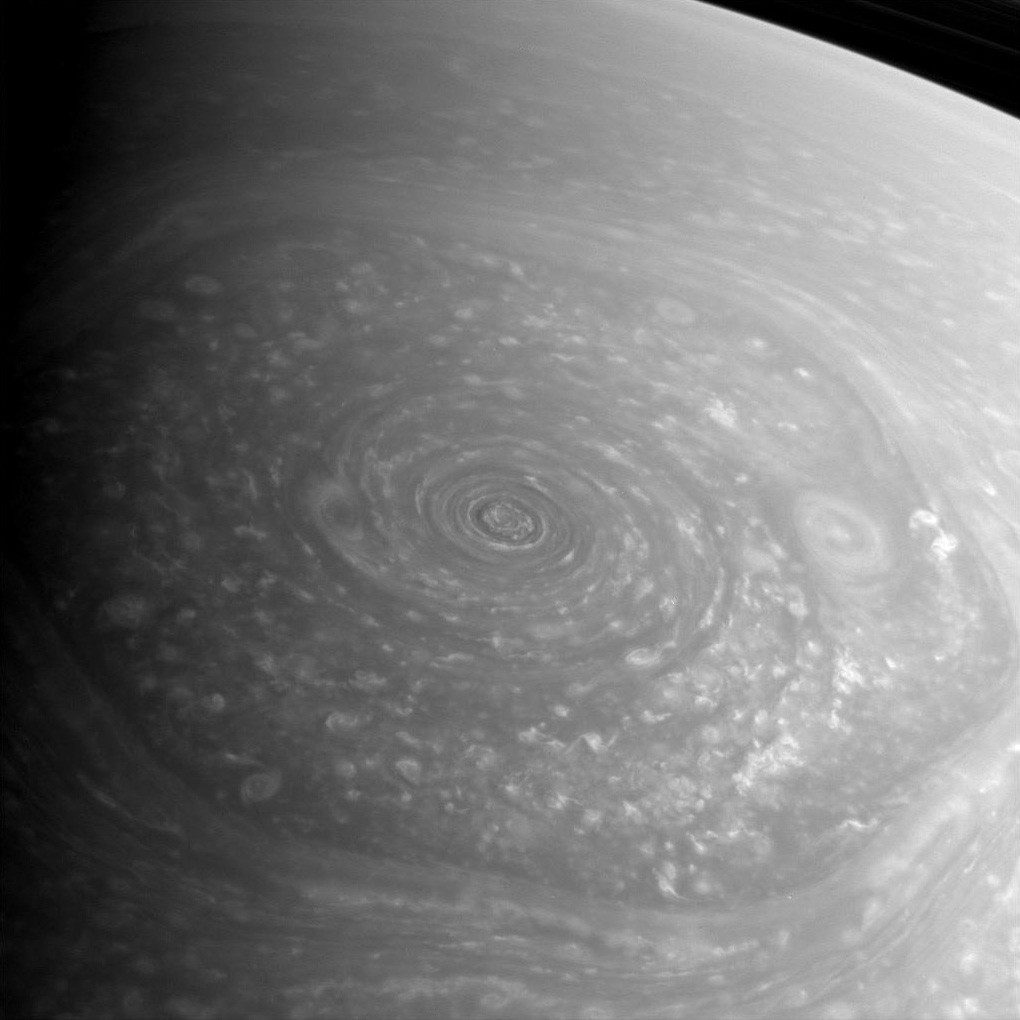
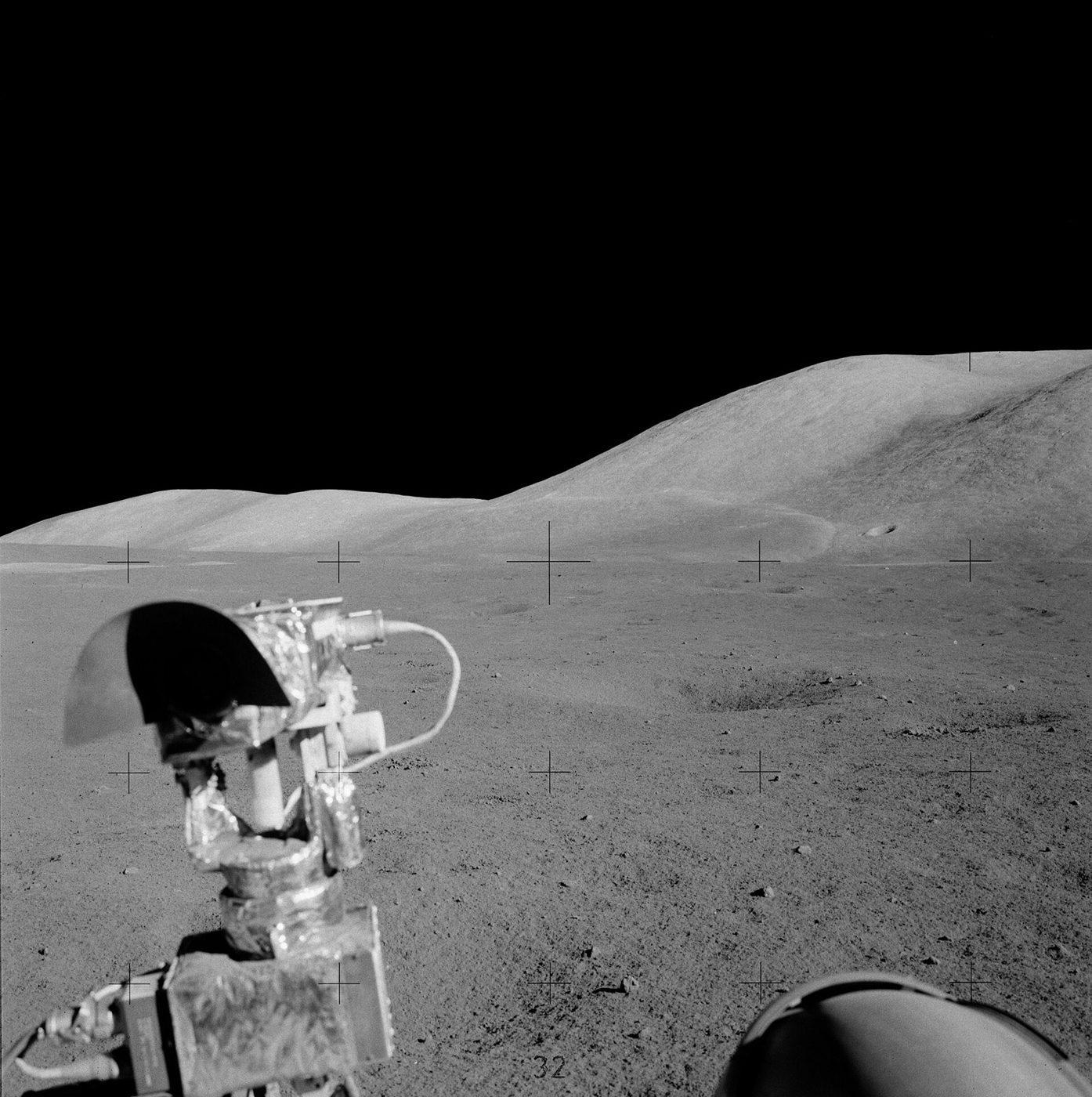
A six-sided storm pattern circles Saturn's north pole. The hexagon spans about 20,000 miles and is a jet stream of 200-mile-per-hour winds, NASA says.
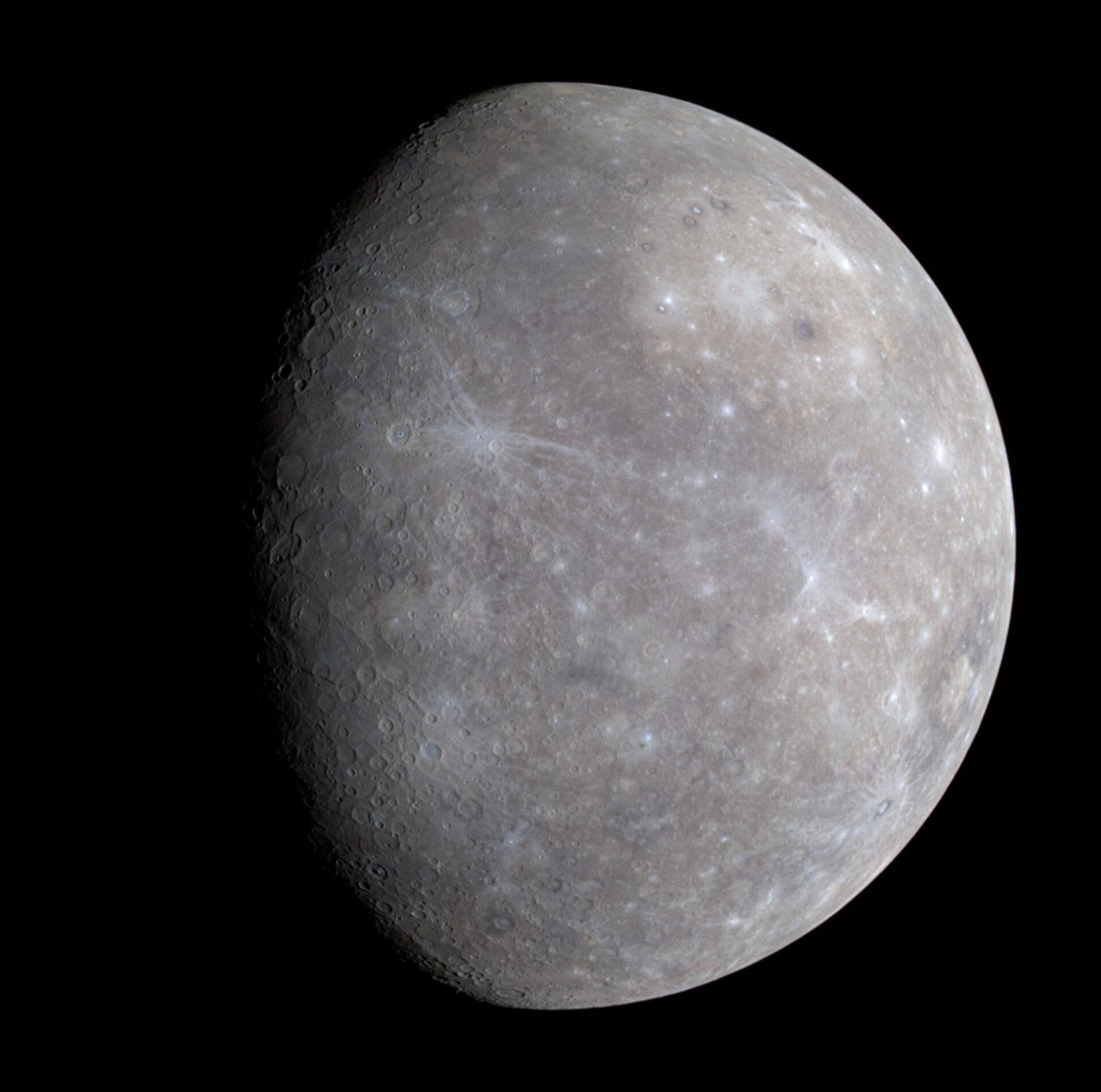
Daytime on Mercury can reach 800 degrees Fahrenheit. With no substantial atmosphere to hold that heat, nights can plunge to minus 290 degrees, NASA says.