The James Webb telescope doesn't orbit Earth. It circles a point in empty space 1 million miles away, on the far side from the Sun.
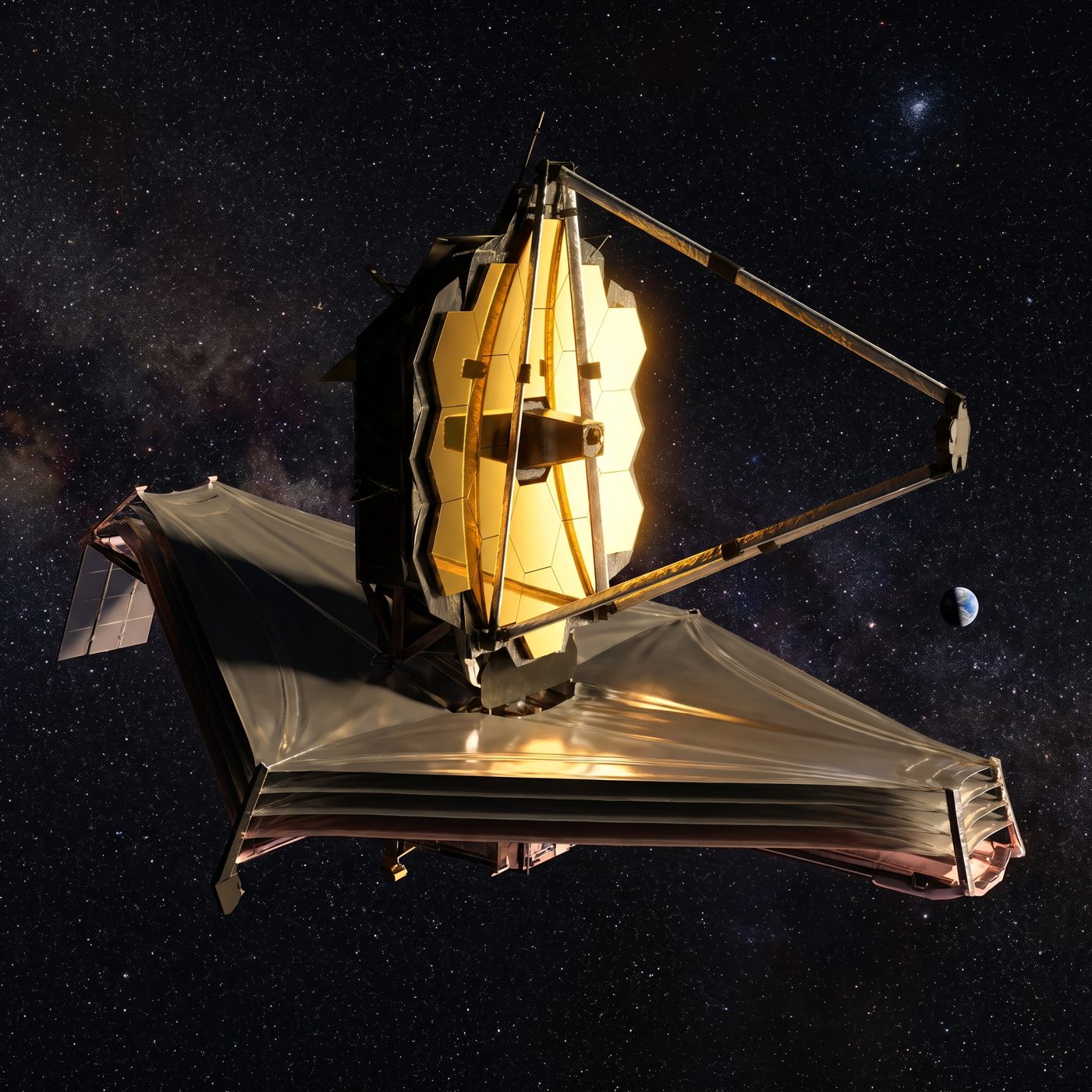 ILLUSTRATION · AI
The James Webb Space Telescope orbits the Sun, not the Earth, tracing a wide loop around an empty point in space 1 million miles from us on the side of Earth facing away from the Sun.
Most people picture the James Webb Space Telescope the way they picture Hubble: a bus-sized instrument wheeling around the Earth, ducking in and out of the planet's shadow every ninety minutes or so. That picture is wrong. According to NASA's own mission page, Webb "is not in orbit around the Earth, like the Hubble Space Telescope is — it actually orbits the Sun, 1.5 million kilometers (1 million miles) away from the Earth at what is called the second Lagrange point or L2."
That distance is worth sitting with. The Moon is about 384,000 kilometers away. Webb is nearly four times farther than that — well beyond the Moon, out where there is nothing to orbit at all except the Sun itself.
Why Webb parks at a point in empty space
The L2 point is one of five Lagrange points, positions where the gravitational pull of the Sun and the Earth combine with the motion of a spacecraft to create a kind of gravitational sweet spot. At L2, which sits directly behind the Earth as seen from the Sun, an object can keep pace with the Earth as both circle the Sun together, rather than falling behind. It's a place where the math cooperates.
But Webb doesn't sit precisely on that point. As NASA describes it in "Webb's Orbit," the telescope "will move in a halo orbit around L2 as it orbits the Sun." Imagine a wide, looping racetrack drawn in space around an invisible marker — Webb travels that loop, completing one circuit roughly every six months, while the whole arrangement sweeps around the Sun once a year. The orbit is genuinely three-dimensional, tilted so that Webb never passes directly into the shadow of the Earth.
That last detail is the whole point of choosing L2 in the first place. Webb is an infrared telescope, and infrared light is heat. To see the faint warmth of the earliest galaxies, the instrument has to be brutally cold — its detectors operate at around 40 kelvin, roughly 233 degrees below zero Celsius. The Sun, the Earth, and the Moon are all sources of heat. From L2, all three sit in the same direction, so Webb can hide from them behind a single tennis-court-sized sunshield, keeping its mirror and instruments in permanent shade.
How we know the orbit works
This isn't a plan that engineers hoped would hold together. Years before launch, NASA Goddard analysts Sun Hur-Diaz — and specifically the work of Yoon, Rosales, and Richon in their 2014 paper "James Webb Space Telescope Orbit Determination Analysis" — modeled how precisely mission controllers could track a telescope moving "from an orbit about the Sun-Earth/Moon L2 libration point, 1.5 million km away from Earth." Halo orbits around L2 are not naturally stable; left alone, a spacecraft drifts off. Webb has to fire small thruster burns roughly every three weeks to stay on its loop, and the 2014 study was part of establishing that the telescope's position could be pinned down well enough to make those corrections.
The vivid consequence of all this distance: nobody is coming to fix Webb. Hubble was serviced five times by astronauts, the last in 2009. At 1.5 million kilometers, Webb is far beyond the reach of any crewed spacecraft. Every unfolding hinge, every mirror segment, had to work on the first try.
What remains genuinely open is how long the loop can last. Webb carries a finite supply of propellant for those station-keeping burns, and its lifetime is ultimately a fuel budget. A precise launch in December 2021 left more propellant in the tank than planners feared — but the exact ceiling, and how many years of that halo orbit the telescope will actually get, is still being counted down, one burn at a time.
More facts
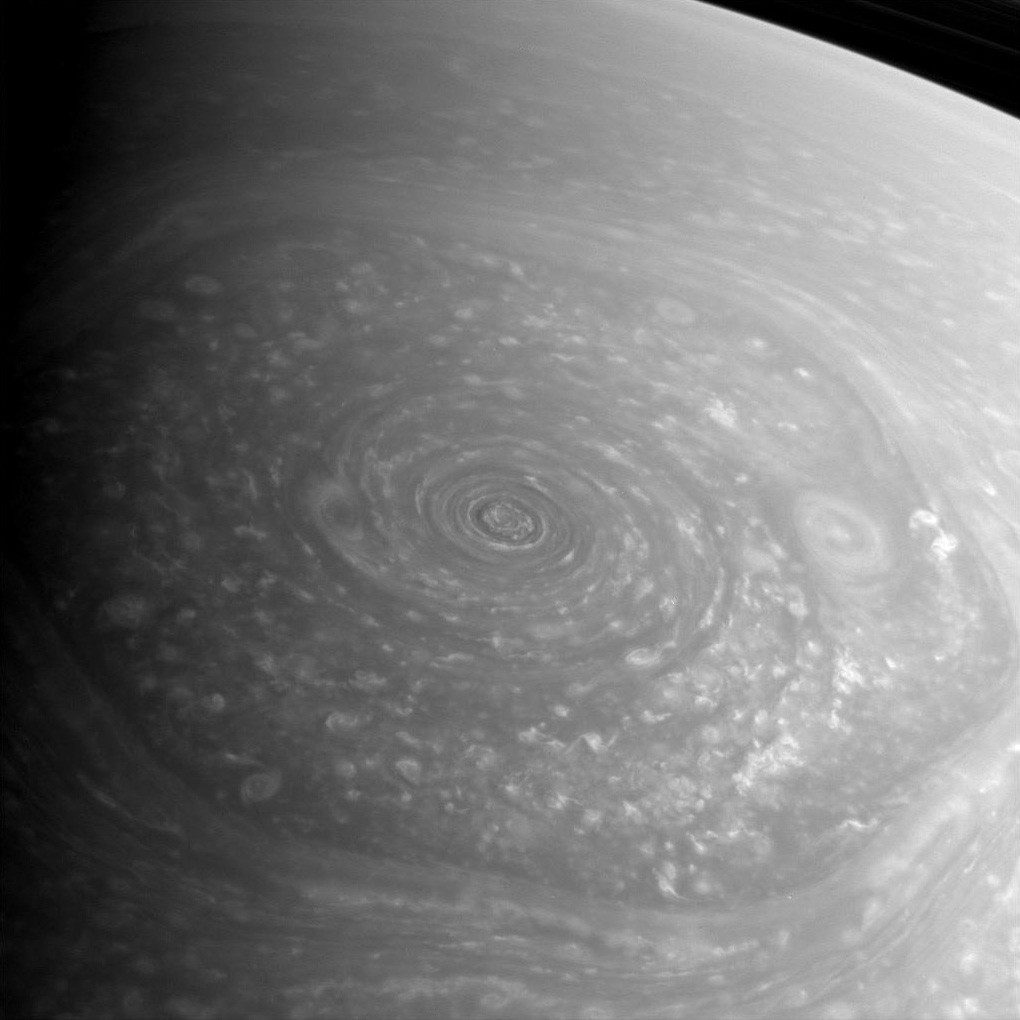
A six-sided storm pattern circles Saturn's north pole. The hexagon spans about 20,000 miles and is a jet stream of 200-mile-per-hour winds, NASA says.
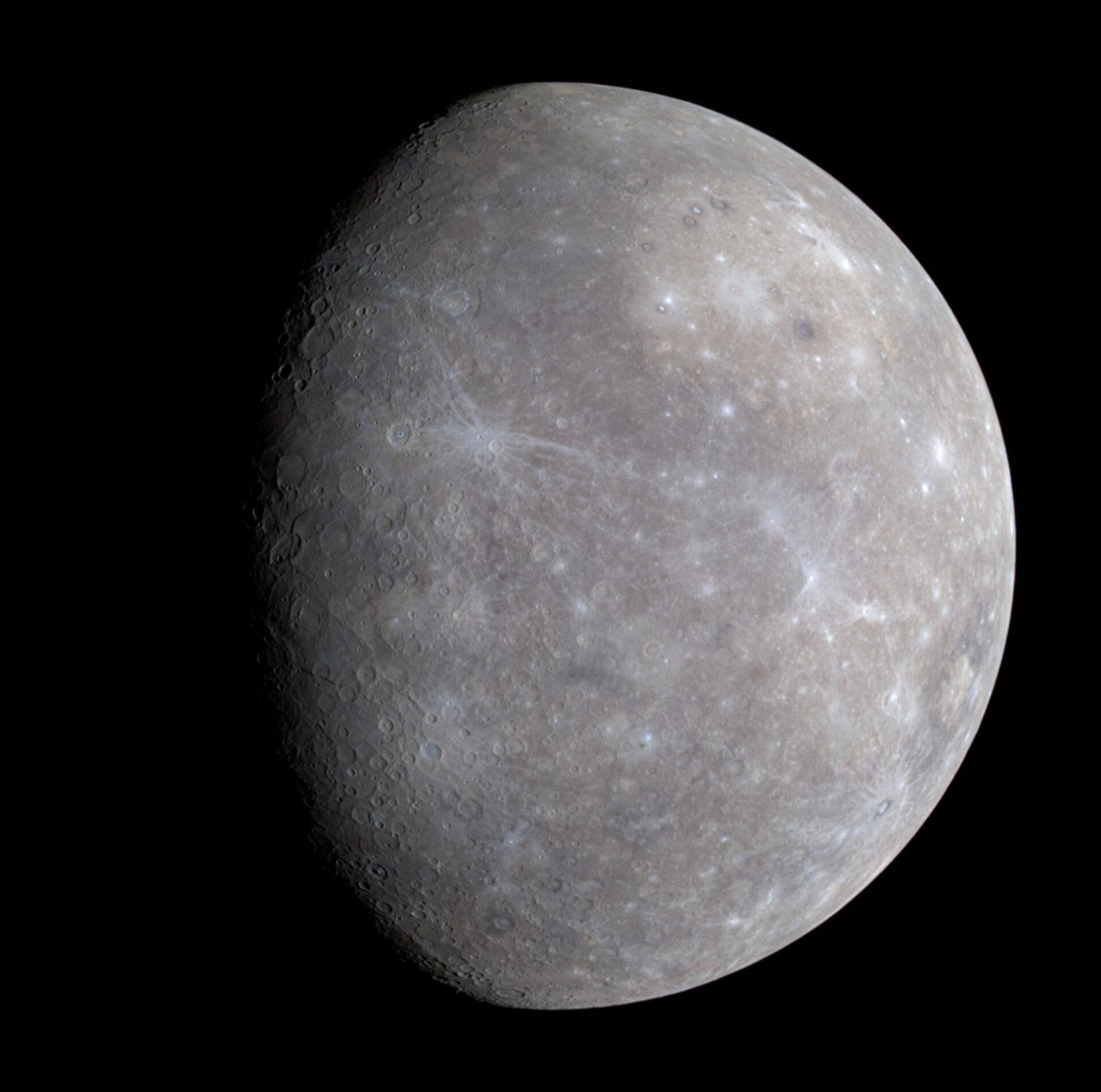
Daytime on Mercury can reach 800 degrees Fahrenheit. With no substantial atmosphere to hold that heat, nights can plunge to minus 290 degrees, NASA says.