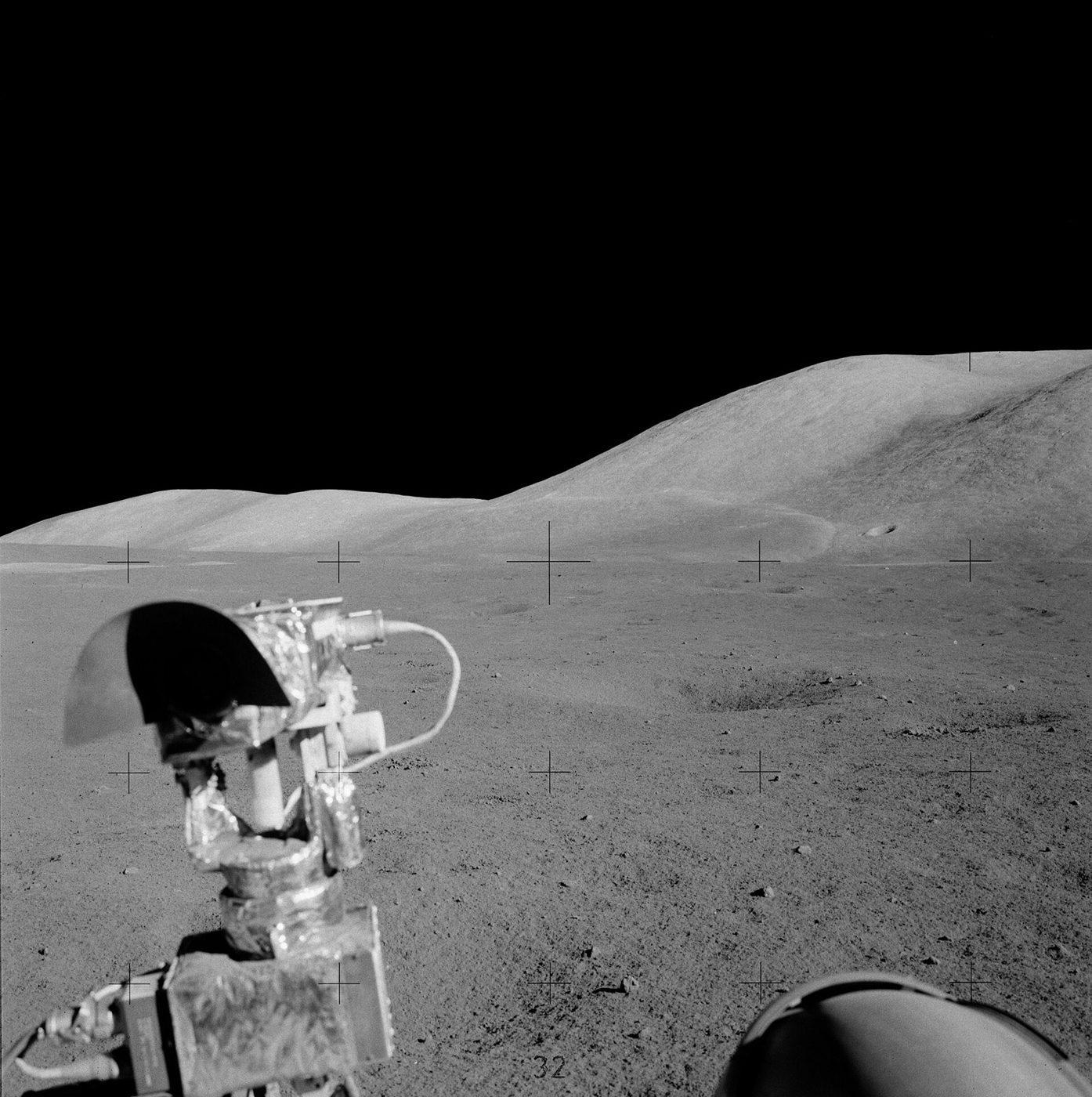
The northern lights aren't paint or magic — they're a collision. Particles hurled off the Sun slam into oxygen and nitrogen 60 miles up, and the sky glows where the atoms take the hit.
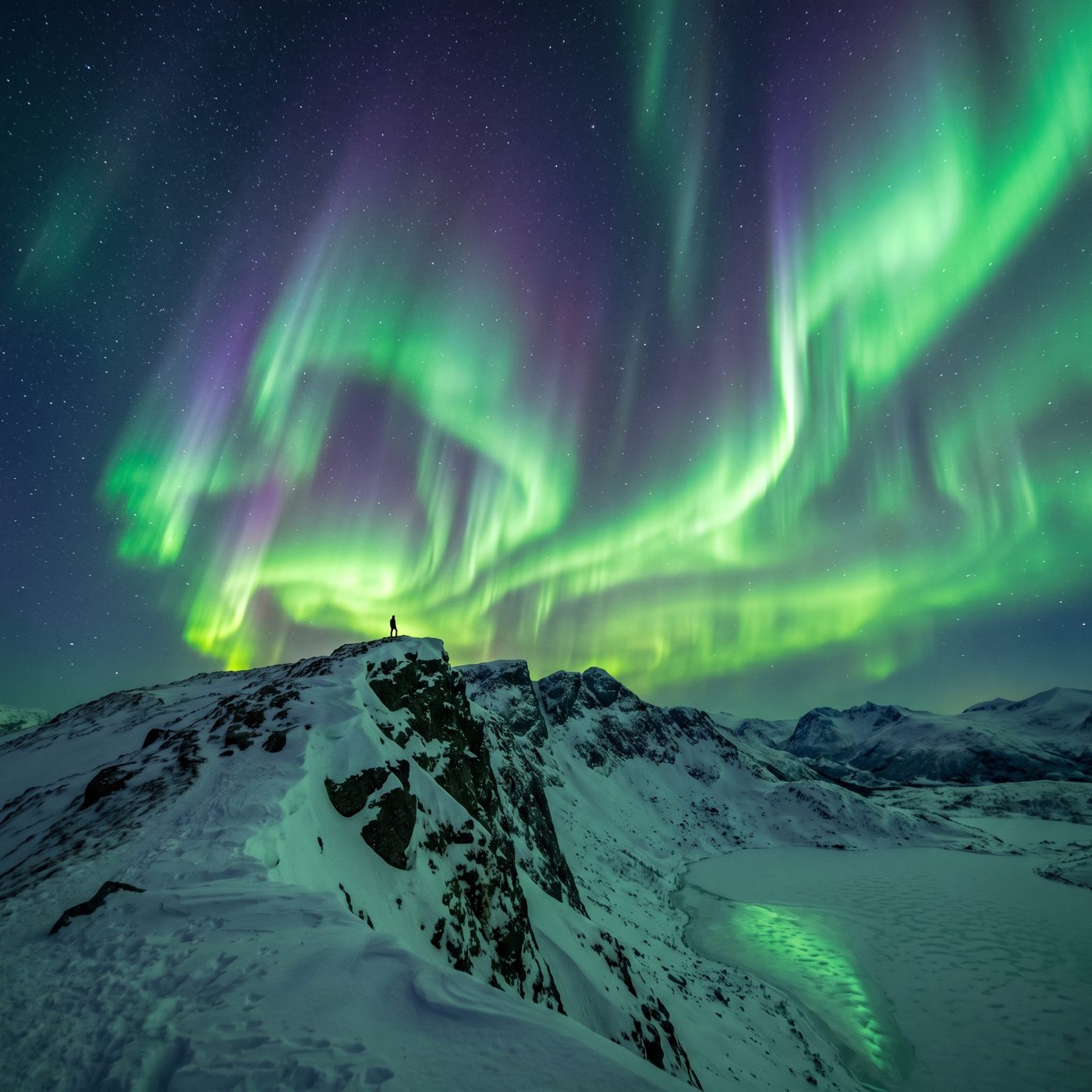 ILLUSTRATION · AI
The aurora is a collision — solar particles striking oxygen and nitrogen atoms about 60 miles up, and the light is the atoms releasing that energy.
The green curtains rippling over an Arctic sky aren't a glow the atmosphere makes on its own. They're the visible flash of a collision. Particles blasted off the Sun — mostly electrons and protons — travel across space, get funneled by Earth's magnetic field toward the poles, and slam into atoms of oxygen and nitrogen roughly 100 kilometers, or 60 miles, overhead. Each hit dumps energy into an atom, and the atom sheds that energy back out as light. The sky glows exactly where the atoms take the blow.
The colors are a fingerprint of what got struck. NASA's heliophysics explainer on auroras lays out the pattern: oxygen tends to give off green — the shade that dominates most displays — and, higher up, a deeper red. Nitrogen contributes the reds and blues and violets that fringe the bottom edges of the strongest storms. So when you're looking at an aurora, you're reading a chemistry chart written in light, with altitude and gas both encoded in the hue.
Why the lights hug the poles
The reason auroras cluster near the Arctic and Antarctic circles is the same reason a compass needle points north: Earth's magnetic field. NOAA's Space Weather Prediction Center explains that the field acts like a set of rails, steering incoming solar particles down toward the two magnetic poles rather than letting them rain evenly across the whole planet. That's why the phenomenon has a northern name (aurora borealis) and a southern twin (aurora australis), and why chasing it usually means heading toward high latitudes.
The particles themselves come in bursts. A strong solar wind or a coronal mass ejection — an eruption that flings a cloud of charged material off the Sun — can push the auroral zone farther from the poles than usual, which is how residents of the northern United States occasionally catch a show normally reserved for Alaska or Norway. NOAA runs forecasts for exactly these events, because the same space weather that lights up the sky can also disturb satellites and power grids.
How we know it's a collision and not a glow
The collision picture isn't a guess dressed up as poetry. It comes from decades of laboratory spectroscopy and in-space measurement, distilled in the current explainers from both NASA (2024) and NOAA (2023). Scientists know which wavelengths oxygen and nitrogen emit when they're energized, and those exact wavelengths show up in the aurora's spectrum — green oxygen at one line, red at another, nitrogen's contributions at their own. Two independent agencies describe the same mechanism because it's the mechanism the light itself reveals.
One concrete detail makes it click: the height. That 100-kilometer altitude is a specific layer where the air is thin enough for particles to reach but dense enough to have atoms to hit. Go much higher and there's little to strike; go much lower and the particles have already spent their energy. The curtain forms in that narrow band, which is why auroras look like they hang at a fixed ceiling.
What still keeps researchers busy is the finer structure — why auroras sometimes pulse, flicker, or form the sharp swirls and rays that photographs freeze mid-motion. The basic collision is settled. The choreography of the magnetic field that shapes those forms, and the way space weather storms build and break, remains an active frontier — which means the next great display over your head is also, still, a live experiment.
- Tier 2 · Secondary2024
- Tier 2 · Secondary2023
More facts
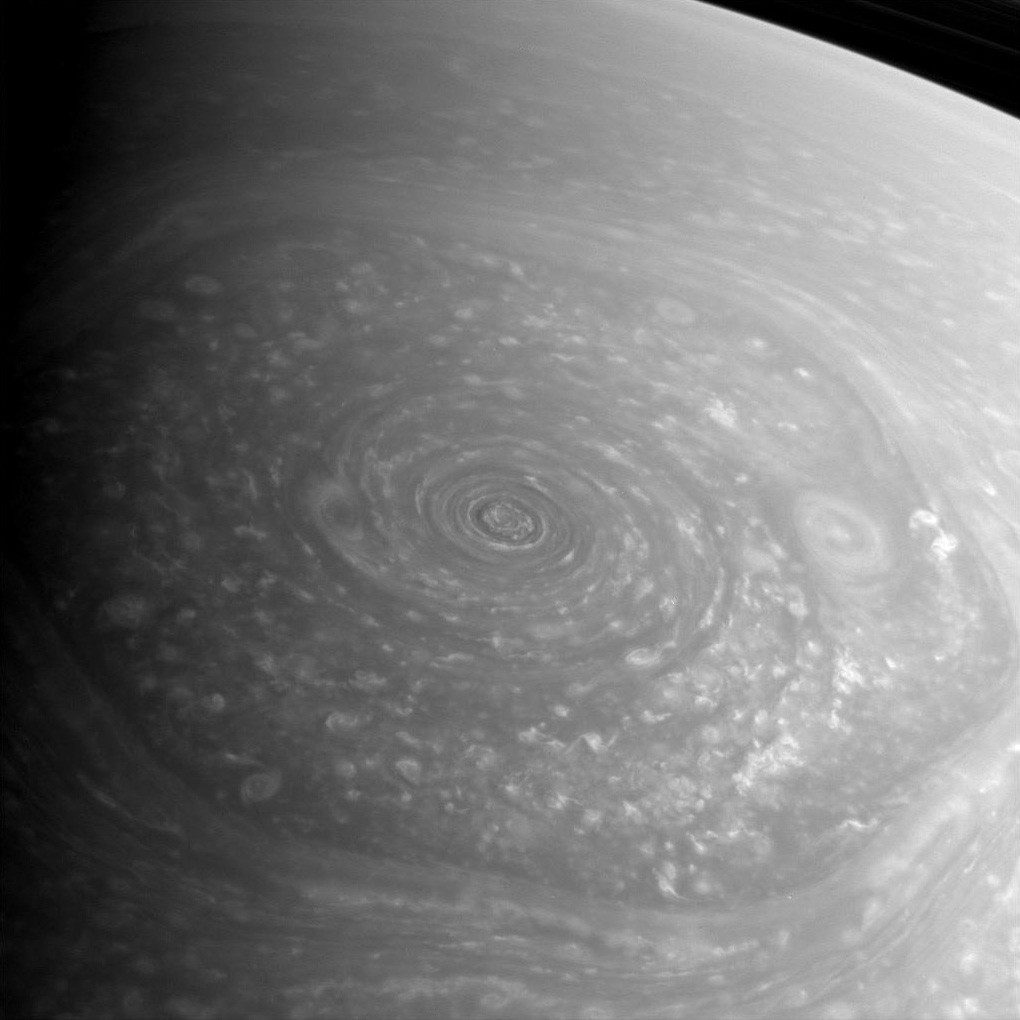
A six-sided storm pattern circles Saturn's north pole. The hexagon spans about 20,000 miles and is a jet stream of 200-mile-per-hour winds, NASA says.
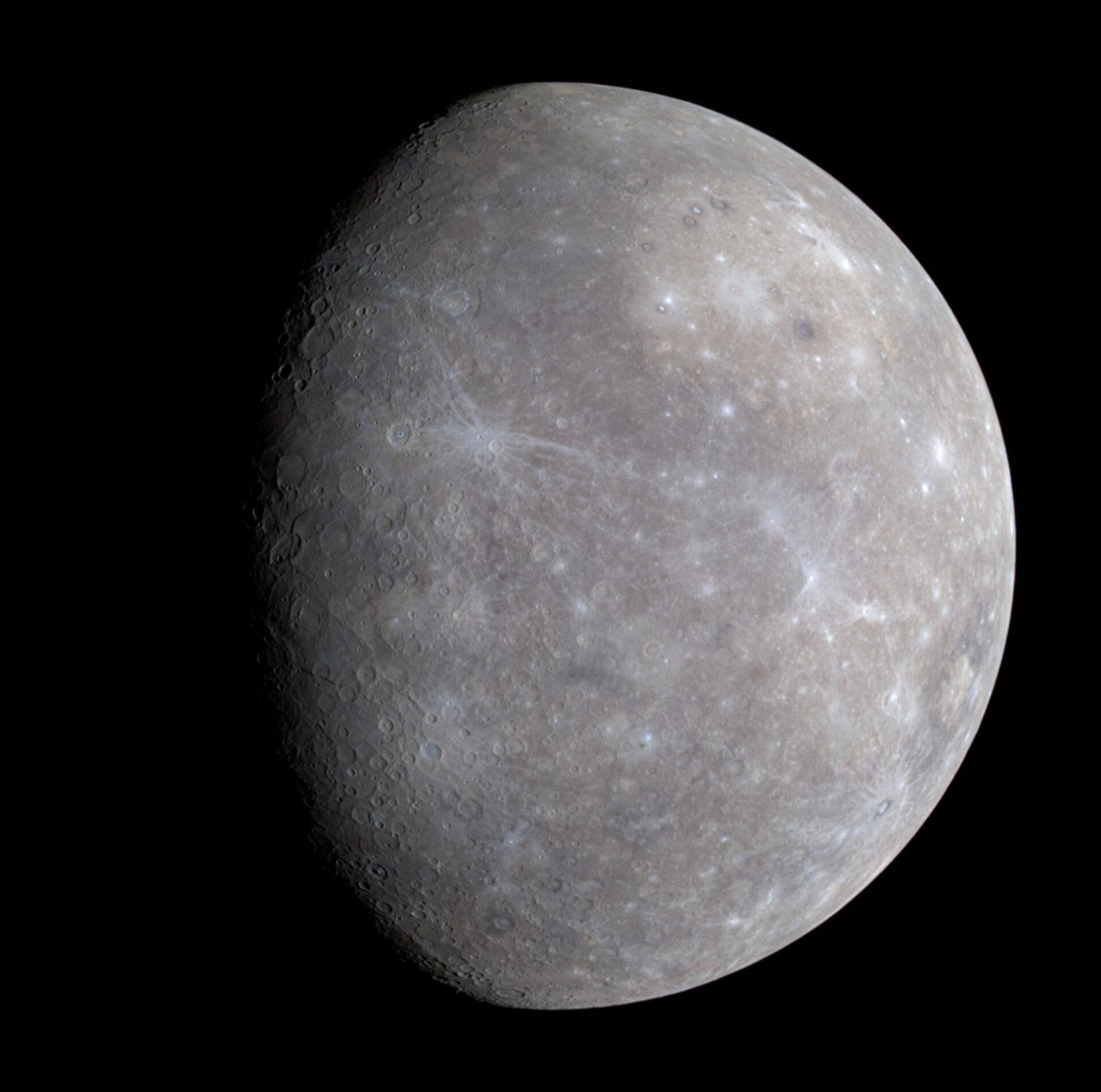
Daytime on Mercury can reach 800 degrees Fahrenheit. With no substantial atmosphere to hold that heat, nights can plunge to minus 290 degrees, NASA says.