The typewriter's 1868 patent, No. 79,265, names three inventors from Milwaukee. The machine sold under two of their names — Sholes and Glidden.
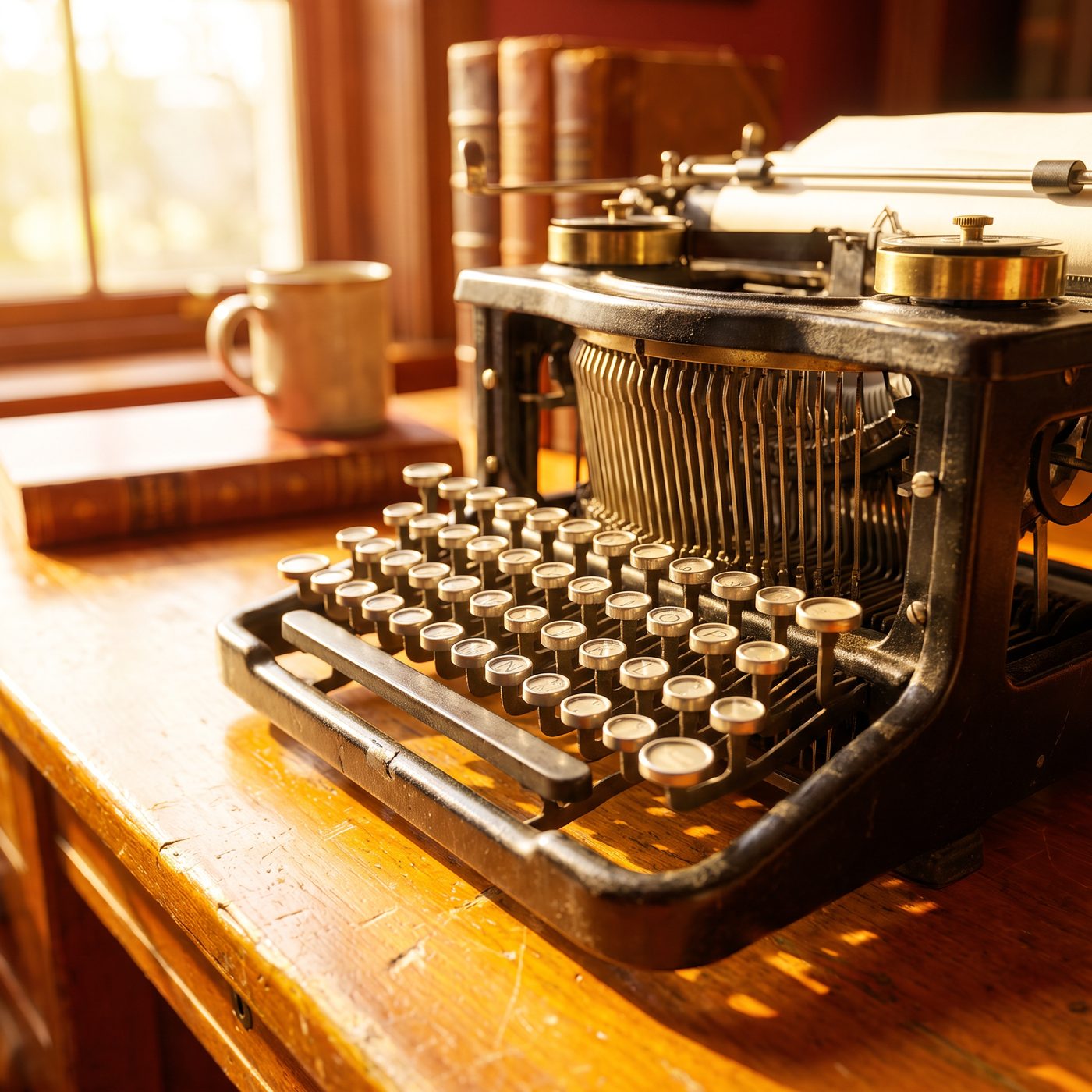 ILLUSTRATION · AI
The 1868 patent that launched the commercial typewriter names three Milwaukee inventors — Sholes, Glidden, and Soule — even though only the first two ended up on the machine.
The typewriter that reached American desks carried two names on its casing: Sholes and Glidden. But the patent that made it possible carried three. U.S. Patent No. 79,265, granted June 23, 1868, for an "Improvement in Type-Writing Machines," names C. Latham Sholes, Carlos Glidden, and Samuel W. Soule — all of Milwaukee, Wisconsin — as co-inventors. The man whose surname vanished from the product had his name on the founding document all along.
Why the patent says three names and the machine said two
The patent's own text leaves no room for interpretation. It opens: "Be it known that we, C. LATHAM SHOLES, CARLOS GLIDDEN, and SAMUEL W. SOULE, of the city of Milwaukee." The document is signed by all three men. That is the primary record, and it settles who the U.S. Patent Office recognized as the inventors in the summer of 1868.
The Smithsonian's National Museum of American History still catalogs the surviving patent model under all three surnames — the "Sholes, Glidden, & Soule Typewriter Patent Model," dated June 23, 1868, patent number 79,265. The Library of Congress, in its "This Month in Business History" feature marking the start of production, likewise credits Christopher Latham Sholes, Carlos Glidden, and Samuel W. Soule with the 1868 patent. Three institutions, three names, one machine.
So how did Soule drop off? The answer lies in the gap between inventing a thing and selling it. A patent records who did the work; a brand records who backed the manufacturing and marketing. When the machine went into commercial production in the following years — eventually built by E. Remington & Sons — it went to market as the "Sholes and Glidden Type-Writer." Soule's contribution to the 1868 device is preserved in the legal record, but it never made it onto the product that reached the public. His name lives in archives, not in advertising.
How we know the record is right
The strength of this fact is that it doesn't rest on a secondhand telling. A 2026 commissioned search of the official USPTO archival record confirmed the filing details directly: patent number 79,265, the grant date of June 23, 1868, the exact title "Improvement in Type-Writing Machines," and the three inventors named and signed in the document itself. The Smithsonian catalog entry and the Library of Congress feature independently line up with that primary source, which is what lets Numinous state it plainly rather than hedge.
The vivid detail is in the language of the era. The patent doesn't say "the inventors" or list them in some detached third person — it speaks in the first-person plural of the men themselves: *we, C. Latham Sholes, Carlos Glidden, and Samuel W. Soule.* Reading it, you're reading three Milwaukee men putting their names to a promise together, in a shop where the keys that would eventually reshape the workplace were first being hammered out by hand.
The seam still open to argue about
What the patent cannot tell you is how the credit *should* have been divided. A signature on a patent is a legal equal sign; it does not measure who sketched the first workable key, who solved the jamming, who kept the project funded, or who lost interest and walked away. Historians of the typewriter have long noted that Sholes is generally treated as the driving figure, with Glidden and Soule in supporting roles — but "supporting" is a judgment, not a fact recorded on the document.
So the record is settled on one point and unsettled on another. Three men from Milwaukee invented the 1868 typewriter; the patent says so in their own words. Whether the machine should have carried two names, three, or one is a question the paperwork was never designed to answer — and that's the part still worth arguing about.
More facts
The internet's first message was 'lo' — on October 29, 1969 the receiving computer crashed after just two of the five letters sent.
The first message ever sent over the internet was 'LO' — the system crashed on October 29, 1969 as Charley Kline typed the 'G' in 'LOGIN.'