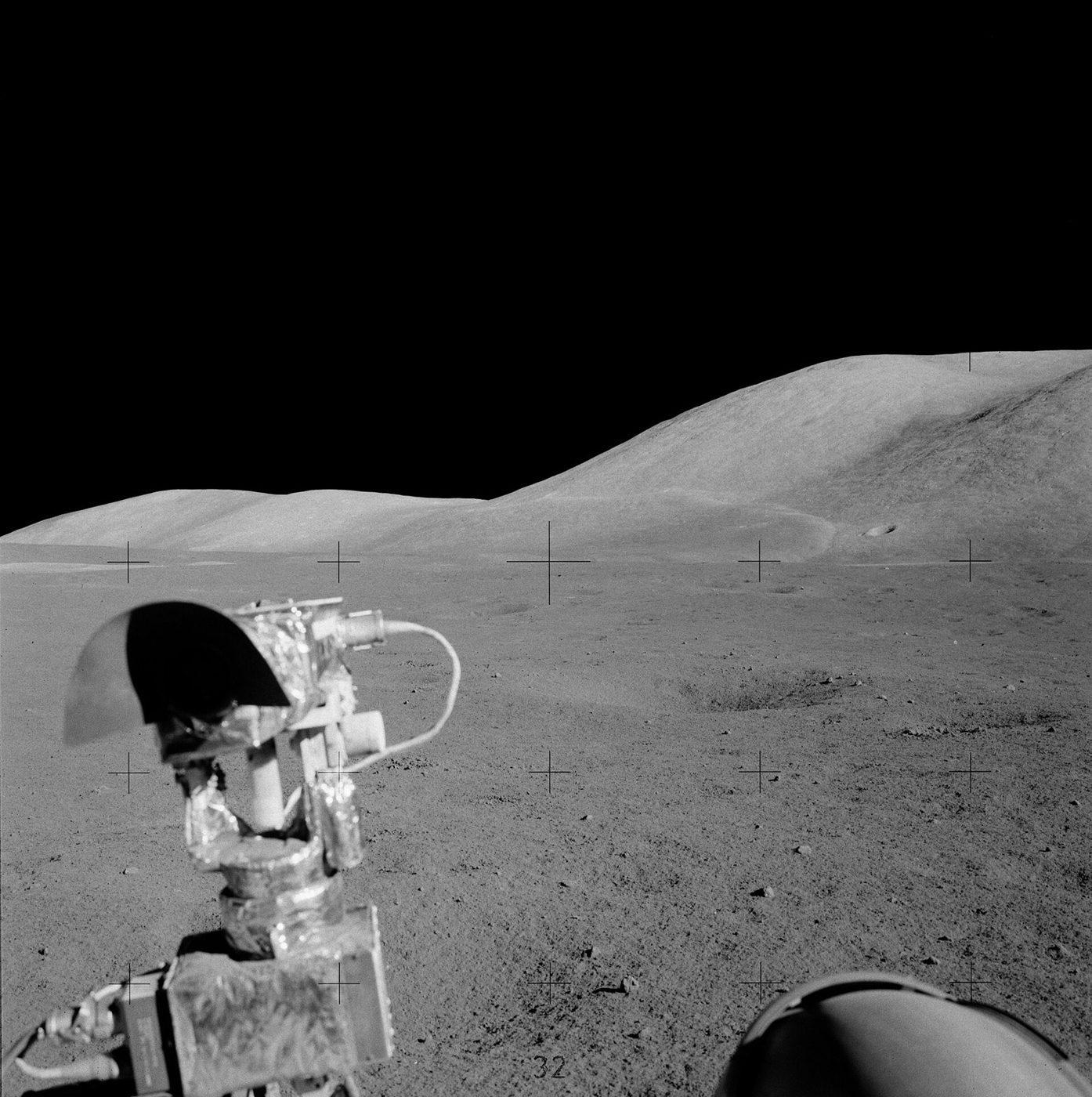
Venus takes 243 Earth days to spin once—but only 225 to orbit the Sun. It's the one planet whose day outlasts its year.
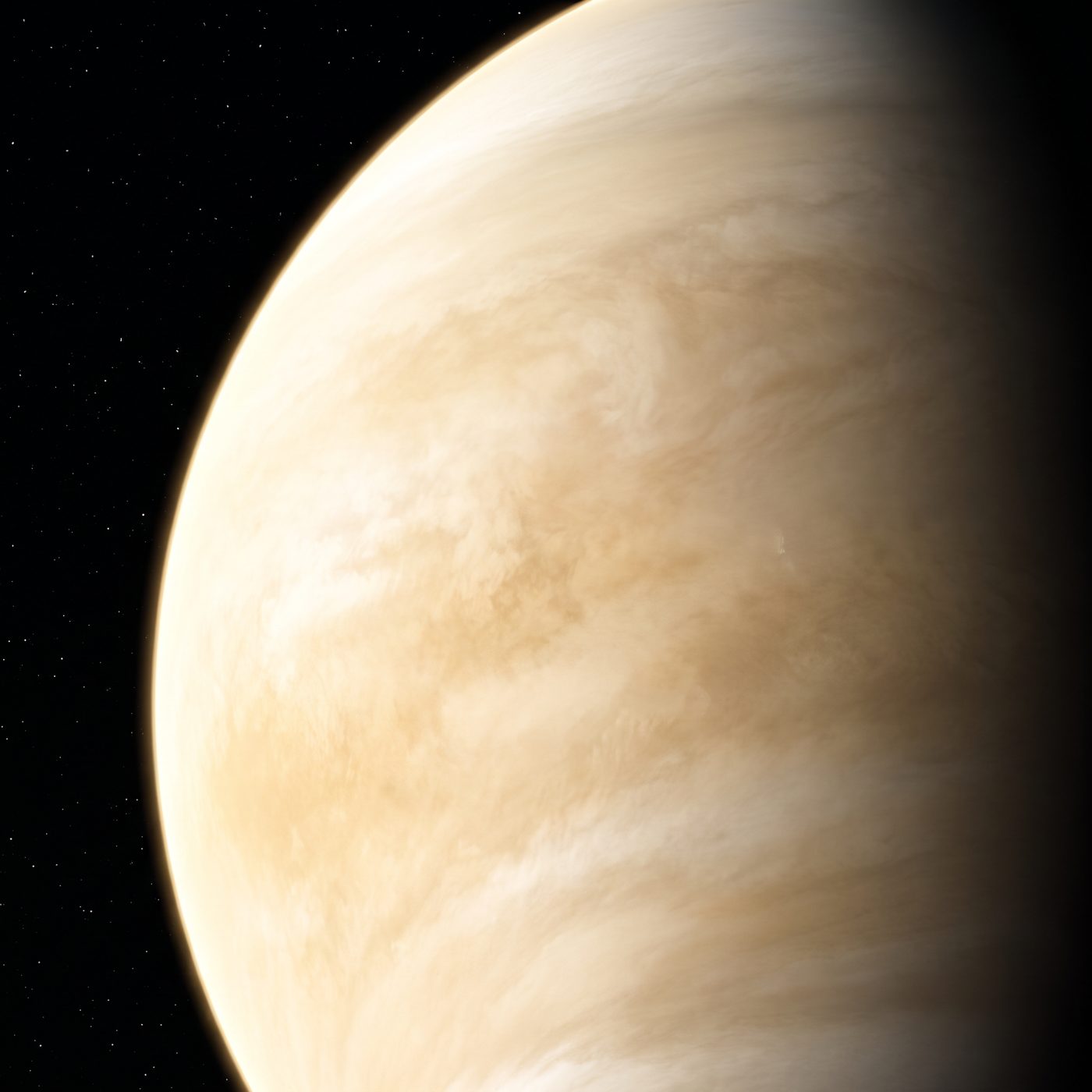 ILLUSTRATION · AI
Venus spins once on its axis every 243 Earth days but circles the Sun every 225, making it the only planet whose day, measured against the stars, is longer than its year.
Venus turns so slowly that it finishes a full lap of the Sun before it finishes a single rotation. Its sidereal rotation period—one complete spin measured against the distant stars—runs about 243 Earth days, while its orbit takes only about 225. No other planet does this. Every other world in the solar system spins many times per orbit; Venus is the lone exception where the spin outlasts the trip.
The precise numbers come from a 2021 paper in *Nature Astronomy* by Jean-Luc Margot and colleagues, who bounced radar off Venus in 21 separate measurements between 2006 and 2020 from Earth-based antennas. They clocked the mean sidereal rotation at 243.0226 days, give or take about a minute and a half. The Royal Belgian Institute for Space Aeronomy lists 243.0185 days for rotation against an orbital period of 224.70096 days—close enough to Margot's figure to show independent teams landing on the same strange answer.
Why Venus's day is longer than its year
The comparison only holds for a specific definition of "day." Astronomers distinguish the *sidereal* day—one turn relative to the stars—from the *solar* day, which is sunrise to sunrise. On Earth the two are nearly identical. On Venus they diverge wildly, because Venus rotates backward.
Venus spins retrograde, the opposite direction from its orbit and from nearly every other planet. As NASA's *Venus: Facts* page notes, that backward spin means the Sun rises in the west there. It also means the planet's orbital motion and its rotation work against each other in a way that shortens the interval between sunrises. The result is a solar day of only about 117 Earth days—actually *shorter* than the 225-day year.
So the headline is true, but with a footnote worth keeping straight: if you stood on Venus's surface and counted the time from one sunrise to the next, that stretch would be shorter than a Venusian year. It's the *sidereal* day, the one measured against the stars rather than the Sun, that outlasts the orbit. The Canadian Space Agency and NASA both state the day-longer-than-year fact plainly; the resolution is which day you mean.
How we know the spin so precisely
The measurement is harder than it sounds, because Venus doesn't spin at a perfectly steady rate. Margot's team found that the rotation period wobbles by roughly 20 minutes from one observation to the next. The culprit is the planet's own atmosphere—a dense, fast-moving blanket that trades angular momentum with the solid body beneath it. When the thick winds push, the surface responds, and the spin speeds up or slows fractionally.
That is why the group needed 21 radar epochs spread across 14 years rather than a single snapshot. Each measurement caught Venus at a slightly different moment in this atmospheric tug-of-war, and only by averaging them could they pin down the true mean. The technique itself is elegant: send a radar pulse, and the way its echo smears across the receiving antennas encodes exactly how fast and which way the surface is turning.
The concrete detail that makes it real is that atmosphere-and-solid handshake. Venus's air is so heavy—about 90 times Earth's surface pressure—that it can measurably shove a planet around. The spin you'd read off a stopwatch depends on when you looked.
What remains open is *why* Venus ended up like this at all. A slow retrograde spin is not what you'd expect from a planet's formation, and researchers still argue over whether a giant ancient impact flipped it, whether solar tides on that massive atmosphere gradually braked and reversed the rotation, or whether some combination did the work. The number is settled. The story behind it is not.
More facts
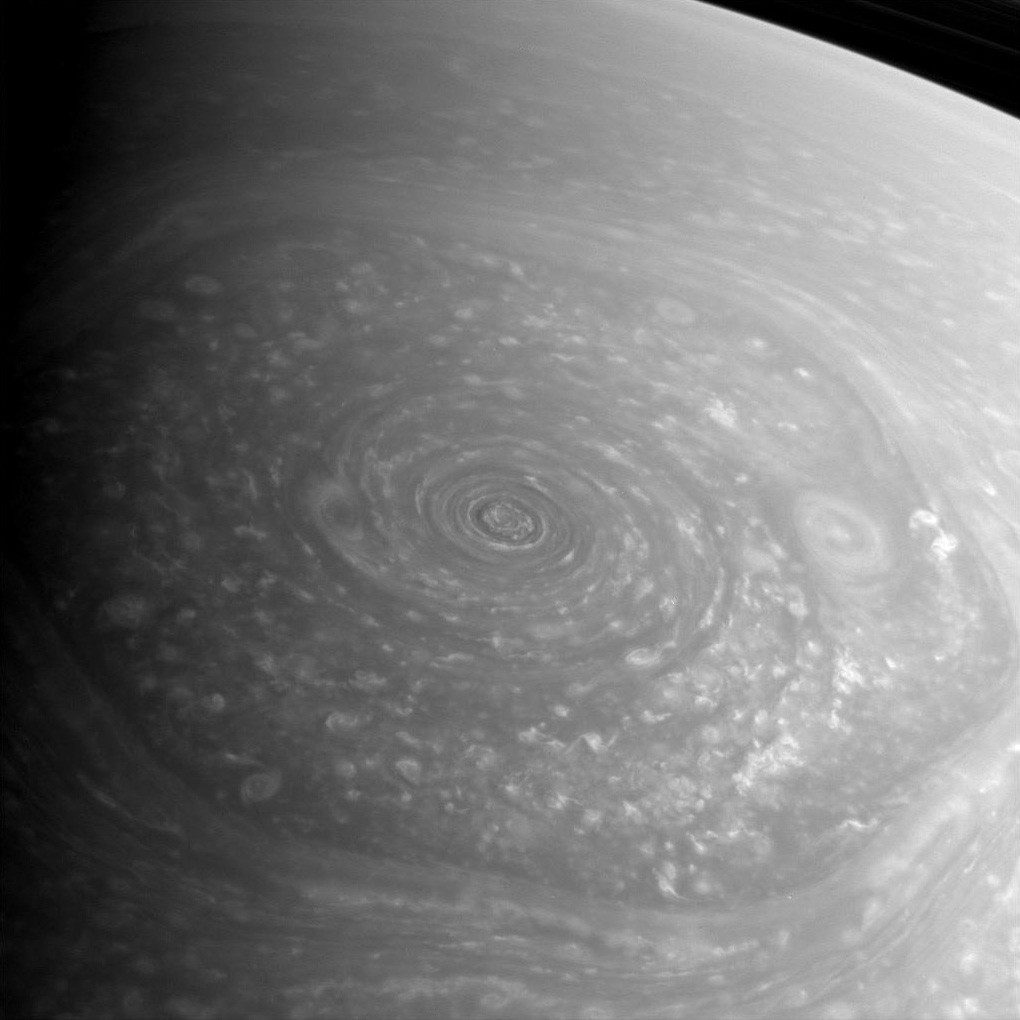
A six-sided storm pattern circles Saturn's north pole. The hexagon spans about 20,000 miles and is a jet stream of 200-mile-per-hour winds, NASA says.
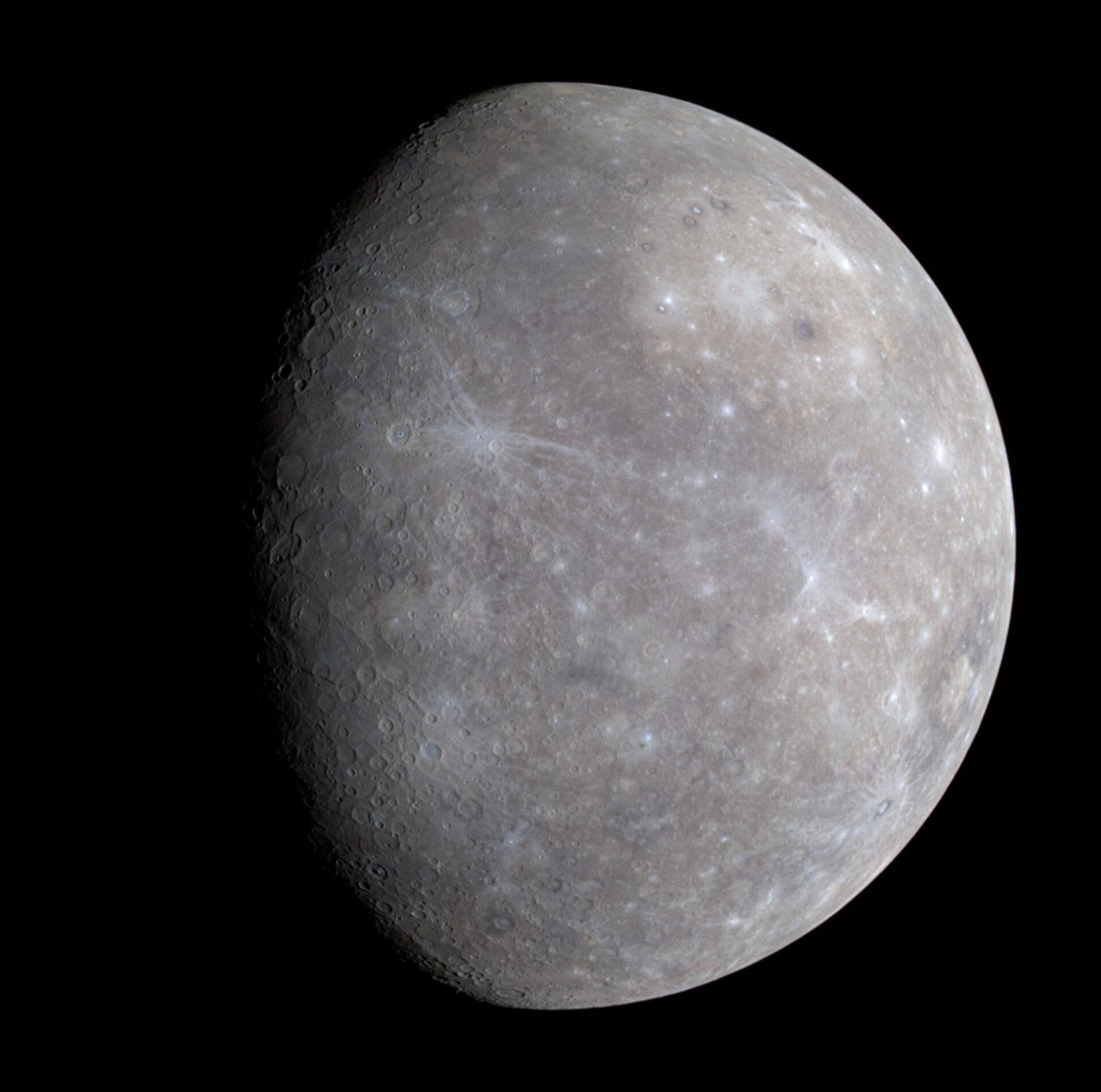
Daytime on Mercury can reach 800 degrees Fahrenheit. With no substantial atmosphere to hold that heat, nights can plunge to minus 290 degrees, NASA says.