A wild blue whale's heart slowed to 2 beats per minute on a deep dive off Monterey Bay in 2019 — the first heartbeat ever recorded in the species.
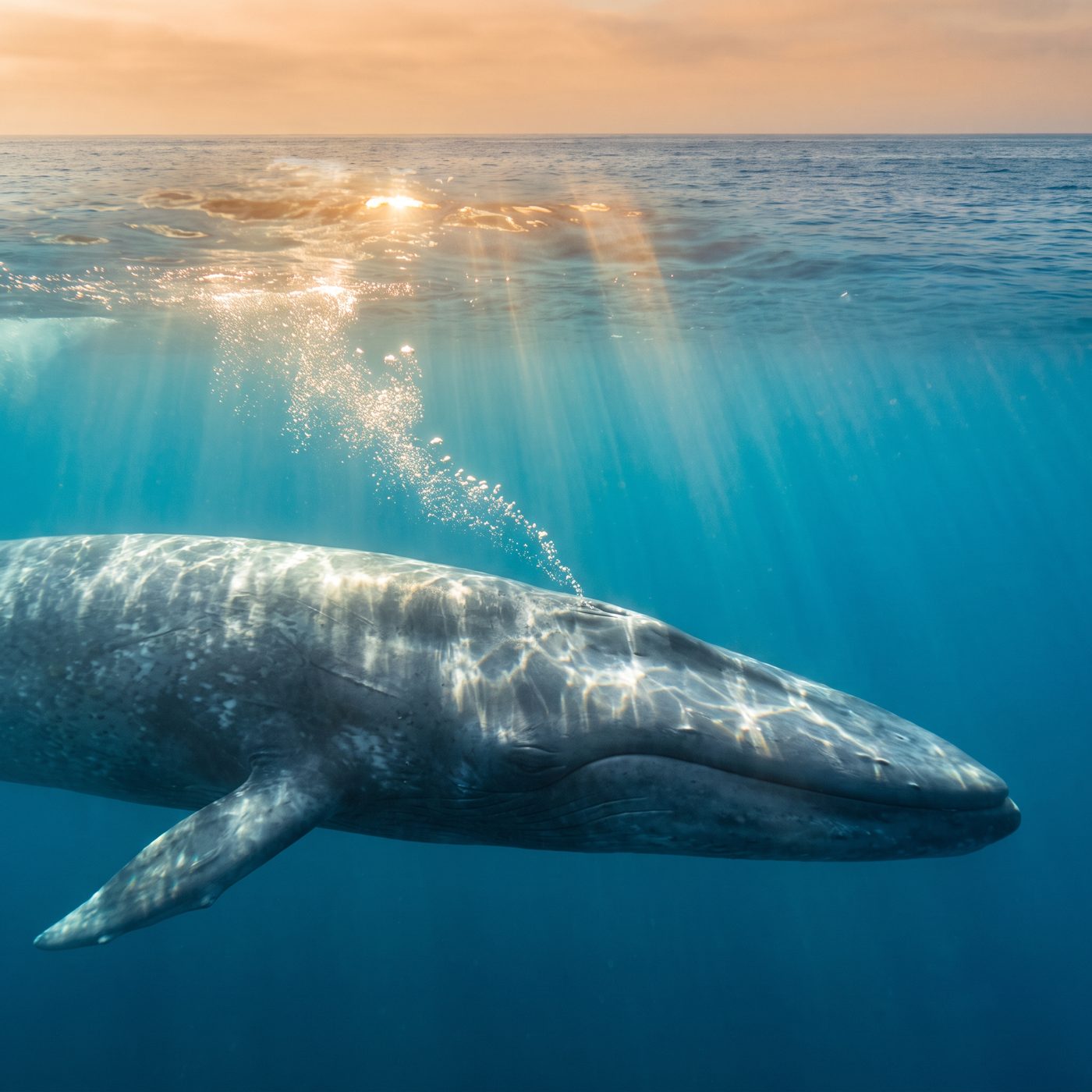 ILLUSTRATION · AI
In 2019, researchers recorded a wild blue whale's heartbeat for the first time and found it dropping to as low as 2 beats per minute during deep dives off California.
On its deepest foraging dives beneath Monterey Bay, the heart of the largest animal that has ever lived beat just twice a minute. At the surface after those dives, the same heart raced to between 25 and 37 beats a minute — a swing the lead scientist called "more than an order of magnitude difference, 10-fold." It was, remarkably, the first time anyone had ever measured a blue whale's heart rate at all.
The recording came from a single 15-year-old male in Monterey Bay, and the team behind it — Jeremy Goldbogen of Stanford, David Cade, John Calambokidis and colleagues — published the results in December 2019 in the Proceedings of the National Academy of Sciences under the fittingly blunt title "Extreme bradycardia and tachycardia in the world's largest animal."
How do you record a blue whale's heartbeat?
You can't exactly ask a wild blue whale to hold still for an EKG. So the researchers built a tag studded with sensors and suction cups, designed to attach to the animal's skin without breaking it. The device carried electrodes — essentially an electrocardiogram — that could pick up the faint electrical pulse of the heart through blubber and muscle.
Getting it in the right place was luck as much as engineering. As the team described, the tag happened to land near the whale's left flipper, close enough to the heart to register a clean signal. Over 8.5 hours, it logged the animal's pulse through repeated foraging dives that reached 184 meters deep and lasted as long as 16.5 minutes.
The pattern that emerged was stark. As the whale descended, its heart slowed dramatically — a phenomenon called bradycardia, common in diving mammals conserving oxygen. Typical diving rates ran between 4 and 8 beats per minute, but at the deepest, stillest moments the tag caught the heart falling to just 2. When the whale surfaced to breathe and reoxygenate its enormous body, the rate shot back up toward its physiological ceiling, 25 to 37 beats a minute.
Why 2 beats per minute is close to the limit
The Stanford team suspected they were watching an animal operating at the very edges of what a heart can do. The low end was so low that it hints at a mechanical constraint on how large a blue whale — which can exceed 100 feet and 150 tons — could ever grow. At the top end, 37 beats per minute is already near the estimated maximum for a heart of that size; there simply isn't much headroom left.
The most demanding moment came during lunge feeding, when the whale opens its mouth and engulfs a volume of water and krill larger than its own body. Even mid-dive, the heart briefly ramped up about 2.5-fold to power that explosive effort, then dropped back down to keep stretching its oxygen supply.
One concrete image sticks: to make those numbers work, the blue whale's heart appears to rely on an unusually stretchy, elastic aortic arch that keeps blood flowing smoothly between beats — a physiological cushion for a pulse that can pause for many seconds at the bottom of a dive.
What remains open is how universal this is. The study rests on a single male over a single afternoon, and while it fits neatly with what physiologists expected from the mass-heart-rate relationship — smaller mammals like mice run at hundreds of beats per minute, larger ones far slower — one whale is not a population. Whether every blue whale flirts this closely with its cardiac ceiling, and whether that ceiling truly caps the size of Earth's biggest animal, is the argument this first heartbeat leaves us to settle.
More facts

In ideal conditions, kelp can grow up to 18 inches in a single day. Kelp forests provide food and shelter for thousands of species, NOAA says.
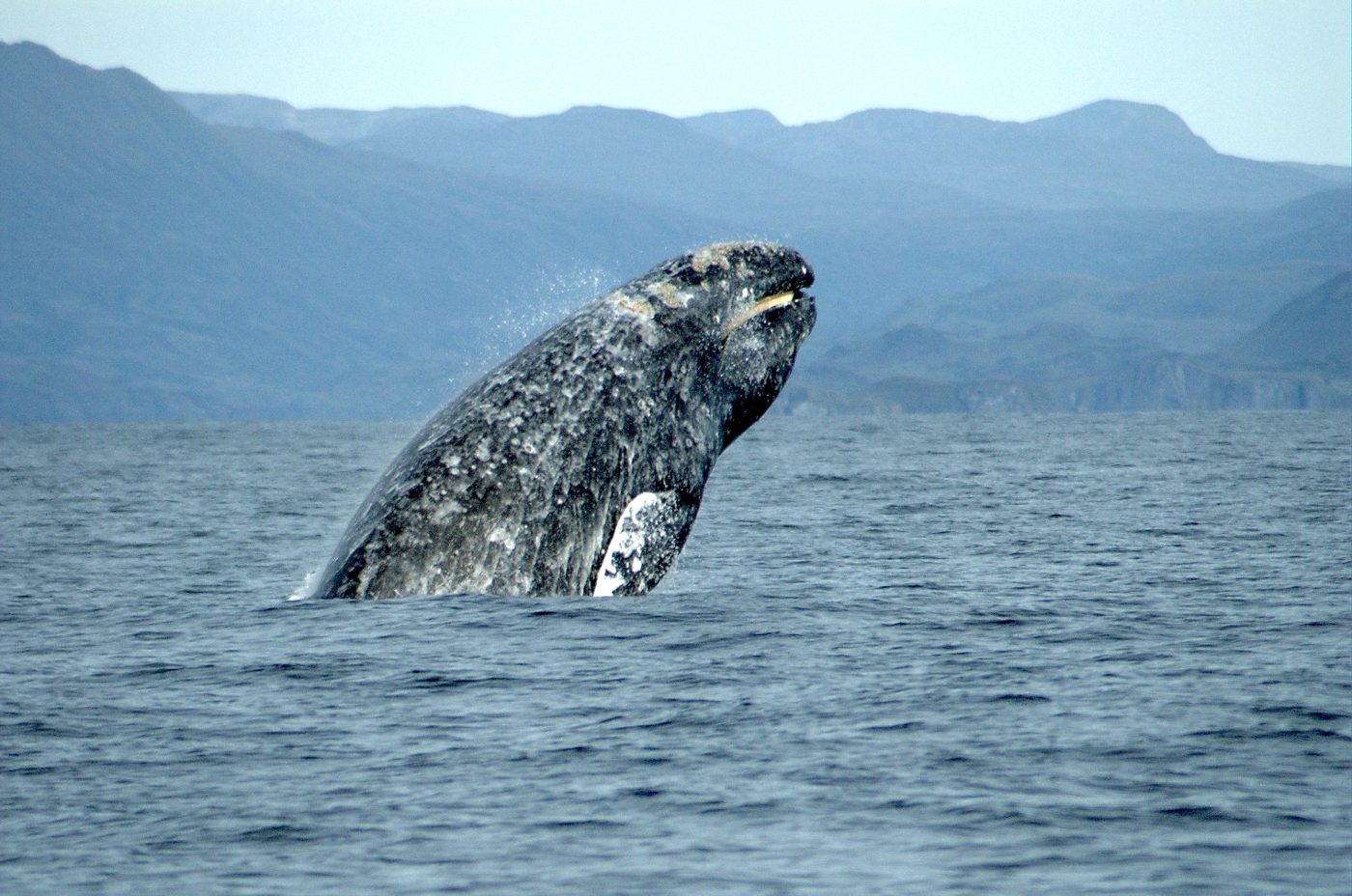
Gray whales travel about 10,000 miles round-trip every year, and some go more than 14,000, one of the longest annual migrations of any mammal, NOAA says.