Cut every nerve from an octopus brain to its hearts, and all three keep beating — in 1980 M. J. Wells found they run without the brain.
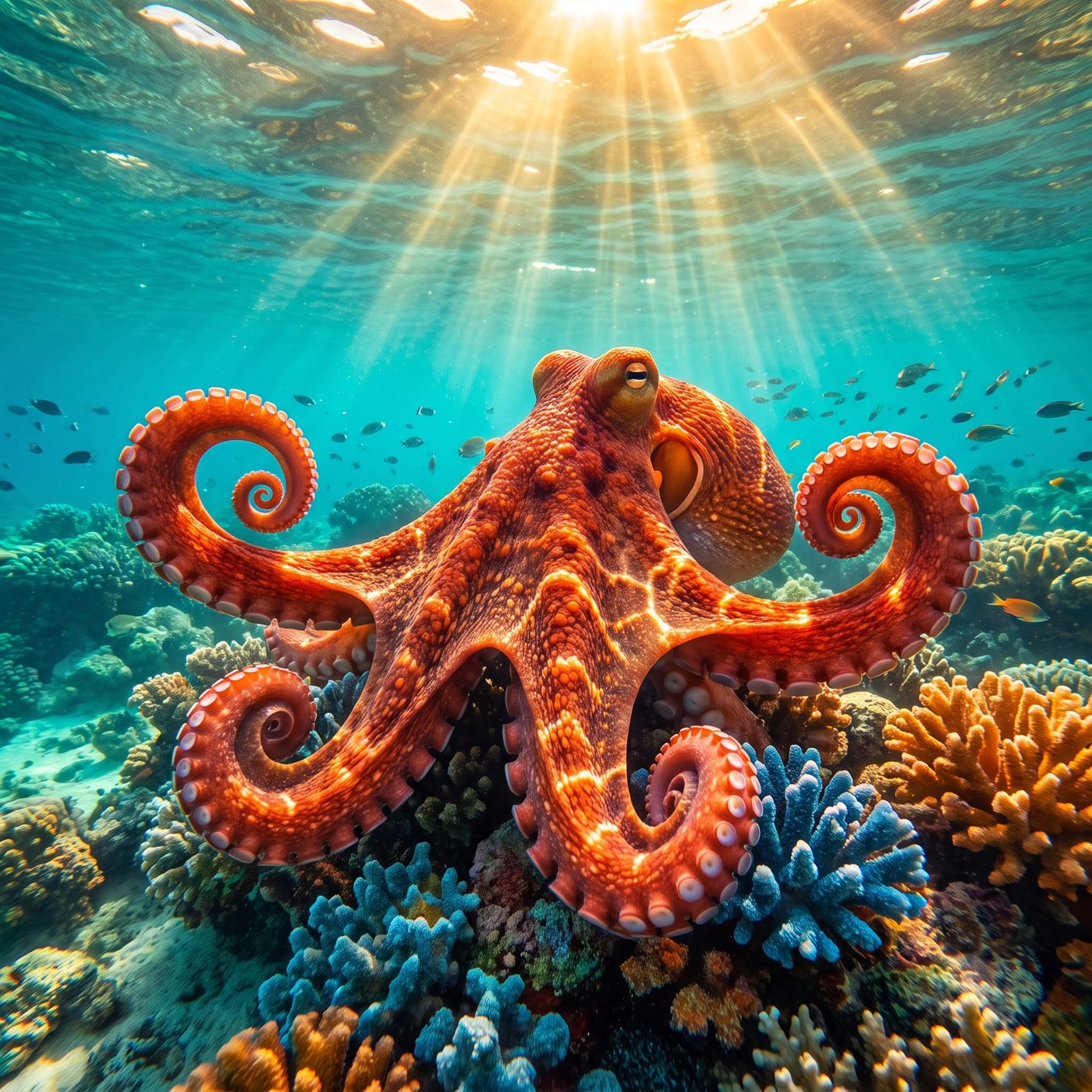 ILLUSTRATION · AI
In a 1980 experiment, the physiologist M. J. Wells cut the nerves linking an octopus's brain to its three hearts and found the hearts kept beating strongly and in coordination anyway.
An octopus has three hearts: two branchial hearts that push blood through the gills, and one systemic heart that drives it to the rest of the body. You might assume the brain keeps that trio in time. Cut the visceral nerves that carry commands from the central nervous system, and you would expect the beat to falter or stop.
It doesn't. When M. J. Wells severed those nerves, the hearts carried on — beating powerfully, and still coordinated with one another, in complete isolation from the brain.
How Wells found the octopus hearts run without the brain
Wells published the work as "Nervous Control of the Heartbeat in Octopus" in the *Journal of Experimental Biology* in April 1980 (volume 85, pages 111–128). The paper is indexed in the U.S. National Library of Medicine's PubMed database under PMID 7373208 and abstracted by NASA's Astrophysics Data System, so anyone can trace the original.
His method was direct. By cutting the visceral nerves that connect the central nervous system to the heart complex, Wells removed the brain's line of communication and then watched what the hearts did on their own. Instead of the disorganized twitching you'd get from muscle with no instructions, the hearts kept up a strong, well-ordered rhythm.
That result told Wells where the timekeeper had to be: not in the brain, but down in the hearts themselves. He argued that the beat is normally set by pacemakers located in the branchial heart and cardiac ganglion complexes — the clusters of nerve cells sitting right at the hearts — and perhaps within the cardiac ganglia specifically. It's worth being precise about his own language: Wells *argued* this. He demonstrated that the hearts don't need the brain to keep time; he proposed the ganglia as the likely local clock, a hypothesis the experiment supports rather than proves outright.
Why the brain still matters, even if it isn't the pacemaker
The finding isn't that the octopus brain is irrelevant to its circulation. It's that the brain isn't the thing generating the beat. The distinction is the whole point.
The nerves Wells cut turned out to have a different job. They aren't needed to start or sustain the normal rhythm, but they do raise cardiac output when the animal exercises — turning the pump up when the body demands more oxygen. And, tellingly, they can stop the hearts entirely when the octopus's mantle movements cease. So the central nervous system acts less like a metronome and more like a throttle: it can push output up, and it can shut things down, but the steady baseline ticks along on its own.
There's a familiar echo here for anyone who has read about the human heart, whose sinoatrial node fires without instruction from the brain — which is why a transplanted heart beats before any nerves reconnect. Wells's octopus work sits in that same tradition of showing that hearts, across very different animals, tend to carry their own clocks.
The concrete image that stays with you is those three hearts, cut off from the brain, still beating in step with one another — a self-governing pump built into a body plan that shares almost no recent ancestry with our own.
What Wells left open is the part still worth arguing over. He located the likely pacemaker in the branchial heart and cardiac ganglion complexes, and suspected the cardiac ganglia themselves, but "argued" and "perhaps" are his own hedges. Exactly which cells set the pace, and how three separate hearts stay synchronized without a central conductor, is the kind of question that a 1980 paper opens rather than closes — and the reason it's still worth citing by name.
More facts

In ideal conditions, kelp can grow up to 18 inches in a single day. Kelp forests provide food and shelter for thousands of species, NOAA says.
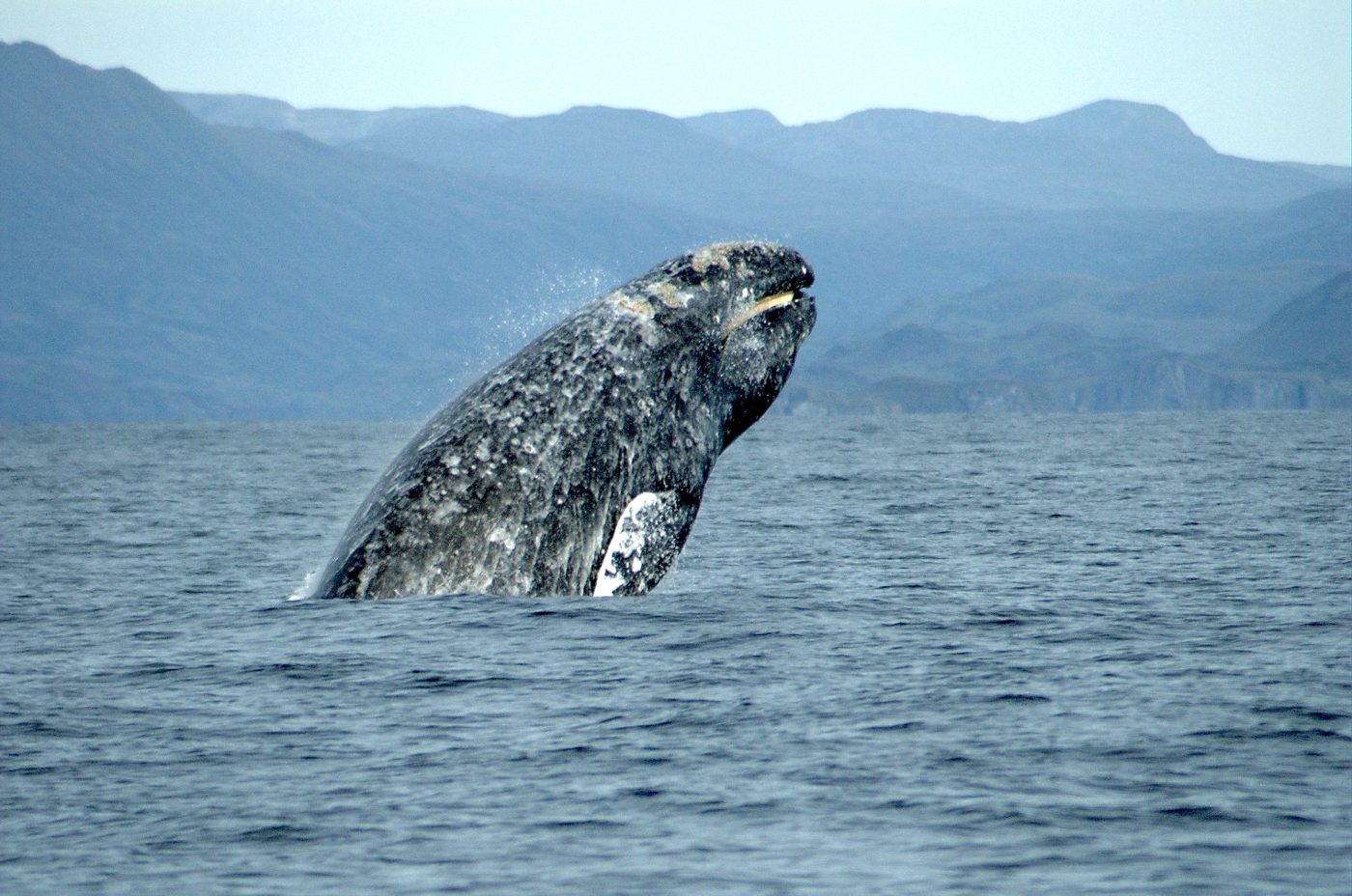
Gray whales travel about 10,000 miles round-trip every year, and some go more than 14,000, one of the longest annual migrations of any mammal, NOAA says.