Each killer whale pod off British Columbia speaks its own dialect of 7 to 17 calls that stays fixed for over 25 years.
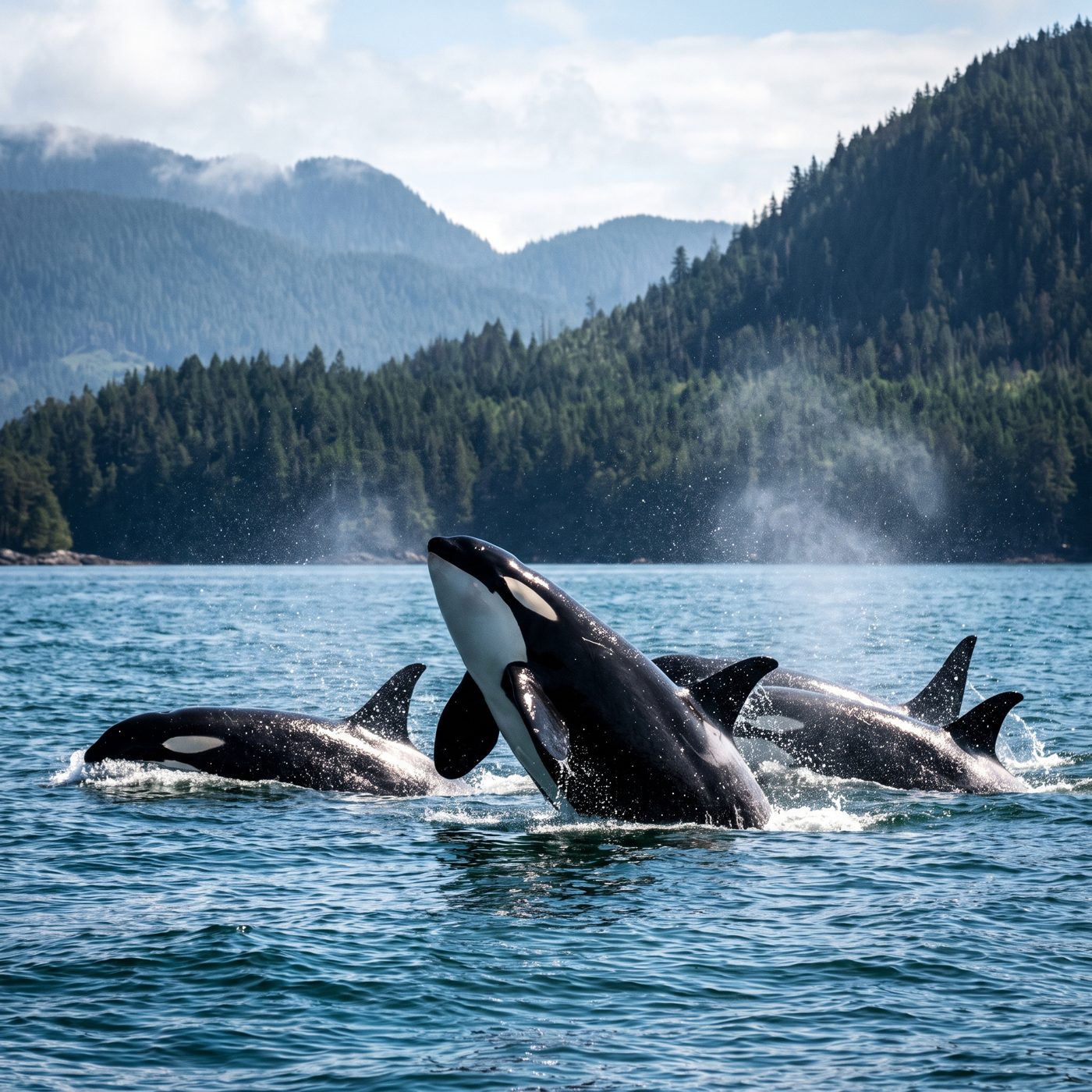 ILLUSTRATION · AI
Each resident killer whale pod off British Columbia uses a distinct set of 7 to 17 call types that can stay nearly unchanged for more than 25 years.
Off the coast of British Columbia, if you drop a hydrophone into the water and listen to a passing group of resident killer whales, the calls you hear can tell you which family you're eavesdropping on. Each pod uses its own set of discrete calls—somewhere between 7 and 17 of them—and that vocal signature is stable enough to persist for over a quarter century, longer than many of the whales making the sounds have been alive when the recording is made.
This is one of the clearest examples in the animal world of what scientists call a vocal tradition: a repertoire of sounds passed down and held constant across generations, not by instinct alone but by learning within the group.
How researchers documented the whale dialects
The finding comes from John K. B. Ford, a marine mammal biologist whose work on these whales spans decades. In a 1989 paper in the *Canadian Journal of Zoology*, Ford reported that each resident pod he studied produced a group-specific repertoire of discrete call types, ranging from 7 to 17, with a mean of 10.7. He expanded on this in a landmark 1991 paper in the same journal, "Vocal traditions among resident killer whales (Orcinus orca) in coastal waters of British Columbia."
Ford's method was patient and direct. Over repeated encounters with 16 different pods, he recorded their vocalizations and cataloged the "discrete calls"—the stereotyped, repeated sounds distinct from the clicks whales use for echolocation. By comparing which calls appeared in which pods, he could map out each group's repertoire and see how much they shared or differed.
What he found was structure. Pods that were closely related shared more call types, forming what Ford called acoustic clans. Pods with no calls in common belonged to different clans entirely, suggesting no recent maternal connection. The dialect, in other words, tracks family history the way a surname might.
The persistence is the part that stops you. By comparing his recordings against archival tapes going back years, Ford concluded that a pod's repertoire "can persist with little change for over 25 years." The calls a pod uses today are, in many cases, the same calls it used before some of its members were born.
Why the dialects matter
That stability is not a curiosity; it's a conservation tool. The Government of Canada leans on Ford's work in its official recovery strategy for killer whales. Environment and Climate Change Canada's 2018 document states plainly that "each resident pod has a unique dialect made up of approximately a dozen discrete calls," citing Ford's 1989 and 1991 papers. Because the dialects are so reliable, listening alone can identify a pod without ever seeing it—useful for tracking small, endangered populations like the Southern Resident killer whales.
The reason the calls stay fixed appears to be social. Resident killer whales live in matrilineal groups; offspring stay with their mothers for life, and calves learn the family's calls by hearing and imitating them. The repertoire is a cultural inheritance, transmitted vocally rather than encoded genetically, which is exactly why closely related pods sound alike and unrelated ones sound foreign.
Here is the seam still worth arguing over. Ford's data show *that* the dialects persist and *that* they map onto lineage, but they don't fully settle *why* the calls exist in the forms they do—whether specific call types carry meaning, signal pod identity to coordinate hunting, or simply drift and stabilize as a byproduct of learning. Researchers continue to debate whether these are functional "words," identity badges, or something in between. What isn't in dispute is that when a British Columbia pod calls out across the dark water, it is speaking a dialect its family has kept, largely intact, for longer than the study that first described it took to unfold.
More facts
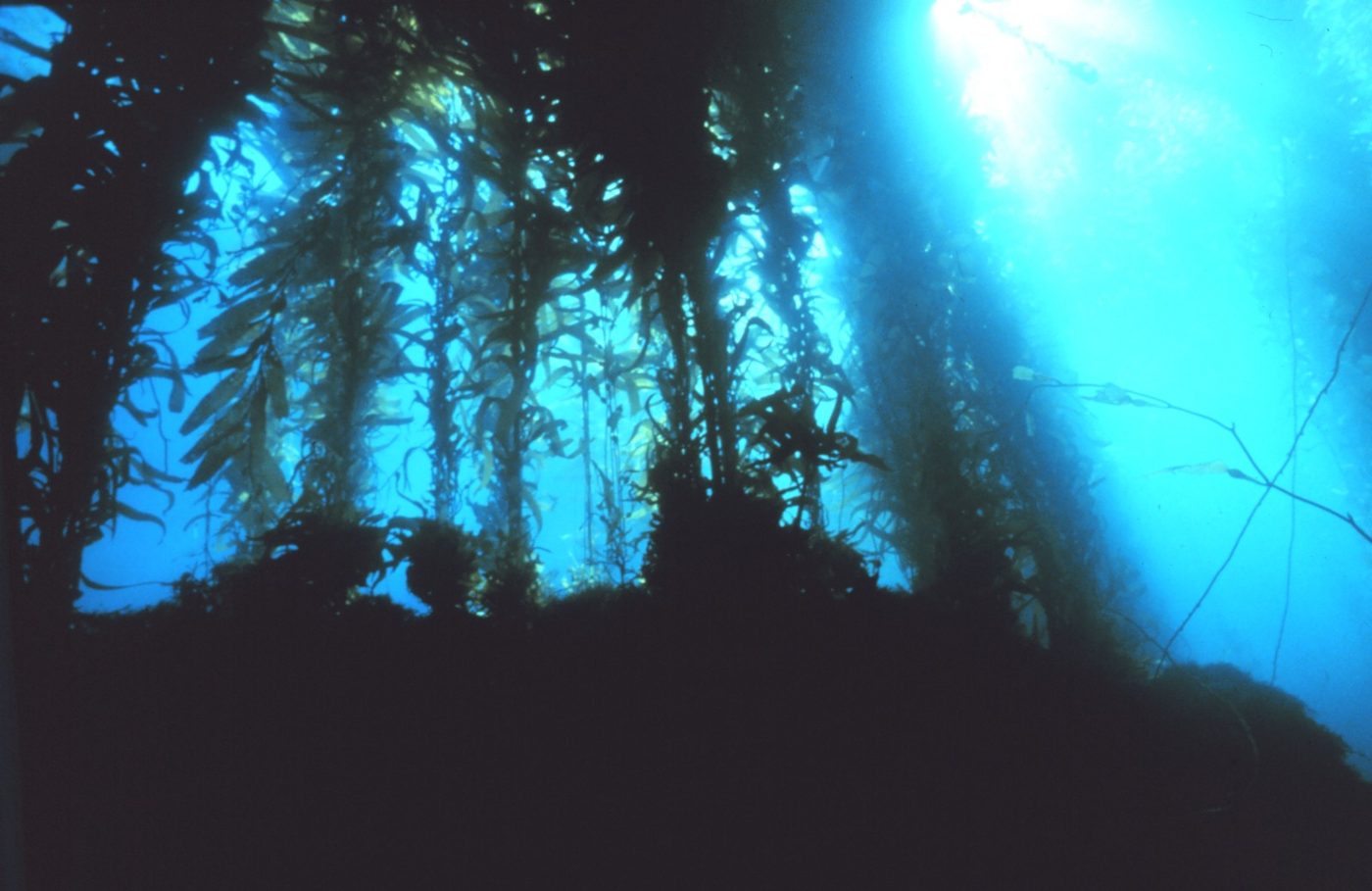
In ideal conditions, kelp can grow up to 18 inches in a single day. Kelp forests provide food and shelter for thousands of species, NOAA says.
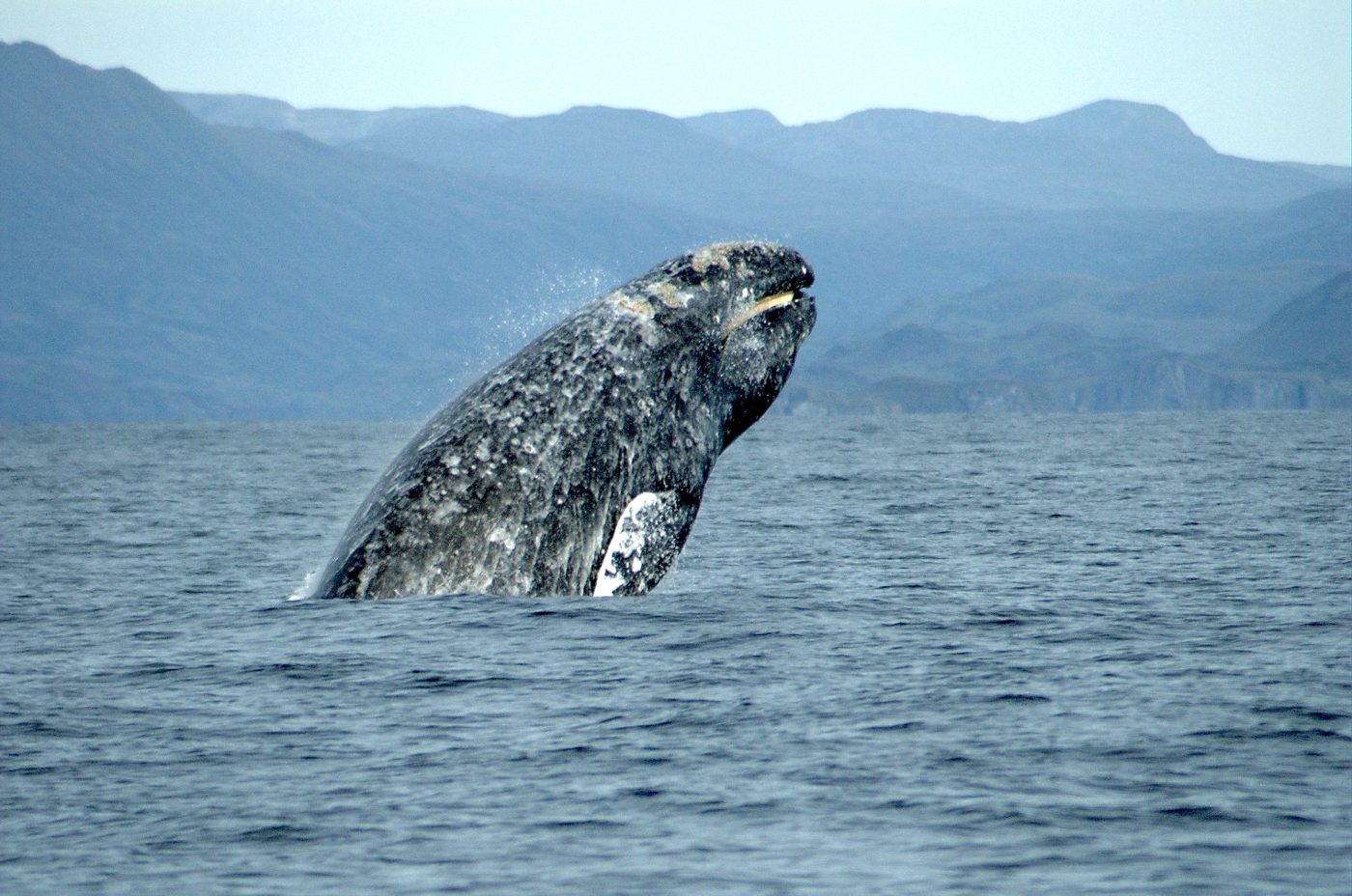
Gray whales travel about 10,000 miles round-trip every year, and some go more than 14,000, one of the longest annual migrations of any mammal, NOAA says.