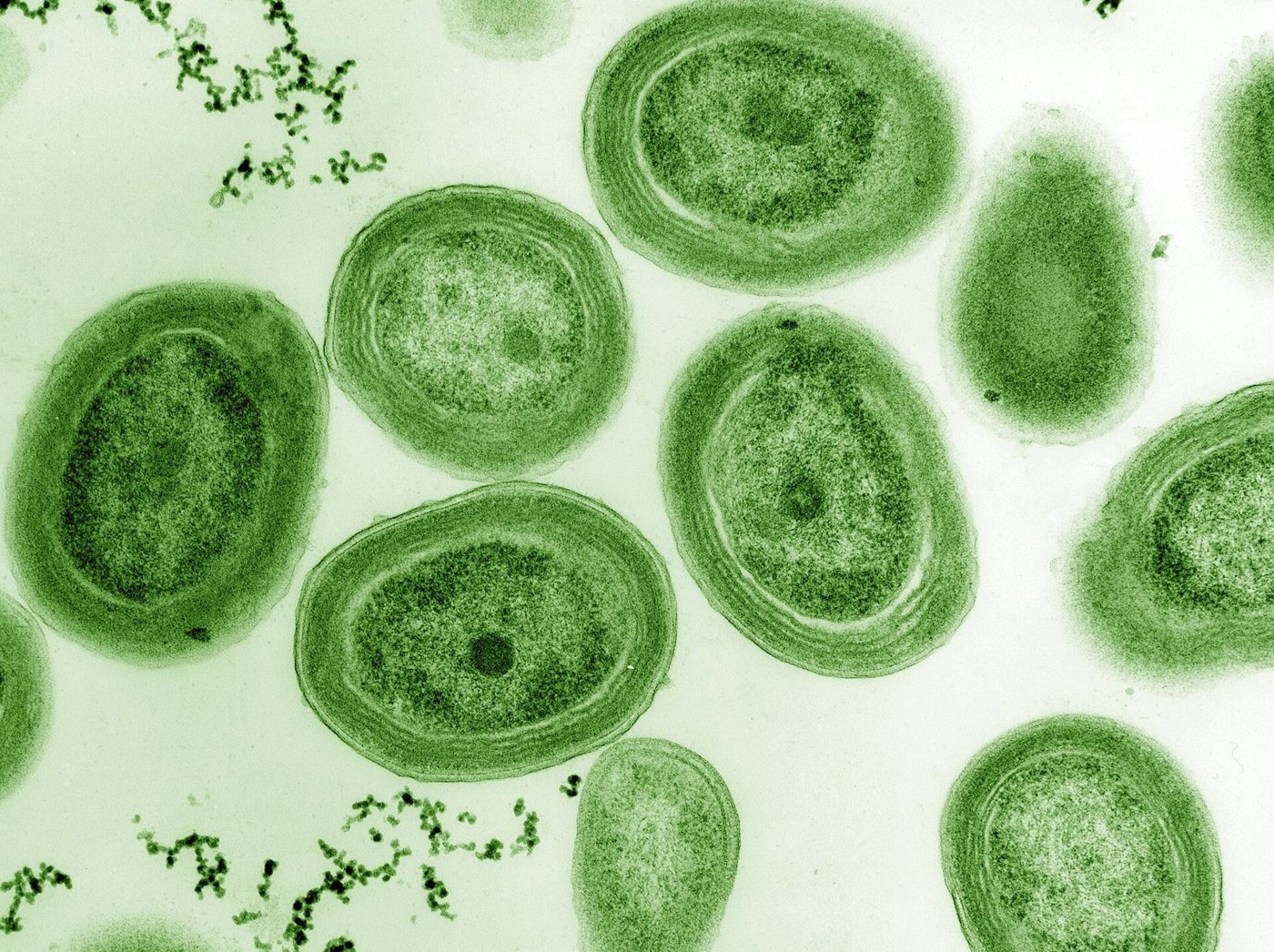
Native bacteria from a flooded uranium mine pulled 95% of dissolved uranium out of the water in 130 days — fed only glycerol.
 ILLUSTRATION · AI
Bacteria already living in a flooded German uranium mine removed about 95% of the dissolved uranium from contaminated water over 130 days when researchers fed them nothing but glycerol.
Give a community of ordinary mine-water bacteria something to eat, and they will quietly strip uranium out of the water around them. That is the finding reported in 2026 by Ashley M. Newman-Portela and colleagues at the Helmholtz-Zentrum Dresden-Rossendorf, published in *Nature Communications*. In a 130-day laboratory experiment, microbes native to a flooded former uranium mine — stimulated with glycerol, a cheap and harmless carbon source — pulled roughly 95% of the dissolved uranium out of the water. As Newman-Portela put it in the accompanying institute statement, only about 5% remained.
What makes the result more than a cleanup trick is what the uranium became.
How bacteria immobilize uranium
Dissolved uranium in mine water usually exists as uranium(VI), a highly soluble, mobile form that travels easily through groundwater. That mobility is exactly the problem at abandoned uranium sites: the metal spreads. To lock it in place, you have to change its chemistry — specifically, to reduce it to a less soluble state that stays put as a solid.
The bacteria in the microcosms did this by respiration. Feeding on glycerol, they used uranium and iron as part of their metabolic electron chemistry, converting soluble U(VI) into solid mineral phases that dropped out of the water. The team identified U(IV) as uraninite, the classic reduced uranium mineral, which behaves much like the naturally stable ore. That part was expected.
The surprise was pentavalent uranium — U(V).
Why pentavalent uranium is the strange part
Uranium(V) is the oxidation state that chemists almost never catch in nature. It sits awkwardly between the common U(VI) and U(IV) states and normally survives only for an instant before disproportionating into the two neighbors. It is the fleeting middle rung on the ladder.
In this experiment, it didn't vanish. Newman-Portela and co-author Evelyn Krawczyk-Bärsch report that some of the uranium was captured as FeU(V)O₄, an iron-uranium compound in which the U(V) is stabilized, along with U(V)-carbonate complexes. And it stuck around: the pentavalent uranium persisted for at least the full 130 days of the experiment. That is not a transient flicker but a durable state — the sort of stability that matters if you're hoping the trapped uranium stays trapped.
FeU(V)O₄ is not entirely new to science. It was first documented in 2020 in depleted-uranium-contaminated soils in Croatia, where it was shown capable of remaining stable for more than 25 years. The Dresden-Rossendorf work adds something the field wanted to see: a living microbial route to forming it, driven by bacteria that were already present in the contaminated water rather than introduced from outside.
The practical appeal is easy to see. There are thousands of legacy uranium mining sites worldwide, and pumping-and-treating their water chemically is expensive and endless. A method that recruits the site's own microbes and feeds them glycerol — food-grade, biodegradable, cheap — points toward a lower-cost, self-sustaining way to hold uranium in place underground rather than repeatedly extracting it.
What's still open
The result is a 130-day microcosm study in the lab, not a treated mine. The obvious open question is durability at scale and over decades: bench conditions are controlled, and a real flooded mine has fluctuating oxygen, temperature, and water chemistry that could re-oxidize U(V) back toward its mobile form. The very fact that U(V) is normally so unstable makes its long-term fate in the field the thing to watch — 130 days of persistence in a flask is encouraging, but 25-year stability in Croatian soil was a different mineral setting entirely.
Whether native bacteria can be reliably steered to build and keep FeU(V)O₄ in the wet, messy interior of an abandoned mine — that is the argument the next round of experiments will have to settle.
- Tier 1 · Primary2026
More facts
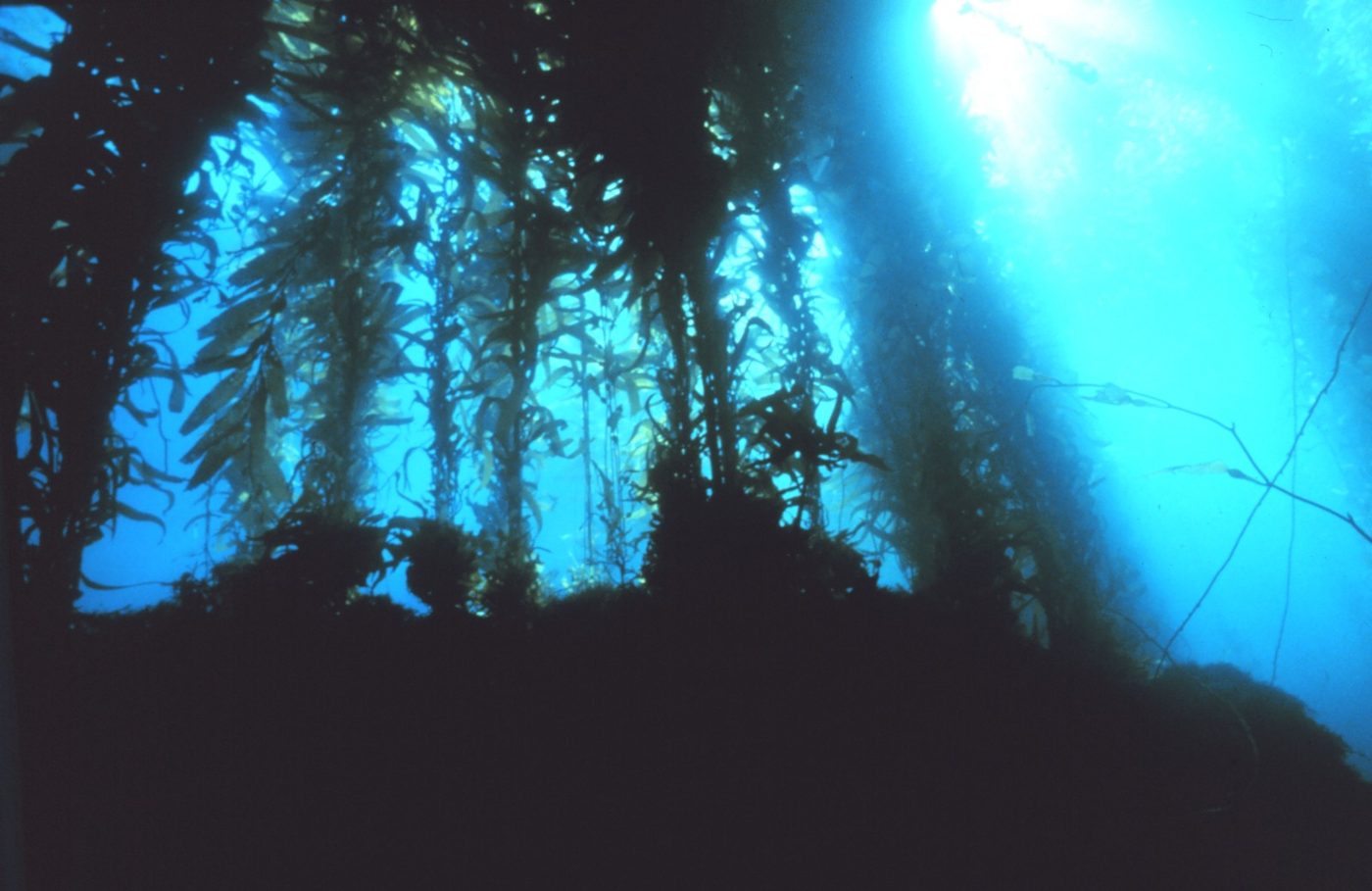
In ideal conditions, kelp can grow up to 18 inches in a single day. Kelp forests provide food and shelter for thousands of species, NOAA says.
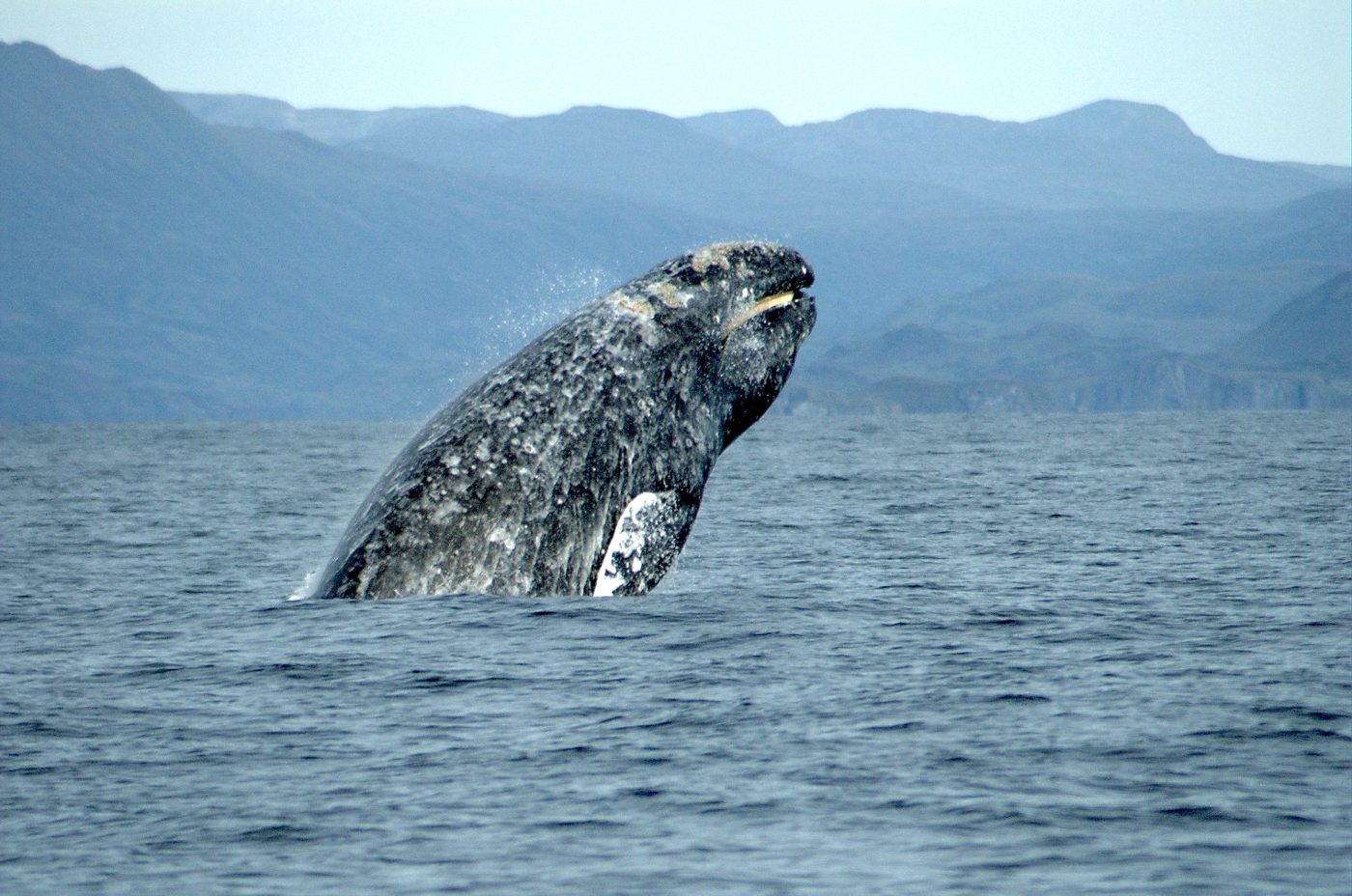
Gray whales travel about 10,000 miles round-trip every year, and some go more than 14,000, one of the longest annual migrations of any mammal, NOAA says.