The Etruscan shrew weighs 2 grams and its heart once hit 1,511 beats per minute — the fastest heartbeat ever recorded in any warm-blooded animal.
 ILLUSTRATION · AI
The Etruscan shrew, at about 2 grams the world's lightest mammal, has a resting heart rate near 835 beats per minute and once registered a single peak of 1,511 — the fastest heartbeat ever documented in a warm-blooded animal.
Hold a paperclip in your palm. That's roughly the weight of a full-grown Etruscan shrew, and inside that sliver of an animal is a heart beating so fast it blurs past anything you can count. At rest and at a mild 22 °C, the shrew's heart averages 835 beats per minute. Push it, and one recorded animal spiked to 1,511 beats per minute — about 25 heartbeats every second, and the highest rate ever reported for any endotherm.
Those numbers come from a 1996 study by Klaus-Dieter Jürgens, Roger Fons, Thorsten Peters, and Silke Sender, published in the *Journal of Experimental Biology*. They measured resting rates of 835 ± 107 beats per minute — that ± is the spread between individual shrews, not measurement wobble — a mean maximum of 1,093, and that one extraordinary peak of 1,511. In a companion analysis published two years later, the team restated the same figures and the same claim: nothing warm-blooded has been clocked faster.
Why such a small animal has such a fast heart
The reason is geometry, and it's unforgiving. As mammals get smaller, their surface area shrinks more slowly than their volume, so tiny bodies lose heat catastrophically fast. To stay warm — and endotherms must stay warm — the shrew has to burn fuel at a furious rate. Burning fuel means delivering oxygen to tissue, and oxygen rides in the blood. A 2-gram heart holds almost no blood per beat, so the only way to move enough is to beat again, and again, absurdly fast.
Jürgens and his colleagues framed their whole paper around exactly this problem: convective oxygen transport in the smallest mammal. The shrew sits at the extreme end of a curve that comparative physiologists have mapped across the entire class. A human heart idles near 60 to 70 beats per minute; a laboratory mouse runs 500 to 600; a blue whale, at the opposite pole of mass, beats as slowly as a handful of times per minute. Plot heart rate against body mass and you get a clean downward slope — and the Etruscan shrew perches right at the top corner, pushing against what a beating heart can physically do.
How we know it isn't just a lucky number
The 1996 measurements weren't a one-off anecdote. Jürgens's team recorded rates across multiple animals under controlled temperature, which is why they could report a mean and a standard deviation rather than a single dramatic reading. The 1,511 figure is explicitly flagged as the single highest value observed, distinct from the group's average maximum of 1,093 — the researchers were careful not to let the outlier stand in for the norm.
The work has held up as the reference point ever since. In 2016, *Lab Animal*, a Nature Research journal, profiled *Suncus etruscus* as the smallest living mammal by mass — between about 1.8 and 3 grams — and cited Jürgens's extreme heart and breathing rates as the reason biologists find the animal so useful as a physiological limit case.
Picture what that pace demands of the tissue itself. Every muscle cell in that heart must relax and refill in the fraction of a second between contractions; at 1,511 beats a minute, the entire cycle of squeeze and release takes about 40 milliseconds. The shrew's metabolism, running at that pitch, forces it to eat close to its own body weight in insects and other prey each day, hunting almost around the clock. A few hours without food can be fatal.
Which leaves the open question physiologists still chew on: is 1,511 a true ceiling, or simply the fastest we happened to catch? No one has yet defined the hard mechanical limit at which a heart muscle can no longer refill between beats. The shrew may already be living at that edge — or something smaller, somewhere, may be beating faster still, waiting to be measured.
More facts

In ideal conditions, kelp can grow up to 18 inches in a single day. Kelp forests provide food and shelter for thousands of species, NOAA says.
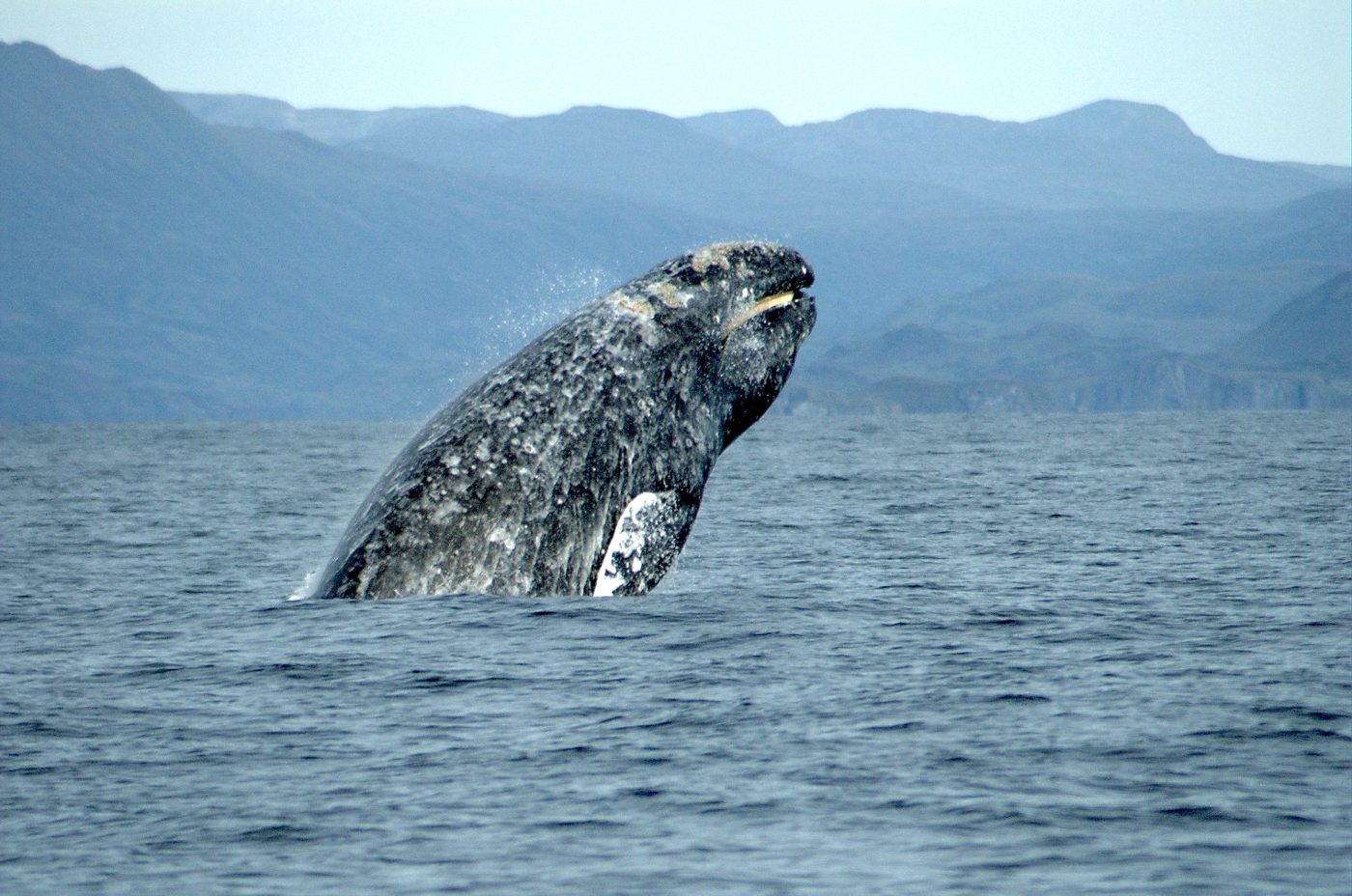
Gray whales travel about 10,000 miles round-trip every year, and some go more than 14,000, one of the longest annual migrations of any mammal, NOAA says.