The fax machine was patented in 1843 — 33 years before the telephone. Alexander Bain's facsimile design beat Bell's phone by three decades.
 ILLUSTRATION · AI
Alexander Bain patented the first facsimile design in 1843, and commercial faxes were traveling between Paris and Lyon a decade before Alexander Graham Bell patented the telephone in 1876.
The fax machine you picture wheezing in a 1980s office is older than the telephone. Alexander Bain, a Scottish clockmaker, received British Patent 9745 for an "Electric Printing Telegraph" on May 27, 1843. That was 33 years before Bell's US Patent 174,465, "Improvement in Telegraphy," was issued on March 7, 1876. The device we file under "outdated" predates the one we still hold to our ears.
How a clockmaker invented the fax before the phone
Bain's insight was to make two pendulums swing in step. One pendulum, sweeping across a raised metal image, would pick up electrical contact line by line; a second, synchronized pendulum at the other end would mark chemically treated paper wherever the current flowed. Scan a picture into pieces, send the pieces down a wire, reassemble them on the far side. That is the core idea behind every fax and, in a real sense, every scanned document since. The McClung Museum of Natural History & Culture at the University of Tennessee, which featured Bain's design in a 2023 "Object of the Month," pins the patent language to "electric printing, and signal telegraphs" — the first facsimile design on record.
Bain's version never worked reliably at scale; keeping two pendulums perfectly in sync across a distance proved harder than the theory suggested. But the concept was sound, and others improved on it.
The one who made it pay was Giovanni Caselli, a Florentine physicist working in France. His "pantelegraph" — a tall, elegant machine standing roughly two meters high — solved the synchronization problem well enough to run as a business. On February 16, 1865, a commercial facsimile service opened between Paris and Lyon, carrying signatures and handwritten messages between the two cities. That date comes from Anton Huurdeman's *The Worldwide History of Telecommunications* (Wiley, 2003), and it is corroborated by John Liffen's 2012 paper for the IEEE HISTELCON conference, "A Florentine in Paris: The Caselli pantelegraph and its successors, 1859–1871," which describes it as the first commercial facsimile service. Banks used it to verify signatures, a fraud check performed by wire more than a century before the modern office fax found the same purpose.
So the timeline is not close. A working, paying fax network existed in France in 1865. Bell's telephone patent was still eleven years in the future.
Why we assume the fax came after the phone
The trick our memory plays is one of visibility, not chronology. The telephone became a household object almost immediately and stayed one for a century, so it feels foundational. The fax stayed a specialist tool — used by banks, newspapers, and militaries — until a wave of cheaper machines put it on office desks in the 1970s and 1980s. That late-century boom is when most people first met a fax, so the machine got mentally stamped with a birthdate it never had.
It is worth being precise about the dates, because the record isn't perfectly tidy. The McClung Museum's write-up gives 1863 for the Paris–Lyon service, but the academic sources — Huurdeman, Liffen, and Robert Burns's *Communications: An International History* (IET, 2004) — converge on 1865, so that is the figure to trust. Bain's 1843 patent and Bell's 1876 patent, by contrast, are fixed points you can read in the documents themselves.
What remains genuinely arguable is what we should call "first." Bain patented a design that barely functioned. Caselli built one that ran a business. Bell built the machine that changed how the world talked. If "invented" means the first patent, the fax wins by 33 years. If it means the first thing that actually worked in daily use, the fax still wins by a decade. Only if "invented" means the machine that reshaped everyday life does the telephone take the prize — and even then, the humble fax got there first.
More facts
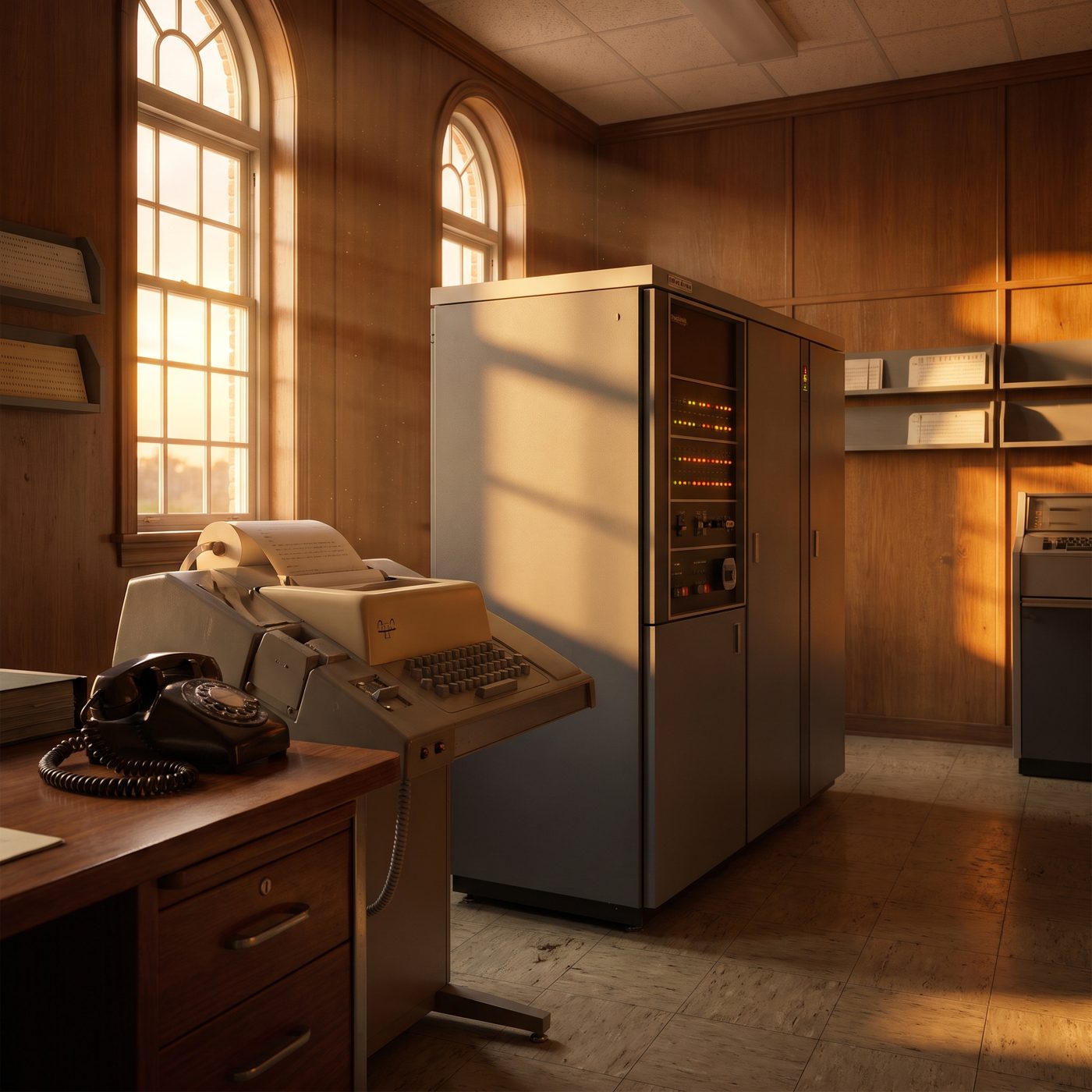
The internet's first message was 'lo' — on October 29, 1969 the receiving computer crashed after just two of the five letters sent.

The first message ever sent over the internet was 'LO' — the system crashed on October 29, 1969 as Charley Kline typed the 'G' in 'LOGIN.'