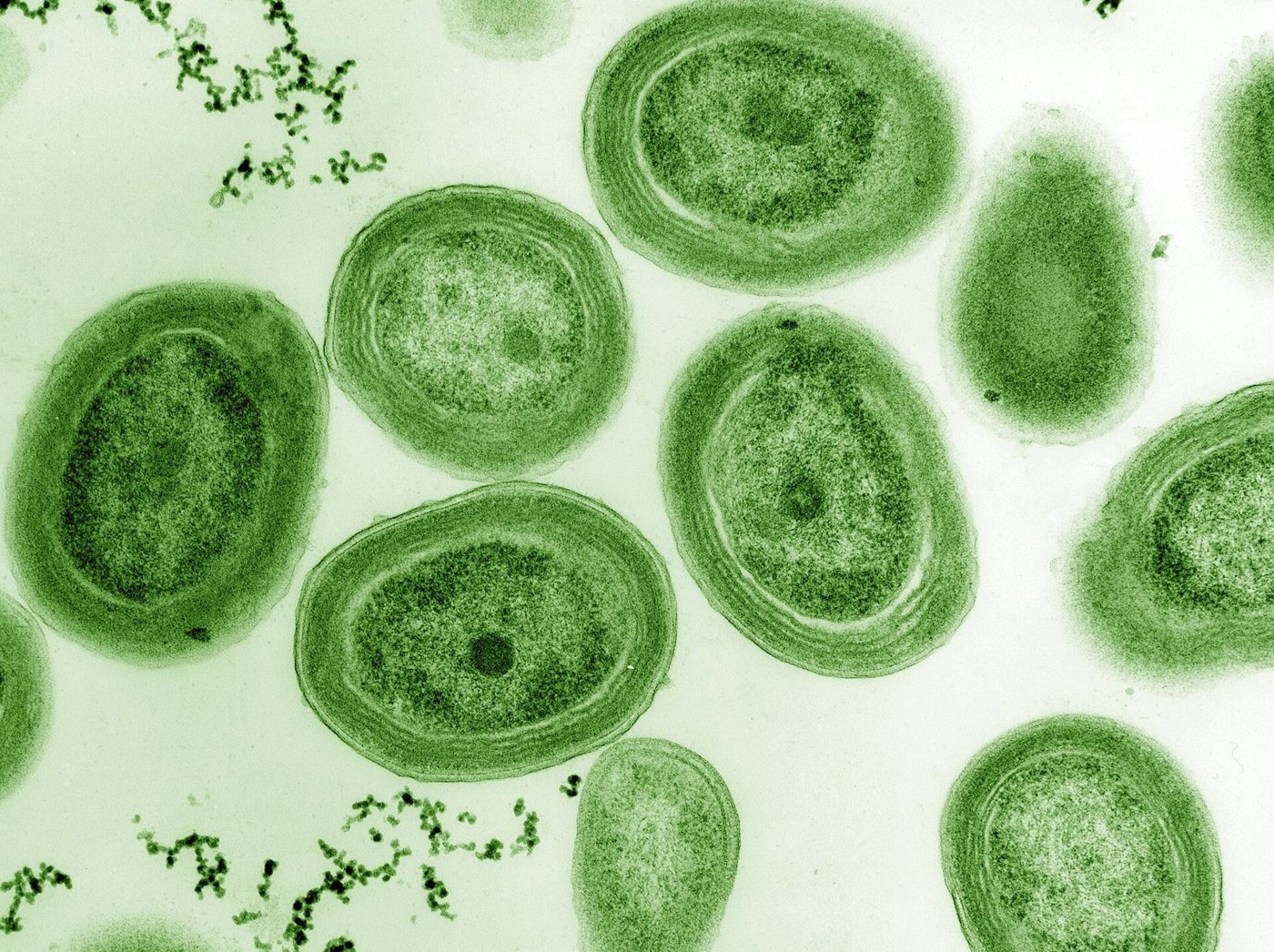
The largest living thing on Earth is a fungus in Oregon: one Armillaria ostoyae covering 2,385 acres — 3.7 square miles.
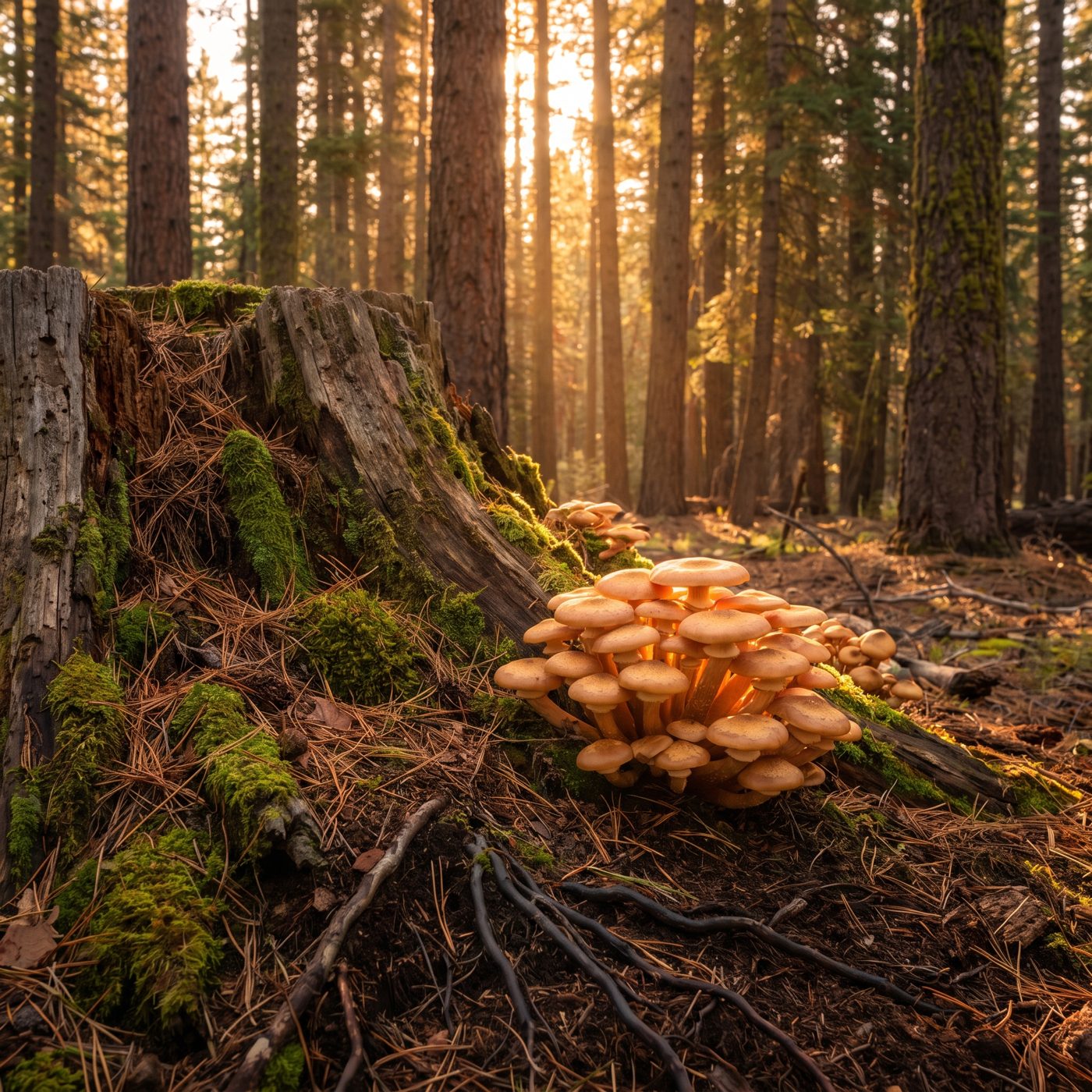 ILLUSTRATION · AI
A single Armillaria ostoyae fungus in Oregon's Malheur National Forest spreads across roughly 965 hectares — about 2,385 acres, or 3.7 square miles — making it the largest documented living organism on Earth by area.
Beneath the mixed-conifer forest of the Prairie City Ranger District in eastern Oregon, one fungus has quietly claimed the title of largest living thing on the planet. It covers approximately 965 hectares — 2,385 acres, roughly 3.7 square miles — as a single genetic individual, or genet. From one edge to the far reaches of the same organism, the maximum distance measured between sampled points was about 3,810 meters, nearly two and a half miles of the same continuous being.
The species is *Armillaria ostoyae*, a root-rot pathogen that kills conifers as it feeds. Most of it is invisible. What you'd see aboveground is honey-colored mushrooms in the fall and, if you peeled back the bark of a dying tree, white fans of mycelium and black bootlace-like structures called rhizomorphs. Those rhizomorphs are how the fungus travels — spreading root to root through the soil, killing one tree and moving on to the next, expanding its territory across centuries.
How researchers proved it was one organism
The measurement comes from a study by Brenda A. Ferguson, Tara A. Dreisbach, Catherine G. Parks, Gregory M. Filip, and Craig L. Schmitt, published in the *Canadian Journal of Forest Research* in 2003 (volume 33, pages 612–623). Working in the Blue Mountains of northeast Oregon for the U.S. Forest Service, the team set out to map the coarse-scale population structure of pathogenic *Armillaria* across the forest.
The hard part is proving that mycelium found under a tree here is the same individual as mycelium found thousands of meters away. Ferguson and colleagues used two distinct methods together. First, PCR-based DNA diagnostics identified which *Armillaria* species each sample belonged to. Then, to sort individuals within *A. ostoyae*, they ran somatic-incompatibility pairings: when you culture two fungal isolates side by side, tissue from the same genet fuses seamlessly, while tissue from different genets forms a visible dark rejection line at the contact zone. Sample after sample, the same individual "accepted" its own tissue.
Those pairings revealed five separate *A. ostoyae* genets in the study area. The largest of the five was the record-holder — 965 hectares of a single, genetically identical organism, which the Forest Service's own "Humongous Fungus" factsheet, adapting the 2003 study, called the largest known fungus genet in the world.
Why it counts as the biggest living thing
Calling a fungus the "largest living thing" invites an obvious objection, and it's worth being precise about what the record actually claims. The Malheur *Armillaria* is the largest documented living organism by *area* — the ground it occupies as one continuous genetic individual. That's a different measure than mass or volume, where a giant sequoia or an aspen clone might contend. But by extent, nothing verified beats it: a single organism draped across nearly four square miles of forest floor.
Estimating its age is trickier and more contested. Because *Armillaria* spreads at a roughly measurable rate through the soil, researchers can back-calculate how long an organism this size would take to grow — figures often cited run to well over a thousand years, and some estimates reach several thousand. Those numbers depend on assumptions about spread rate and whether the organism grew steadily, which is exactly the kind of thing that can't be dug up and counted like tree rings.
So the size is mapped and the individuality is tested; the age is where the honest argument lives. What's not in dispute is the strange fact underfoot: a predator the size of a small town, patient enough to kill a forest one tree at a time, and old enough that no one alive can say for certain when it began.
More facts
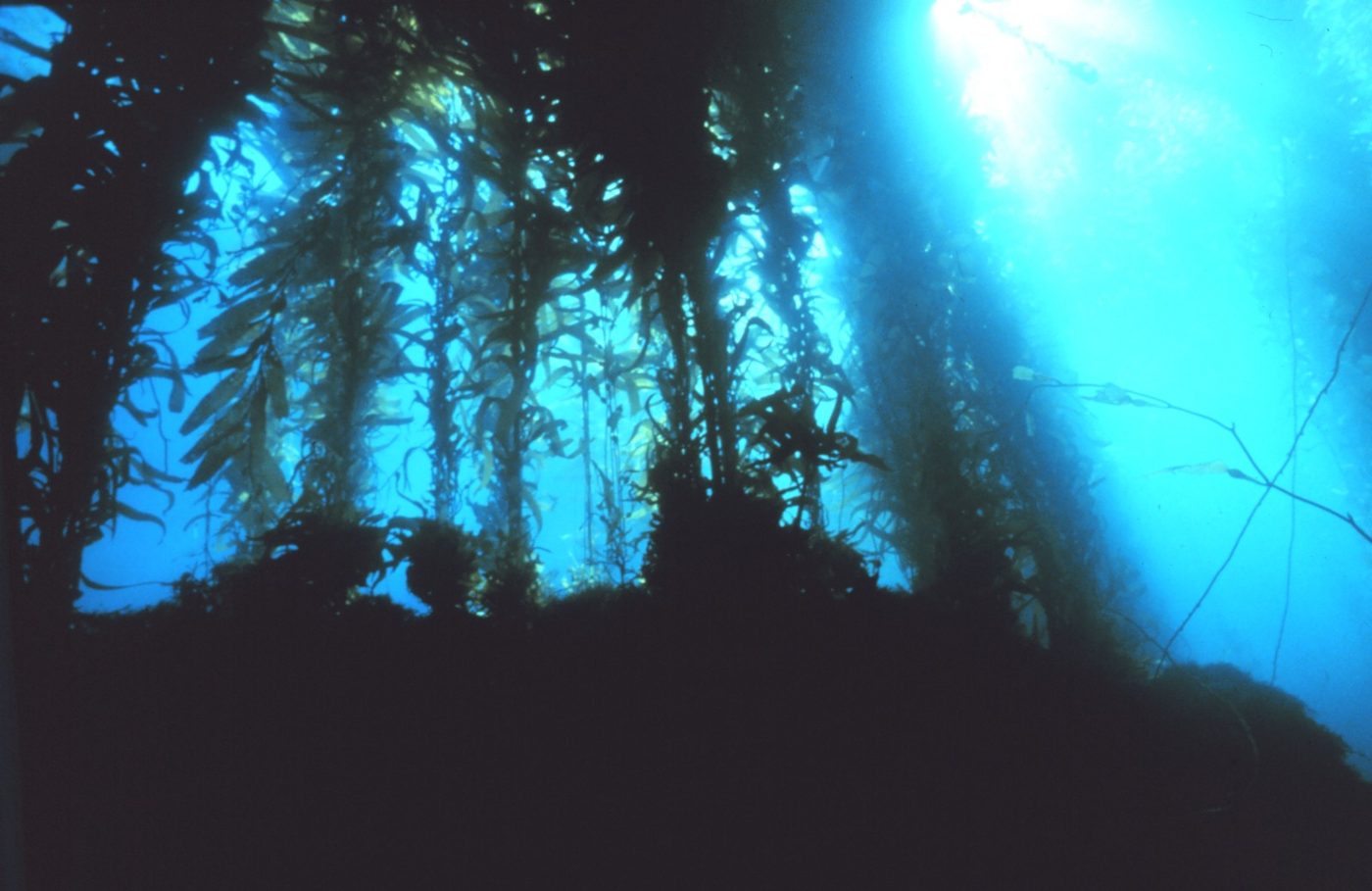
In ideal conditions, kelp can grow up to 18 inches in a single day. Kelp forests provide food and shelter for thousands of species, NOAA says.
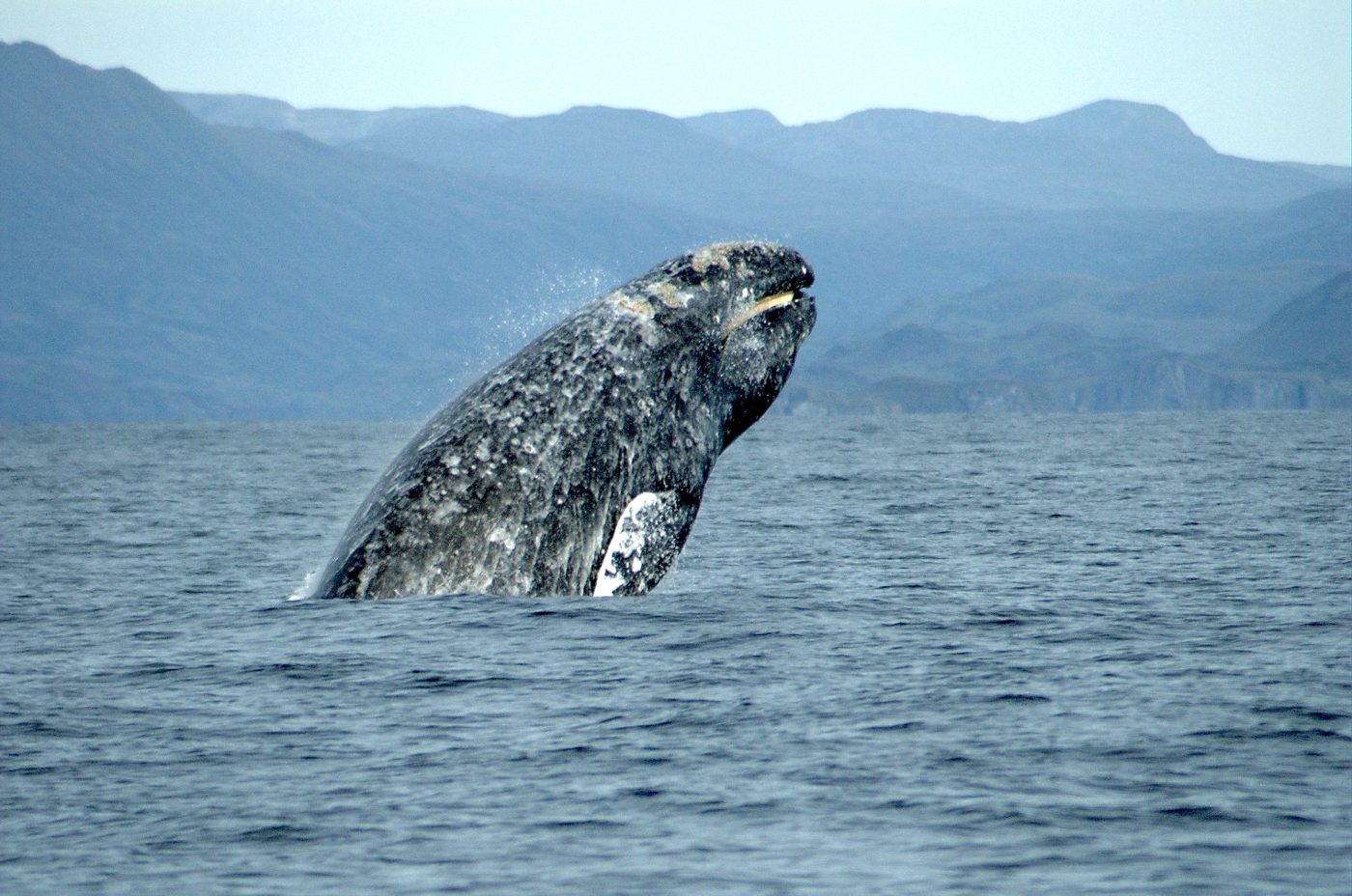
Gray whales travel about 10,000 miles round-trip every year, and some go more than 14,000, one of the longest annual migrations of any mammal, NOAA says.