The rechargeable lithium battery in your phone was patented in 1977 by Exxon — the oil company — with inventor M. Stanley Whittingham.
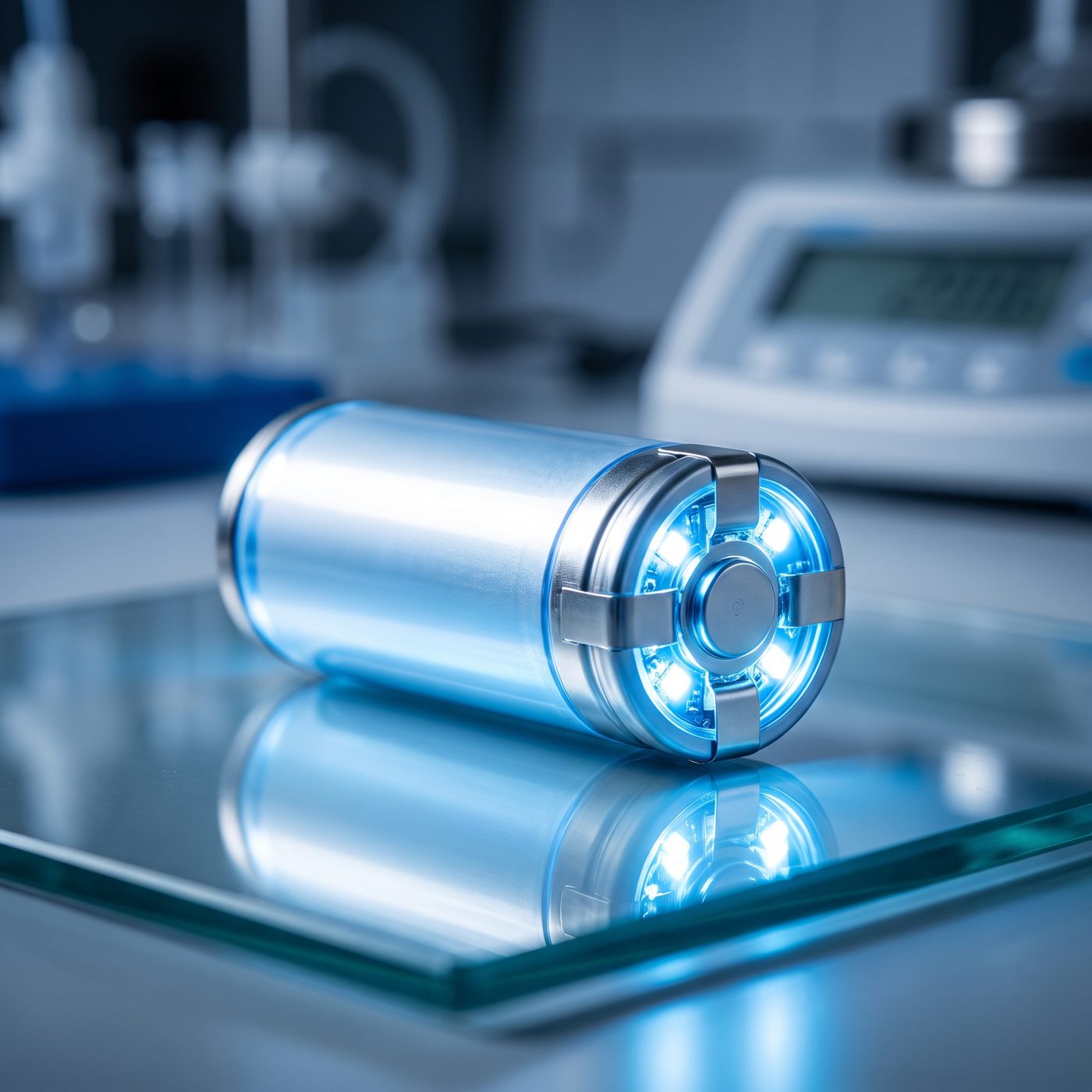 ILLUSTRATION · AI
The core idea behind the rechargeable lithium battery was patented in 1977 by Exxon Research and Engineering, with M. Stanley Whittingham named as the inventor.
The rechargeable battery in your phone traces back to an oil company. U.S. Patent 4,009,052, titled "Chalcogenide Battery," was filed by Exxon Research and Engineering Co. on April 5, 1976, and granted on February 22, 1977. The named inventor was M. Stanley Whittingham, and the patent describes a cell using lithium as the anode-active material and titanium disulfide as the cathode-active material — the essential architecture of a rechargeable lithium battery.
The patent record is unambiguous about who did the work and who owned it. Justia's docket data lists application number 5/673,696, the April 1976 filing, the February 1977 grant, Whittingham as inventor, and Exxon Research and Engineering Co. as assignee. Google Patents carries the same bibliographic information alongside the specification's own language naming lithium and titanium disulfide as the active materials on each electrode.
Why an oil company was building batteries
In the 1970s, the oil crisis had major energy companies hedging their bets on where power would come from next. Exxon ran a serious research operation, and Whittingham — a chemist who had come from Stanford — was working there on how energy might be stored. His answer turned on a phenomenon called intercalation: the ability of certain layered materials to slot ions in and out of their crystal structure without falling apart.
Titanium disulfide is one of those layered materials. Its atomic sheets are stacked like pages, with gaps between them wide enough to accept lithium ions. In Whittingham's cell, lithium ions moved out of the metal anode, traveled through the electrolyte, and lodged themselves reversibly between the sheets of TiS2. Because the host structure stayed intact, the process could run backward. Charge, discharge, repeat. That reversibility is the whole reason a battery can be "rechargeable" rather than a one-time chemical spend.
In a 2021 paper in Nature Energy titled "Lithium titanium disulfide cathodes," Whittingham himself looked back on this chemistry as the origin of the first rechargeable lithium batteries built on reversible lithium intercalation into layered TiS2. The account comes from the inventor decades later, describing the same materials the 1977 patent had claimed.
How we got from Exxon's cell to the phone in your hand
Whittingham's design worked, but it had a dangerous flaw. Metallic lithium is reactive, and cells built on a pure lithium anode were prone to forming spiky deposits called dendrites that could pierce the cell and cause fires. Exxon's version never became a mass-market product.
The fix came from other hands. John Goodenough identified higher-voltage oxide cathodes in the early 1980s, and Akira Yoshino built a safer, commercially viable cell later that decade by swapping the troublesome lithium metal for a carbon anode that also stored lithium by intercalation. Sony commercialized the lithium-ion battery in 1991. In 2019, the Nobel Prize in Chemistry went jointly to Whittingham, Goodenough, and Yoshino — an acknowledgment that the working idea started with the intercalation cell described in patent 4,009,052.
The vivid detail worth holding onto is that the layered-sheet trick never disappeared. The lithium in your phone still moves by intercalation, sliding in and out of a host lattice exactly as it did between titanium disulfide's atomic pages in Whittingham's original cell. The materials changed; the mechanism did not.
What remains genuinely arguable is how much credit the patent deserves. A document filed in 1976 named the chemistry, but the battery that actually shipped fifteen years later used a different cathode and a different anode. Whether "the first rechargeable lithium battery" belongs to the concept in Exxon's patent or to the safe, manufacturable cell that made it useful is a question the Nobel committee answered by splitting the prize three ways — and one that engineers and historians still frame differently depending on where they think an invention truly begins.
More facts
The internet's first message was 'lo' — on October 29, 1969 the receiving computer crashed after just two of the five letters sent.
The first message ever sent over the internet was 'LO' — the system crashed on October 29, 1969 as Charley Kline typed the 'G' in 'LOGIN.'