The world's first feature film, Australia's 1906 Kelly Gang, cost £1,000 to make — and returned £25,000 to its backers.
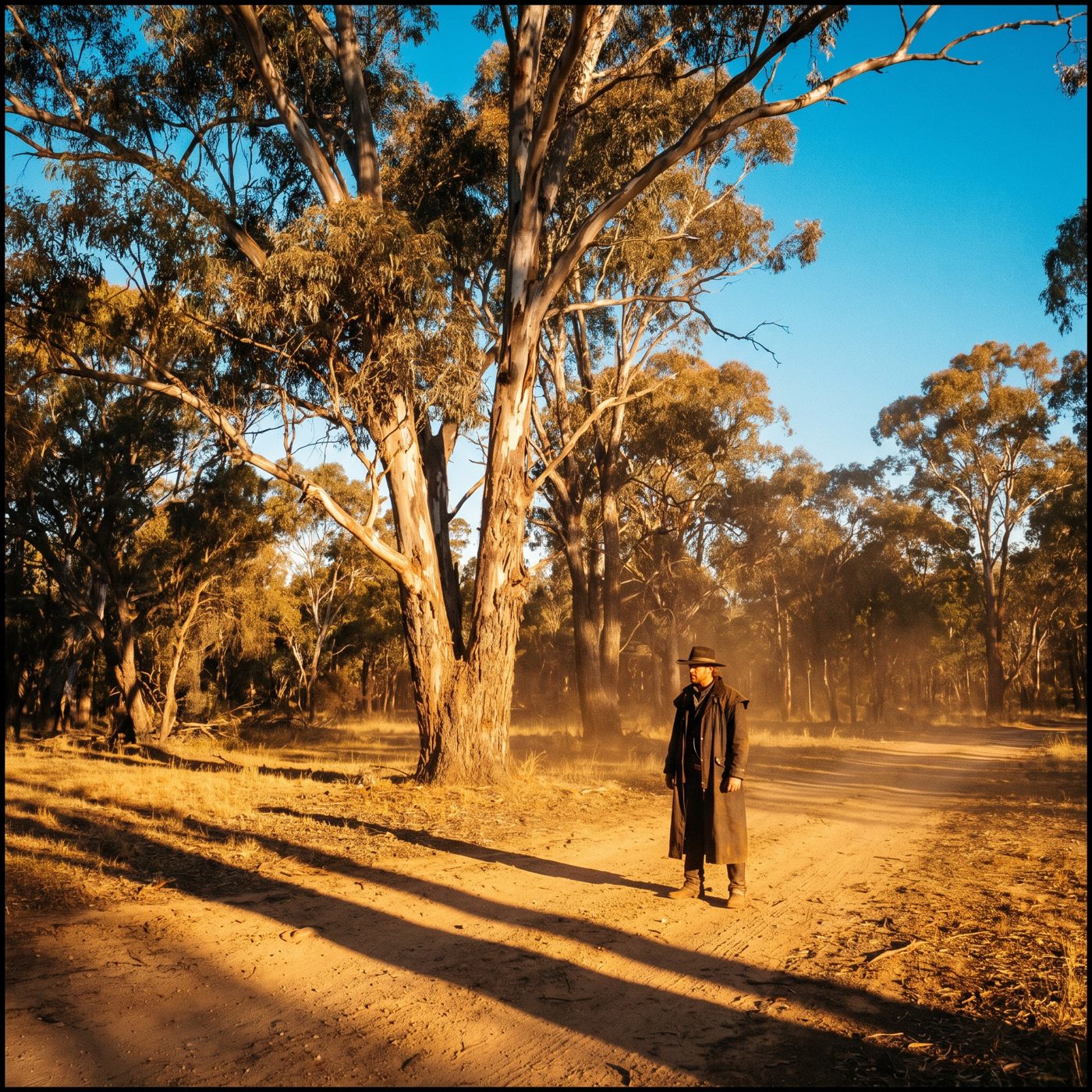 ILLUSTRATION · AI
The Story of the Kelly Gang, made in Melbourne in 1906, cost roughly £1,000 to produce and — by its producer's own account — returned some £25,000 to its backers.
Before Hollywood existed as an idea, a group of Australians made the world's first feature-length narrative film and turned a small stake into a fortune. The Story of the Kelly Gang premiered in Melbourne on December 26, 1906, ran for around an hour, and — on a budget of about £1,000 — went on to earn what its producer said was £25,000 as it toured Australia, New Zealand, and England. That's a 25-fold return, achieved before the feature film had a name.
How a £1,000 film became a £25,000 hit
The picture dramatized the exploits of Ned Kelly, the bushranger hanged in 1880, whose story was still fresh and combustible in Australian memory. That was the whole commercial logic: audiences already knew the outlaw, already had opinions about him, and would pay to see him ride across a screen. The filmmakers shot on locations around Melbourne, staging the gang's robberies and final siege at Glenrowan with real horses, real bushland, and actors in armor modeled on Kelly's famous homemade plate.
The economics worked because the film kept moving. According to the National Film and Sound Archive of Australia, by late 1907 the picture had screened not just across its home country but in New Zealand and England. Each new territory was a fresh audience paying fresh admissions against a fixed production cost that had already been recouped many times over. The Australian Centre for the Moving Image puts it plainly: on a budget of £1,000, the film earned £25,000 in profits touring Australia, New Zealand, and England.
That is the number that made the record. But it's worth being precise about where it comes from.
Why the £25,000 figure needs a name attached
The £25,000 is not a receipt. It is a claim, and the institutions that hold the film's history are careful to say so. The National Film and Sound Archive attributes the figure specifically to one of the film's producers, William Gibson: "according to one of the film's producers, William Gibson, the film eventually returned £25,000 to its backers." The National Museum of Australia echoes the attribution word for word — "William Gibson claiming the production returned £25,000 to its investors."
So the person telling us the film was a spectacular success was the same person who had a stake in it being remembered as one. That doesn't make the number wrong. Films of the era genuinely did tour for years, and the appetite for Kelly stories was real enough that authorities in the Australian state of Victoria eventually banned bushranger films outright, partly out of concern for what they glorified — a ban that says something about how many people were watching. But the £25,000 rests on a producer's memory and a producer's interest, not on an audited ledger.
The one-hour runtime, by contrast, is what earns the film its title. Most 1906 productions ran a few minutes; a narrative that unspooled for close to an hour was a genuine leap in form, and it's why the National Film and Sound Archive holds The Story of the Kelly Gang as the world's first dramatic feature-length film. The scale of the ambition is not in dispute.
What survives is a fragment. Of that original hour, only about 17 minutes of restored footage exists today — scraps recovered from film cans, private collections, and a dump site, painstakingly reassembled. You can watch Kelly's armor-clad figure flicker for a moment, then lose him to a gap in the reel.
Which leaves the seam. We can prove the film existed, prove it was long, prove it toured three countries. The £25,000 return — the very figure that makes the story irresistible — comes down to trusting the word of a man who profited from the telling. Whether that makes it a fact or a well-preserved boast is the argument the missing ledger will never settle.
More facts
Taylor Swift's Eras Tour grossed $2,077,618,725 — the first concert tour in history to pass $2 billion, across just 149 shows.
A Rubik's Cube has exactly 43,252,003,274,489,856,000 possible states — but only 1 in 12 of the arrangements you could build by hand can ever be solved.