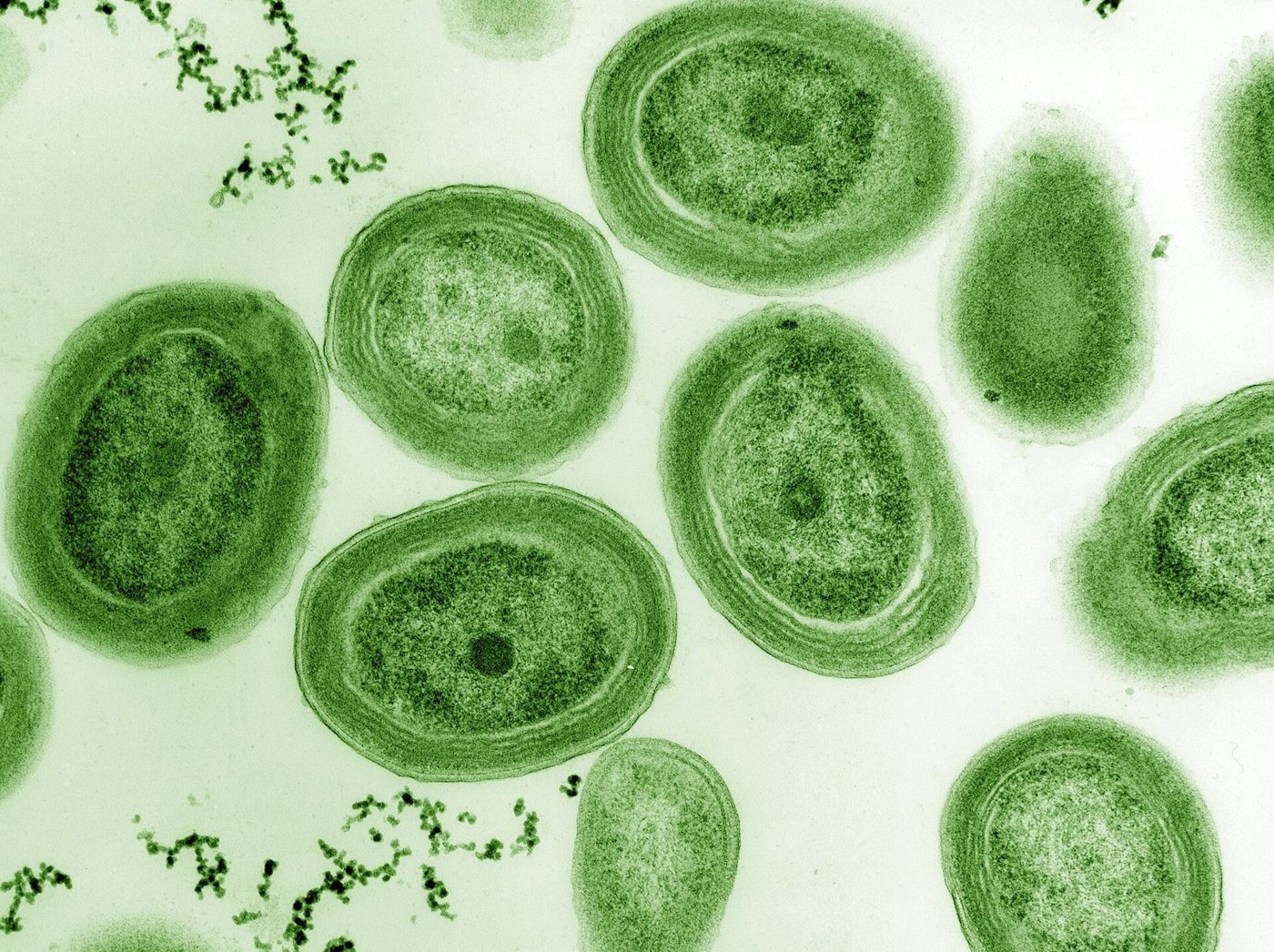
This 106-acre forest of 47,000 aspens in Utah isn't a forest. It's one tree, named Pando — a single organism weighing 13 million pounds.
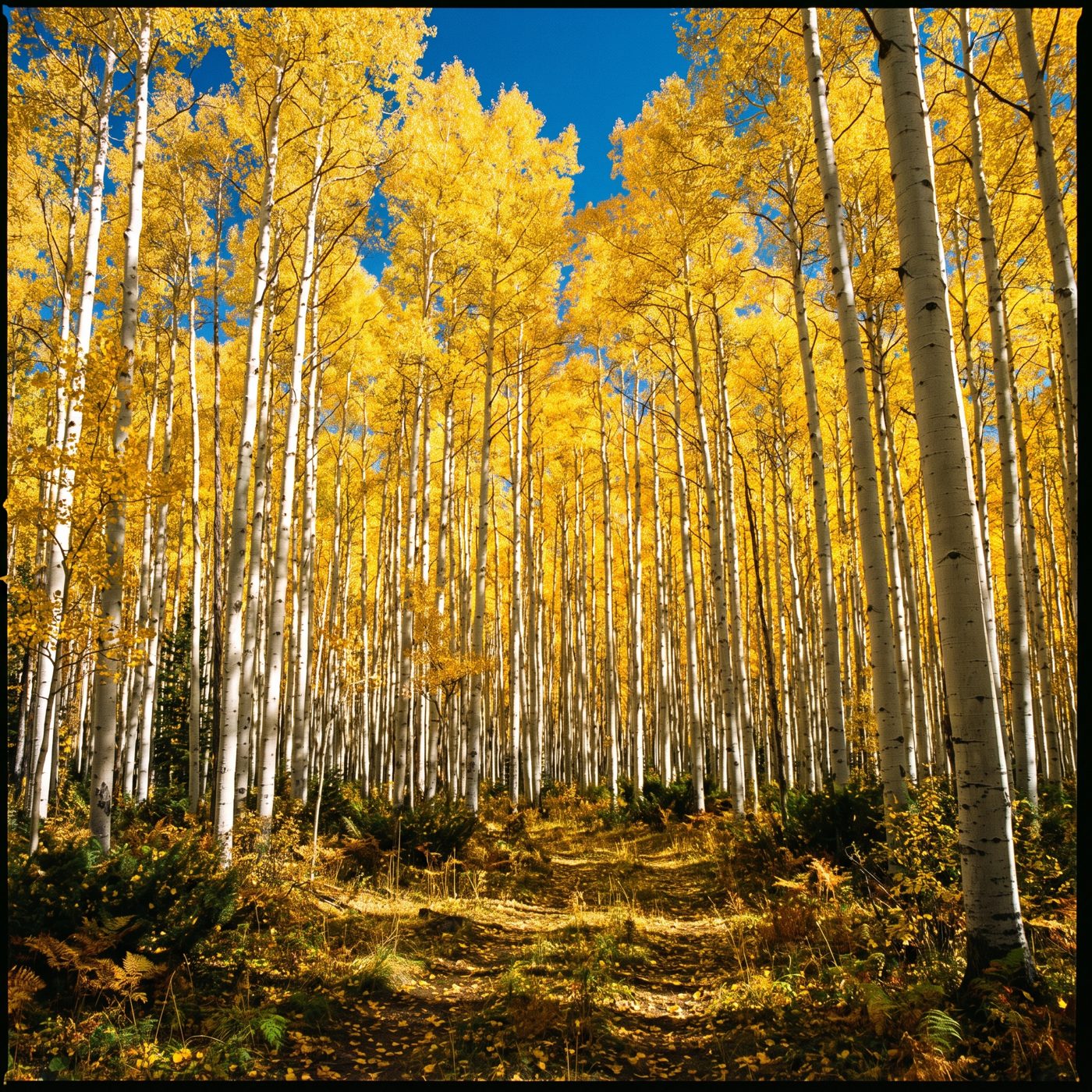 ILLUSTRATION · AI
What appears to be a 106-acre forest of some 47,000 quaking aspens in Utah is a single genetically identical organism, named Pando, weighing an estimated 13 million pounds.
Walk into a certain stand of quaking aspen on the west side of Fishlake National Forest in central Utah, and you are not walking into a forest. You are standing inside a single organism. The roughly 47,000 white-barked trunks around you — spread across 106 acres, about 43 hectares — are not individual trees. They are stems, all genetically identical, all sprouting from one continuous underground root system. Together they form Pando, Latin for "I spread," and at an estimated 13 million pounds (around 5.8 million kilograms) it is widely considered the heaviest known living thing on Earth.
How can one tree be 47,000 trees?
Quaking aspen reproduce two ways. They can make seeds, but far more often they clone themselves: the root system sends up new shoots, called suckers, that grow into full trunks. Each trunk lives and dies on its own timescale — decades, not millennia — while the shared root network underneath persists and keeps generating replacements. So what you read as a crowd of separate trees is closer to blades of grass on a single lawn, or hairs on one scalp.
Because every stem is a copy, the whole clone shares one sex. Pando is male. The Friends of Pando organization, which documents the clone, explains that this is why the stand behaves as a unit: it leafs out and turns gold in near-unison, a coordinated shimmer across a hundred acres that seed-grown forests never quite manage.
The claim that all this is genuinely one organism rests on the genetics. Burton Barnes first mapped the clone's boundaries in the 1970s by tracking shared traits, and in 1992 Michael Grant, Jeffry Mitton, and Yan Linhart published a short note in *Nature* proposing this Utah aspen clone as an organism larger by mass than any then known, estimating roughly 6,000 metric tons. The genetic identity has since been confirmed in fine detail. In a 2025 reviewed preprint in *eLife*, Rozenn Pineau and colleagues sequenced stems from across Pando and found them a coherent single genetic individual — while also uncovering a mosaic of somatic mutations, small genetic differences that have accumulated in different limbs of the clone as it aged, a kind of internal record of its own growth.
Why we know its size — and why it may not last
The most complete accounting came in 2018, when Paul Rogers and Darren McAvoy of Utah State University published the first comprehensive assessment of Pando in the journal *PLOS ONE*. Their survey confirmed the figures that travel with the story — the acreage, the tens of thousands of stems, the dry-weight mass that makes it "putatively the largest known organism on earth." Utah State University publicized the work the same year through its news office.
But Rogers and McAvoy's paper was not a celebration. Its title is blunt: "Mule deer impede Pando's recovery." Their central finding is that Pando is failing to renew itself. Old trunks are dying and few young suckers survive to replace them, because mule deer — and cattle — browse the tender new shoots almost as fast as the roots push them up. In fenced sections where the deer were kept out, young stems came back; in unfenced areas, the regeneration collapsed. A single organism that has likely persisted for thousands of years is, in effect, being eaten one seedling at a time.
That is the seam still open to argue about. Pando's exact age is genuinely uncertain — estimates range wildly, and no method yet pins it down. Its future is more uncertain still. Whether the heaviest living thing on Earth survives the coming century may come down to something as ordinary as fencing, and to a decision about how many deer a landscape managed by people should hold.
- Tier 1 · Primary2018
- Tier 2 · Secondary2018
- Tier 2 · Secondary
- Tier 2 · Secondary
More facts
In ideal conditions, kelp can grow up to 18 inches in a single day. Kelp forests provide food and shelter for thousands of species, NOAA says.
Gray whales travel about 10,000 miles round-trip every year, and some go more than 14,000, one of the longest annual migrations of any mammal, NOAA says.