When an orca grandmother dies, her grandcalves are 4.5x more likely to die within 2 years — even when salmon is plentiful.
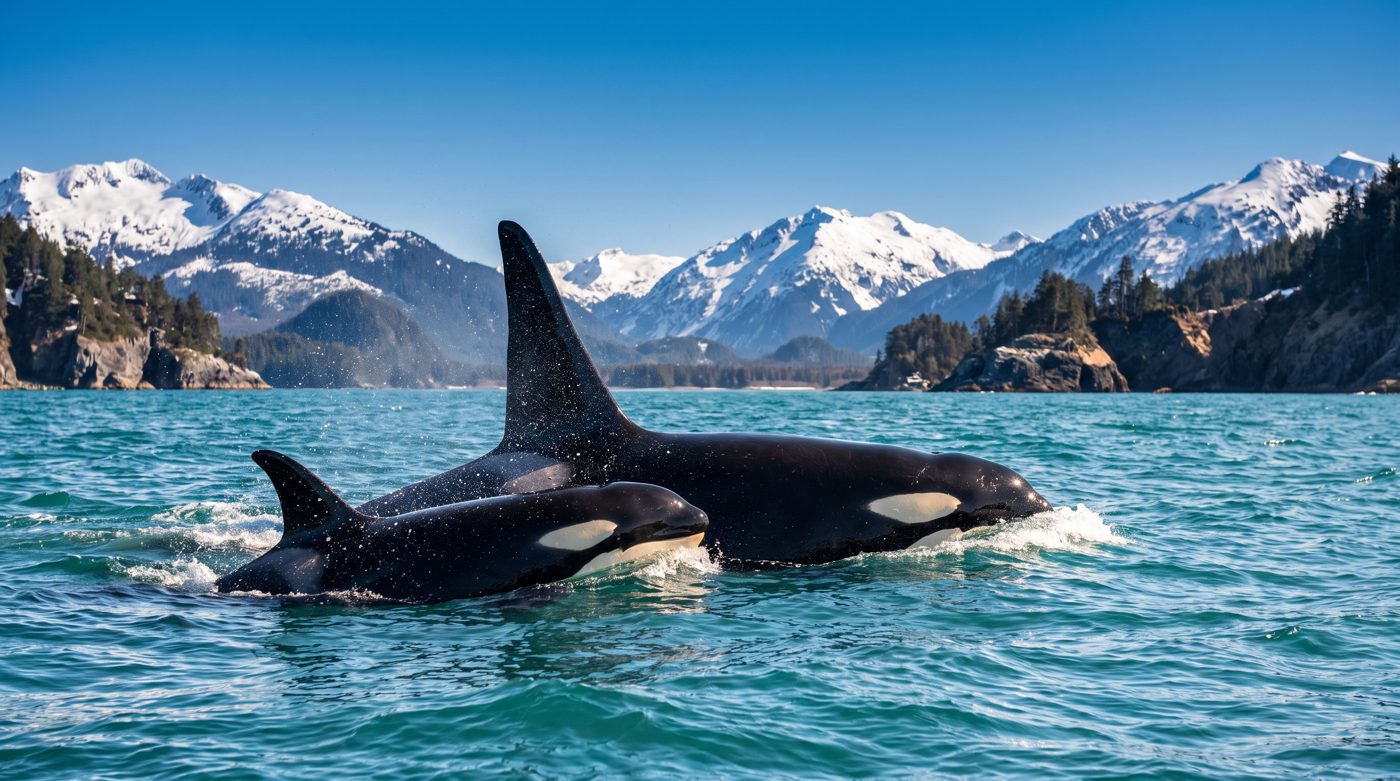 ILLUSTRATION · AI
In Pacific Northwest killer whale families, a grandmother's death makes her grandcalves roughly 4.5 times more likely to die within two years — even in years when salmon runs are strong.
When a killer whale grandmother dies, her grandcalves are far more likely to follow her into the deep. A 2019 study in the *Proceedings of the National Academy of Sciences* found that in the Northern and Southern resident populations off the Pacific Northwest, grandoffspring were about 4.5 times more likely to die in the two years after a maternal grandmother's death than grandcalves whose grandmother was still alive — and that gap held even at average salmon abundance, not just in lean years.
The effect was strongest for one particular grandmother: one who had already stopped breeding. That detail turned out to be the heart of the story.
Why do orca grandmothers matter so much?
Killer whales are among the very few species on Earth — humans are another — in which females live for decades after they can no longer reproduce. Resident orcas can stop breeding in their thirties or forties and live into their eighties or nineties. Evolutionary biologists have long asked why a body would keep going long after passing on its genes has ended. The Pacific Northwest whales offered an unusually good place to look for an answer, because researchers have tracked these families individually since the 1970s.
Stuart Nattrass and colleagues at the University of Exeter and the Center for Whale Research analyzed records of 378 whales with known maternal grandmothers, drawn from decades of photo-identification surveys. Each animal in these populations can be recognized by the shape of its dorsal fin and the gray "saddle patch" behind it, so births, deaths, and family lines are documented individual by individual across generations.
What they found was that a living grandmother improved her grandcalves' odds of survival — and that the boost came specifically from post-reproductive grandmothers. A grandmother still raising her own calves apparently can't spare as much for the next generation down. Once she's done breeding, she becomes, in effect, a full-time helper.
How a grandmother keeps her grandcalves alive
The leading explanation is knowledge, and the knowledge is about fish. Resident killer whales eat almost exclusively salmon, especially Chinook, and salmon runs shift year to year and place to place. Older females appear to serve as ecological memory for the pod, leading the group toward feeding grounds when prey is scarce. Elizabeth Pennisi, writing in *Science*, summarized the finding plainly: grandmother whales pass along both wisdom and, quite literally, extra fish — mothers have been observed sharing salmon with their offspring.
The 2019 paper found the grandmother effect was especially pronounced in years when salmon were scarce, which fits the idea that her experience matters most when finding food is hardest. But the striking part is that the survival benefit did not vanish in good salmon years. As *National Geographic* reported at the time, even when prey was plentiful, losing a grandmother still cost her grandcalves. That suggests she provides something beyond simply steering the pod to fish — perhaps direct provisioning, or care that buffers a young whale through a vulnerable stretch of life.
The vivid version of the finding is this: a matriarch who will never have another calf spends her final decades keeping her daughters' babies fed and alive, and when she dies, some of those grandcalves die too.
What's still open
The correlation is strong and the data set is one of the best in marine mammal science, but the exact mechanism remains debated. Researchers cannot yet fully separate "grandmother as guide" from "grandmother as food-sharer," and the study measures survival, not the day-to-day behavior that produces it. There is also urgency underneath the math: the Southern residents are endangered and their Chinook is declining, which means each of these long-lived, knowledge-bearing females may matter more than the numbers alone convey — and each death may take more than one whale with it.
- Tier 1 · Primary2019
- Tier 2 · Secondary2019
More facts
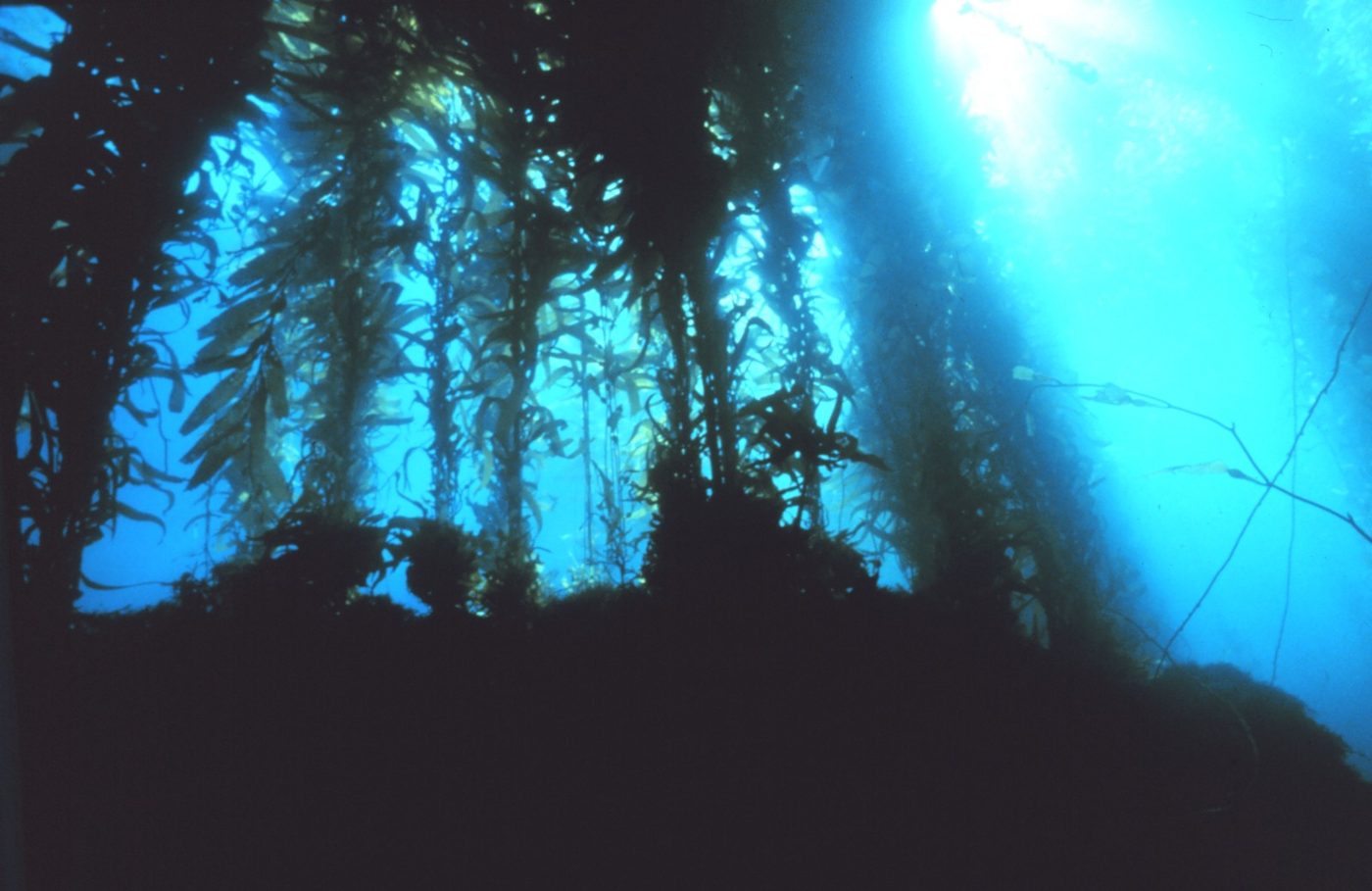
In ideal conditions, kelp can grow up to 18 inches in a single day. Kelp forests provide food and shelter for thousands of species, NOAA says.
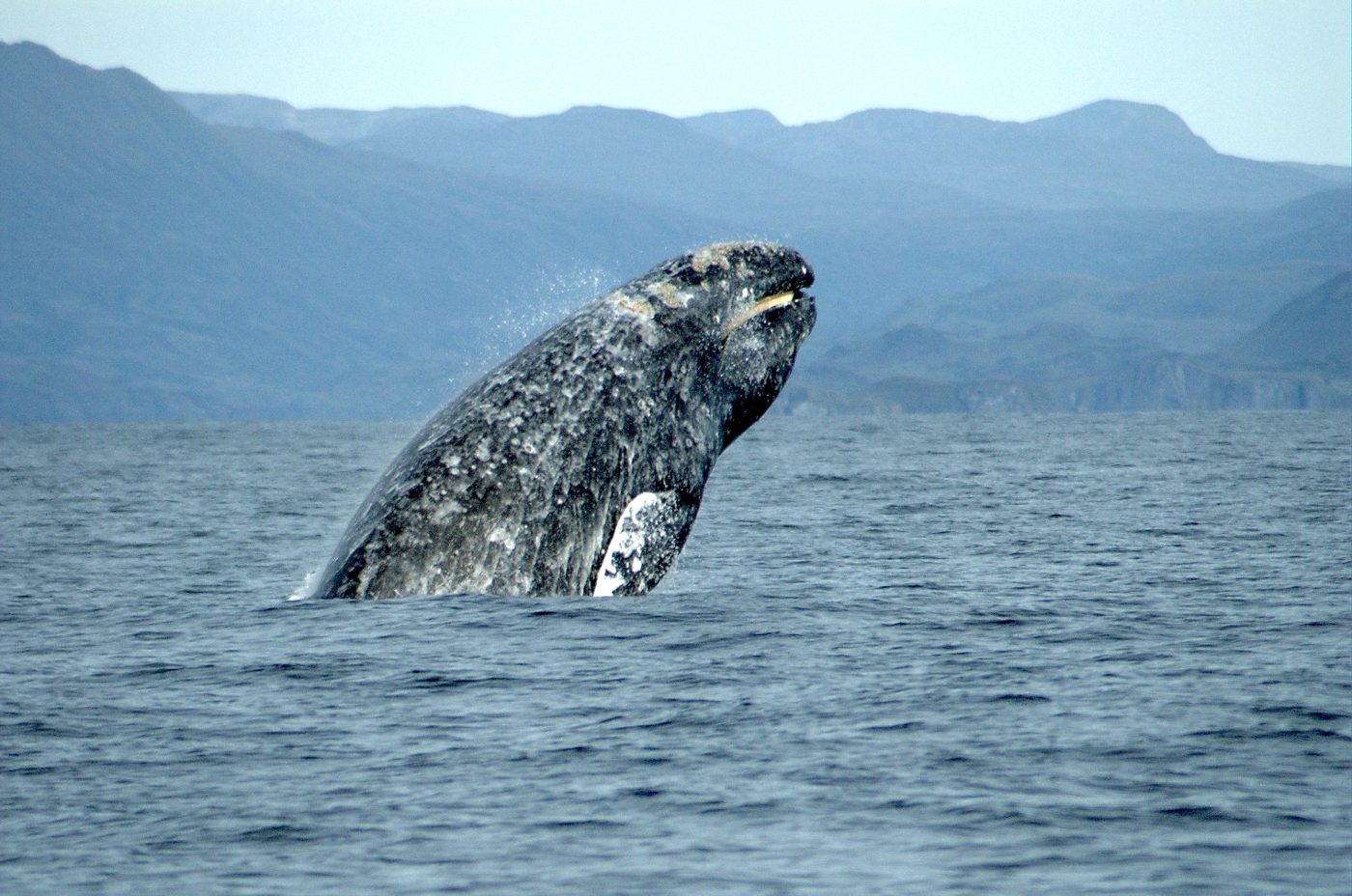
Gray whales travel about 10,000 miles round-trip every year, and some go more than 14,000, one of the longest annual migrations of any mammal, NOAA says.