Magna Carta had 63 clauses in 1215. Only 3 are still law in England and Wales today — and the rest were quietly repealed.
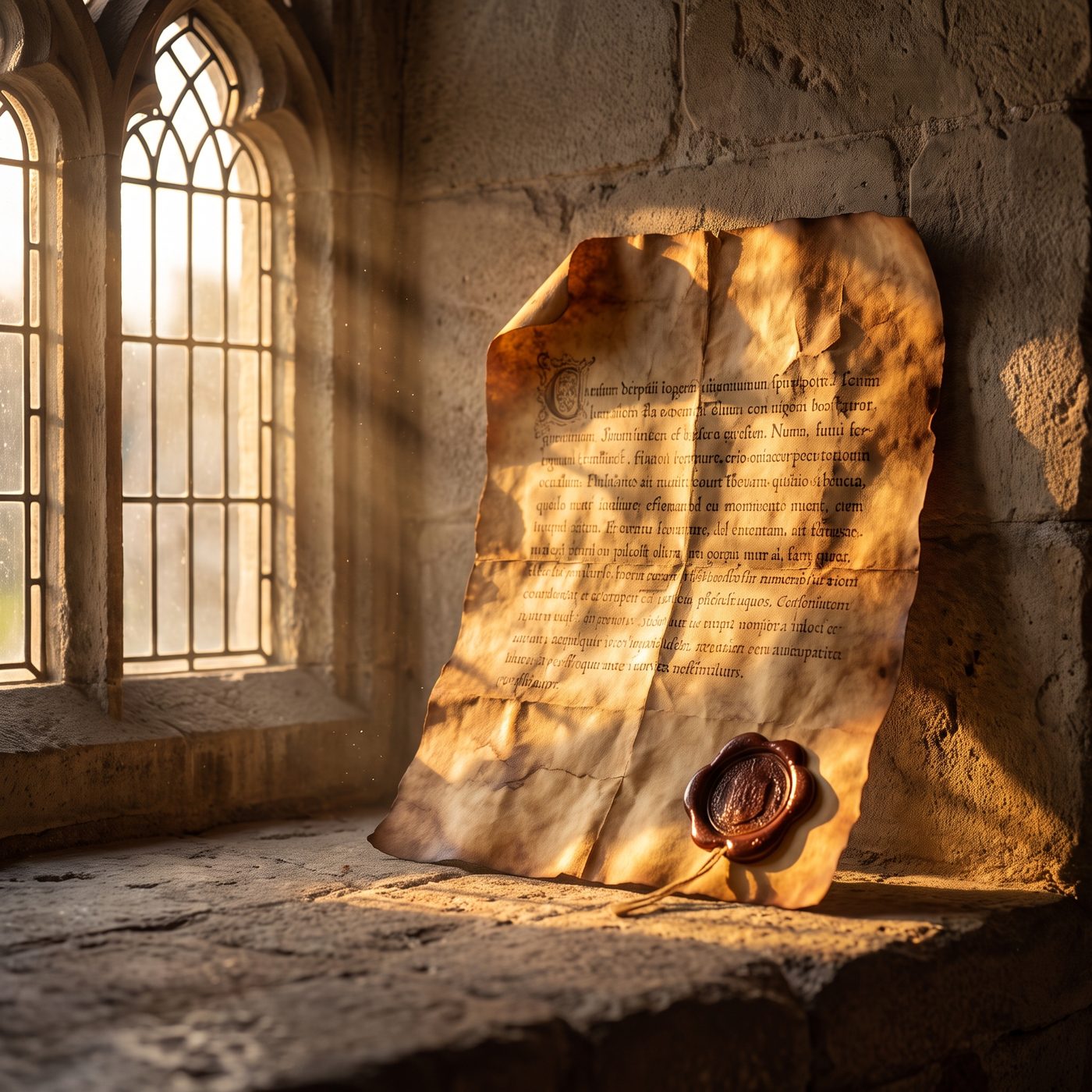 ILLUSTRATION · AI
Of the 63 clauses in the 1215 Magna Carta, only three still carry legal force in England and Wales today; the rest have been repealed over seven centuries.
The famous charter that King John sealed in a meadow at Runnymede in 1215 had 63 clauses. Almost all of them are now dead letters. According to the House of Commons Library, only three clauses of Magna Carta remain in force in England and Wales, and they survive not in John's original document but in a later reissue.
The three survivors are these: the freedom of the English Church, the ancient liberties and customs of the City of London, and the right to due legal process — the guarantee that no free man shall be imprisoned or stripped of his rights except by the lawful judgment of his peers or the law of the land, and that justice shall not be sold, denied, or delayed.
Why only three clauses are left
The rest were not swept away in one dramatic moment. They were repealed piecemeal across centuries, most heavily by Victorian and twentieth-century "statute law revision" acts that cleared obsolete medieval provisions off the books. Clauses about feudal wardship, fish-weirs on the Thames, and the treatment of Welsh hostages simply no longer described the world England lived in.
There is a wrinkle worth knowing. The version still in force is not the 1215 charter at all. That document was annulled by Pope Innocent III within weeks, and John died in 1216. What survived is the 1297 statute — the reissue confirmed by Edward I, catalogued by The National Archives on legislation.gov.uk as 25 Edw 1, chapters 1, 9 and 29. Those three chapters are the ones the archive still lists with, in its own phrasing, "no known outstanding effects." So the living Magna Carta is Edward's, not John's.
Three clauses, or four? How the counting differs
Here the numbers get slippery, and it's the kind of detail that trips up quiz-night arguments. The House of Commons Library, in David Torrance's 2024 briefing "Magna Carta: Does it still matter?", counts three. But a separate UK Parliament page, "The contents of Magna Carta," counts four.
Both are describing exactly the same surviving law. The gap is purely a matter of bookkeeping. The 1215 charter split due process across two clauses — clause 39 (no imprisonment without lawful judgment) and clause 40 (justice not to be sold or delayed). When Edward I's clerks issued the 1297 statute, they fused those two into a single chapter, chapter 29. Count the modern chapter and you get three. Count the two original 1215 clauses it was built from and you get four. Nobody is wrong; they are simply pointing at the same provision through different editions.
The concrete survivor most people never notice is the City of London one. Chapter 9 of the 1297 statute preserves "the ancient Liberties and Customs" of the City — the legal foundation that still underpins the peculiar governance of the Square Mile, its Lord Mayor and its Corporation, distinct from the rest of London. A clause sealed to placate thirteenth-century merchants still shapes how a global financial district administers itself.
What endures, then, is far less than the charter's mythology suggests, and also far more consequential. The line about lawful judgment and undelayed justice is quoted in courtrooms and cited in constitutional argument across the English-speaking world, from the United States to India, even though its actual legal reach in England has narrowed to a single medieval chapter.
That is the seam still open to argue over. Does Magna Carta matter because of the three clauses that remain enforceable — or because of the sixty that were repealed yet left behind an idea about power answering to law? The statute book gives one answer. The mythology gives another. Both are, in their way, verified.
More facts

In a 2015 wire-fraud trial, a judge let the defense argue the numbers were innocent using a 1938 law of how often digits start with 1.

In real-world data, the number 1 leads about 30% of the time—and the IRS uses that skew to flag faked tax returns as fraud.