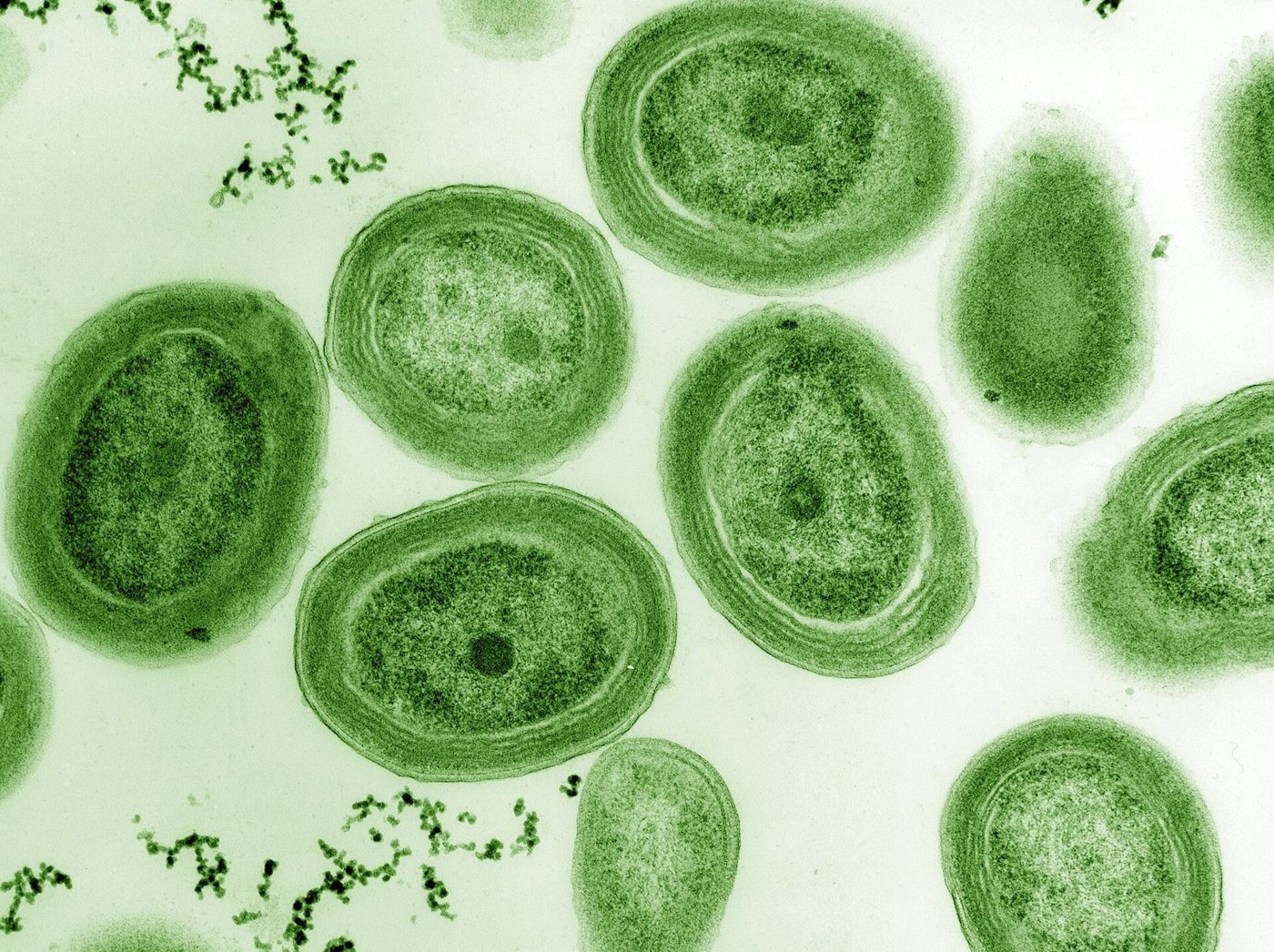
Octopus blood carries oxygen on copper, not iron — and a 2001 study showed it runs colorless until oxygen turns it blue.
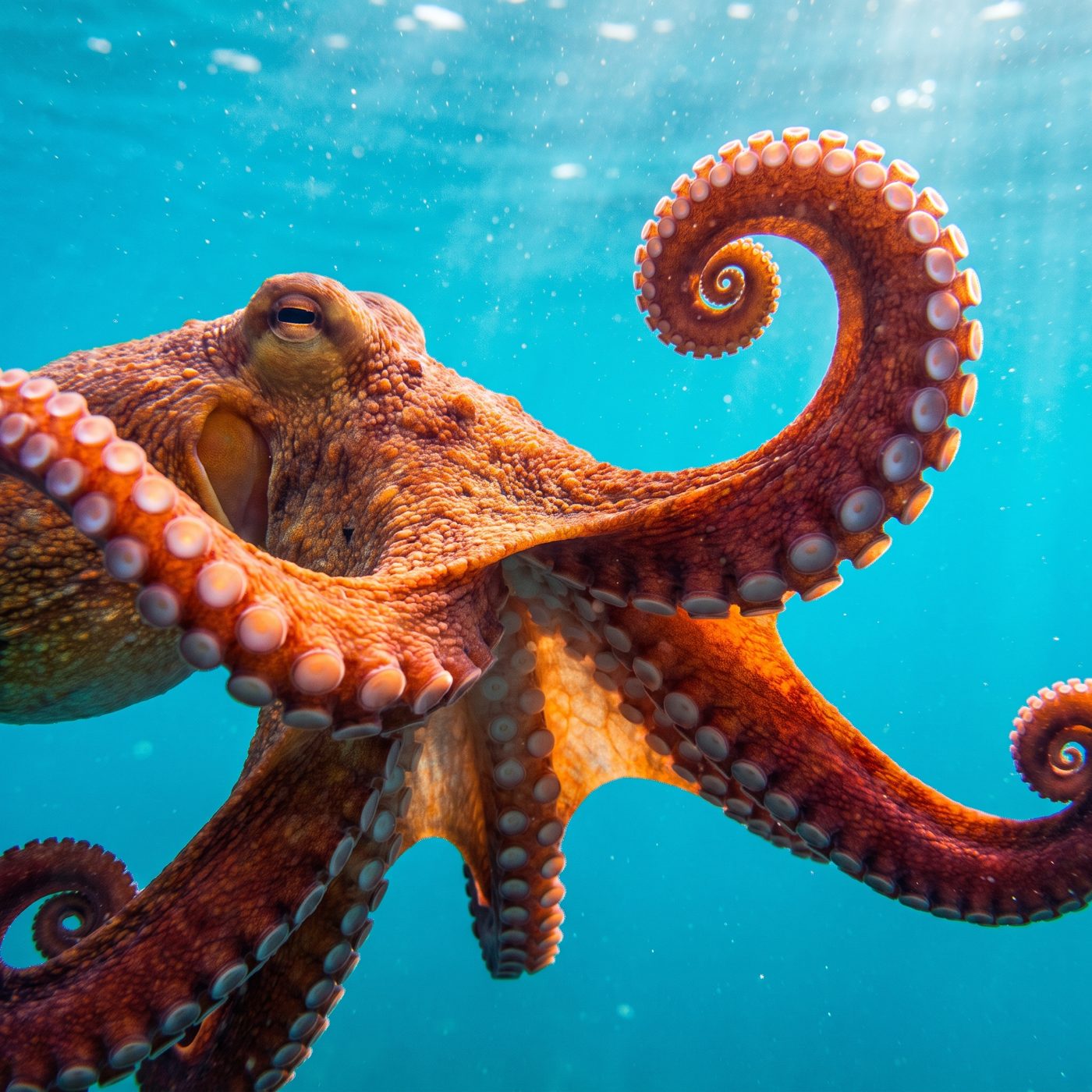 ILLUSTRATION · AI
An octopus carries oxygen on copper instead of iron, and its blood is colorless until oxygen binds and turns it blue.
Drain an octopus of oxygen and its blood runs clear. Let air reach it, and it turns blue. The color comes from copper, not iron — the metal that reddens our own blood by the entirely different chemistry of hemoglobin.
The molecule doing the work is called hemocyanin, and it does not resemble the hemoglobin packed inside our red blood cells. Where our oxygen carrier hides an iron atom inside a ring-shaped heme group, hemocyanin binds oxygen directly to two copper atoms — and it doesn't float loose inside cells but drifts free in the blood plasma, which is why the whole fluid takes on color when it loads oxygen.
Why octopus blood turns blue only with oxygen
The clearest account of the mechanism comes from a 2001 review in the Journal of Biological Chemistry by Kensal van Holde, Karen Miller and Heinz Decker, titled "Hemocyanins and Invertebrate Evolution." They describe an oxygen-binding site built from a pair of copper atoms. In the deoxygenated form, those atoms sit in the Cu(I) state — and Cu(I) is colorless. When oxygen arrives, the coppers shed electrons to it, shifting to the Cu(II) state and holding the oxygen molecule as peroxide, written O2(2-). That electron handoff, the authors write, "accounts for the blue color developed upon oxygenation."
So the color is not decoration. It is the chemical signature of the reaction itself. The blue you'd see in oxygen-rich octopus blood is oxidized copper caught in the act of carrying its cargo.
Chemists classify hemocyanin as a "type-3" copper protein, a detail spelled out in the Chemistry LibreTexts entry on biological dioxygen transport. Each of the two copper centers is held in place by three histidine amino acids reaching in from the surrounding protein, like fingers cradling a marble. The oxygen doesn't perch on one copper; it bridges both, bound "side-on" between them — a geometry later reviews, including work summarized from Decker and colleagues in 2007, describe in the same terms.
Why copper instead of iron
The obvious question is why an animal would build its blood around copper at all. Part of the answer is temperature and oxygen supply. Hemocyanin works comparatively well in cold, low-oxygen water, conditions in which many mollusks and crustaceans live, and its enormous, free-floating molecules can pack a lot of copper into a small volume of plasma.
But van Holde, Miller and Decker's review was aimed at a larger puzzle than color. Hemocyanins turn up in both mollusks — snails, octopuses, squid — and arthropods, such as horseshoe crabs and spiders, two lineages that split far back in animal history. The molecules in these groups are so different in their overall architecture that the authors examine whether they share a common ancestral protein or arrived at the same copper solution independently. The dual-copper oxygen site they describe is a feature of hemocyanins broadly, not a quirk of octopuses alone.
One vivid consequence of running on copper: it is a slower, less efficient way to move oxygen than iron-based hemoglobin. That partly explains a related fact about octopuses — the animal supports its blue blood with three hearts, two pumping blood through the gills and one driving it to the rest of the body. When an octopus swims, the systemic heart actually stops beating, which may be why these animals often prefer to crawl.
The seam still open for argument is that deep evolutionary origin. Whether the mollusk and arthropod hemocyanins descend from one ancient copper-binding protein or converged on the same trick separately is a question the 2001 review lays out rather than closes. The blue is settled chemistry. The family tree behind it is still being drawn.
More facts
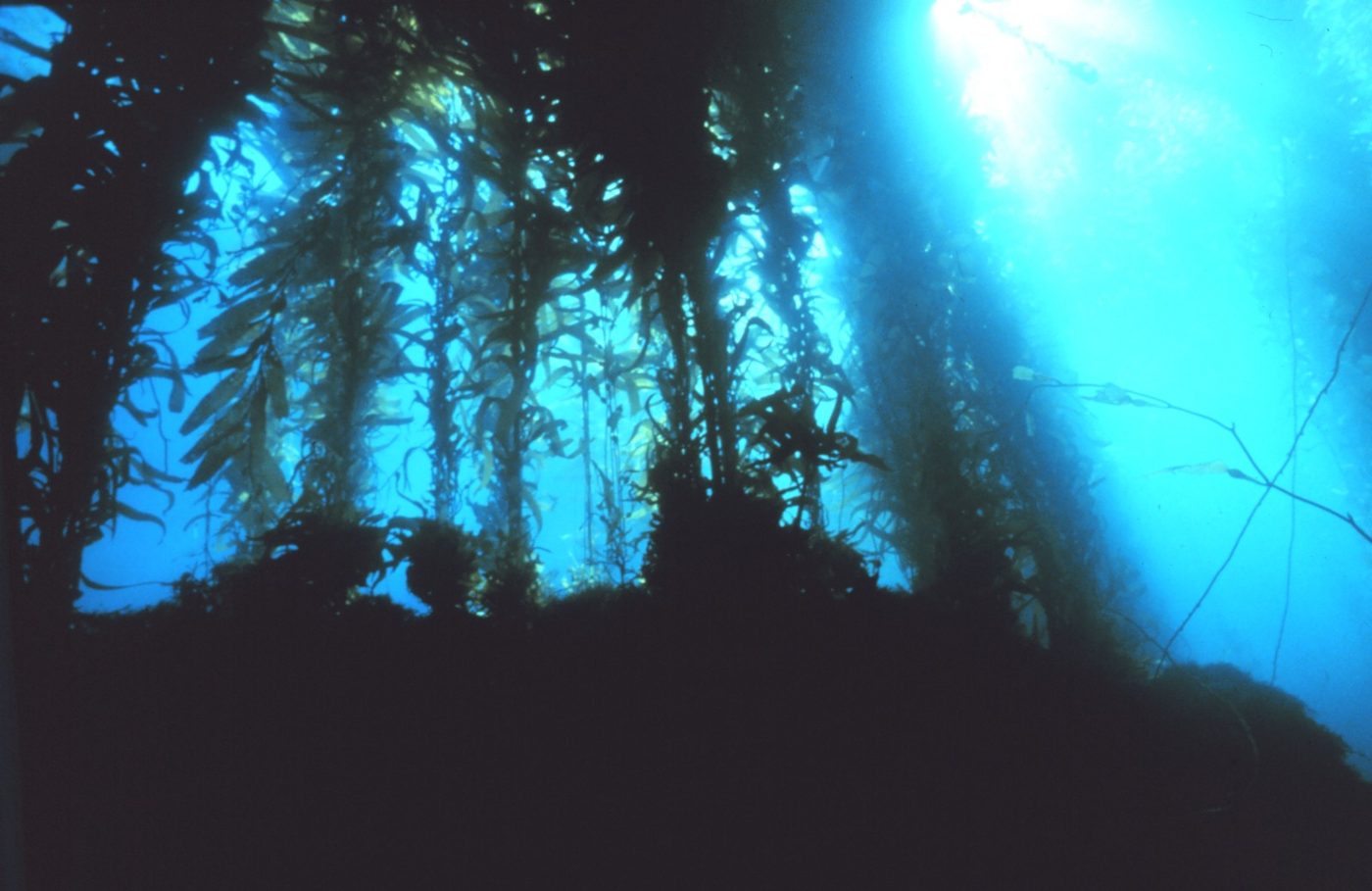
In ideal conditions, kelp can grow up to 18 inches in a single day. Kelp forests provide food and shelter for thousands of species, NOAA says.
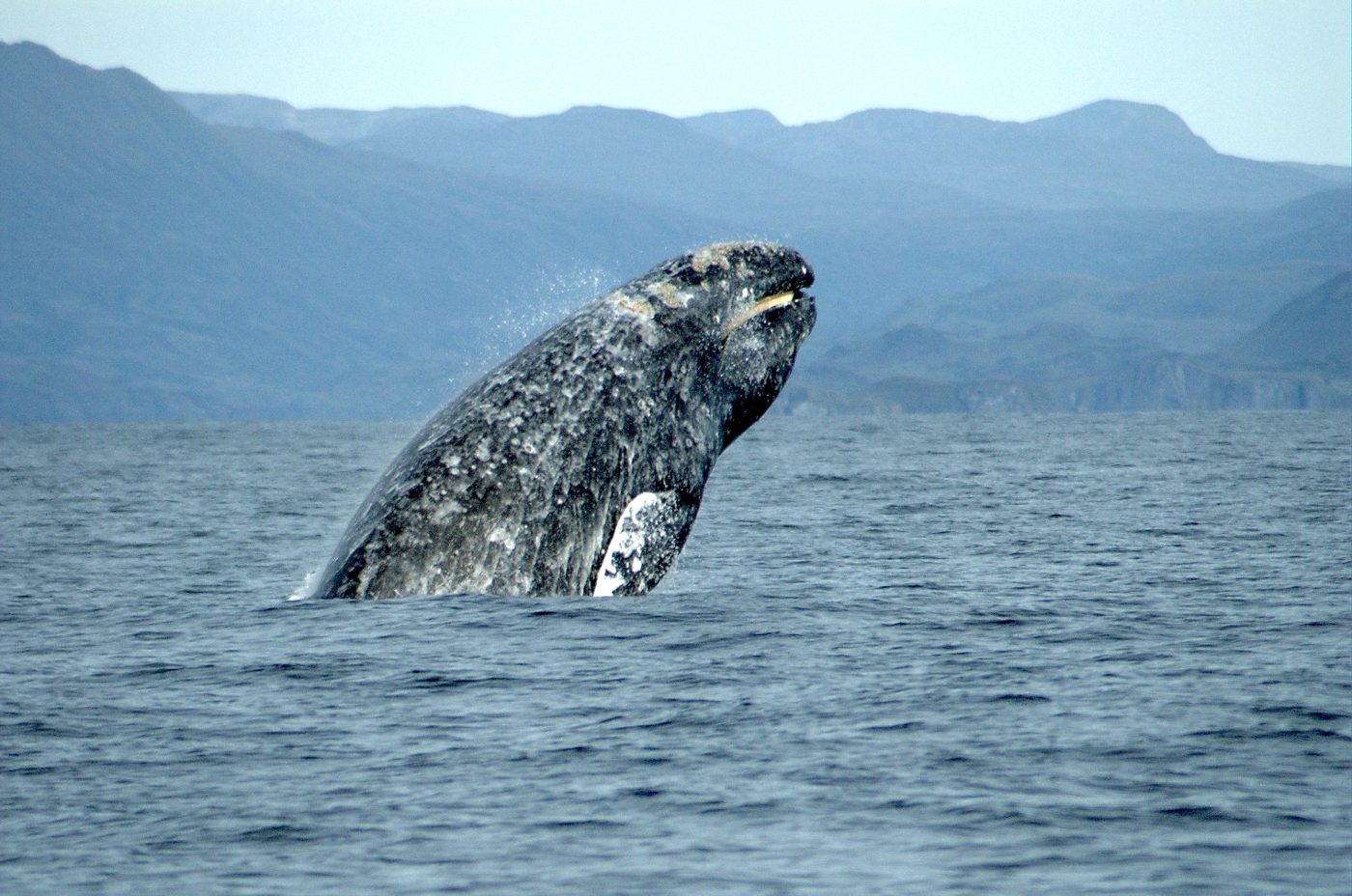
Gray whales travel about 10,000 miles round-trip every year, and some go more than 14,000, one of the longest annual migrations of any mammal, NOAA says.