The fastest wild peregrine ever radar-tracked hit 184 km/h — less than half the famous 389 km/h everyone repeats.
The fastest wild peregrine falcon ever accurately measured by tracking radar dove at 184 km/h — under half the 389 km/h figure that circulates online, which came from a staged skydiving stunt, not a real hunt.
The peregrine falcon is genuinely the fastest animal alive. But the number you've seen — 389 km/h, or 242 mph — is not the speed of a wild bird hunting. It's the result of a 1999 experiment in which a captive falcon dove after a lure dropped from an airplane at 17,000 feet. When scientists have measured actual wild peregrines with tracking radar, the fastest one clocked in at 184 km/h. That's still faster than a highway car, but it's less than half the headline figure.
The careful measurement comes from Daniel Peter and Martin Kestenholz, whose study appeared in the Swiss journal *Der Ornithologische Beobachter* in 1998. Using tracking radar, they clocked two wild peregrine stoops at maximum air speeds of 36 and 51 meters per second — 130 and 184 km/h. Their own conclusion was direct: the 51 m/s value "represents the highest air speed of a bird accurately measured so far." Not modeled, not extrapolated — measured, with the instrument locked onto the diving bird.
Why the 389 km/h figure is so misleading
The famous number belongs to a falcon named Frightful, owned by falconer Ken Franklin. In 1999, for a project later filmed by National Geographic, Franklin released Frightful from a Cessna 172 at around 17,000 feet and had her dive after a lure. Her speed was recorded not by radar but by a Pro-Track altimeter chip — the kind skydivers use — fastened to her tail feathers. Guinness World Records certified the resulting 389.46 km/h as the "fastest bird (diving)."
That setup matters. Dropping from an airplane at high altitude, where the air is thinner and offers less resistance, and diving toward a falling lure is nothing like a peregrine hunting over a marsh. The stunt was engineered to maximize velocity. It answers the question "how fast *can* a peregrine go under ideal conditions?" — a real and interesting question — but it doesn't tell you how fast the bird outside your window actually flies.
Peter and Kestenholz weren't even the first to catch peregrines on radar. Thomas Alerstam, in a 1987 study in the journal *Ibis*, tracked peregrine stoops and recorded maxima of 31 to 39 m/s over ten-second intervals — 112 to 140 km/h. Alerstam explicitly noted these were "well below the maximum possible terminal speeds." So two independent radar studies, a decade apart, land in the same neighborhood: real wild dives top out somewhere between roughly 140 and 184 km/h.
How the birds go so fast at all
A stooping peregrine folds its wings tight against its body and drops into a teardrop shape, trading lift for pure velocity. Its nostrils have bony baffles — small cone-shaped tubercles — that researchers have long suggested slow the incoming air so the bird can still breathe at speed, a feature sometimes compared to the intake cones on jet engines. A translucent third eyelid, the nictitating membrane, sweeps across the eye to keep it clear and protected during the plunge.
The vivid detail that makes the radar numbers real is what the instrument was doing: it wasn't watching a controlled drop from a plane but a hunting bird over open country, the radar dish physically swiveling to keep its beam on a target smaller than a football moving faster than traffic. That's a harder thing to do, and it produces a more honest answer.
So which number is "the" speed of a peregrine? That's the seam still open to argue. If you mean the fastest a peregrine can be provoked to travel under engineered conditions, 389 km/h stands. If you mean what a wild bird actually does when it hunts, the best measured figure remains 184 km/h — and even Peter and Kestenholz suspected peregrines can exceed it. Nobody has yet caught a faster one on radar to prove it.
More facts
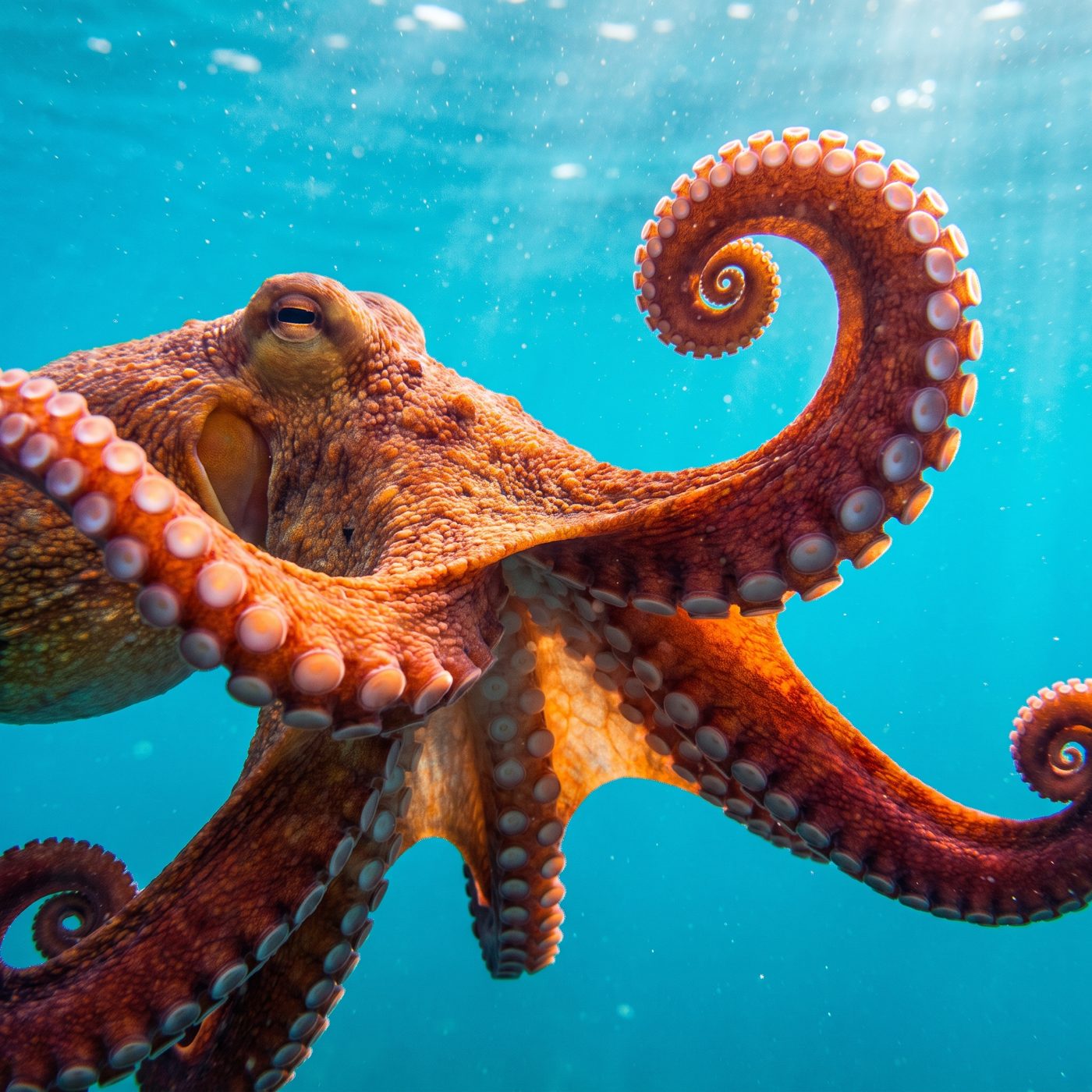
Octopus blood carries oxygen on copper, not iron — and a 2001 study showed it runs colorless until oxygen turns it blue.
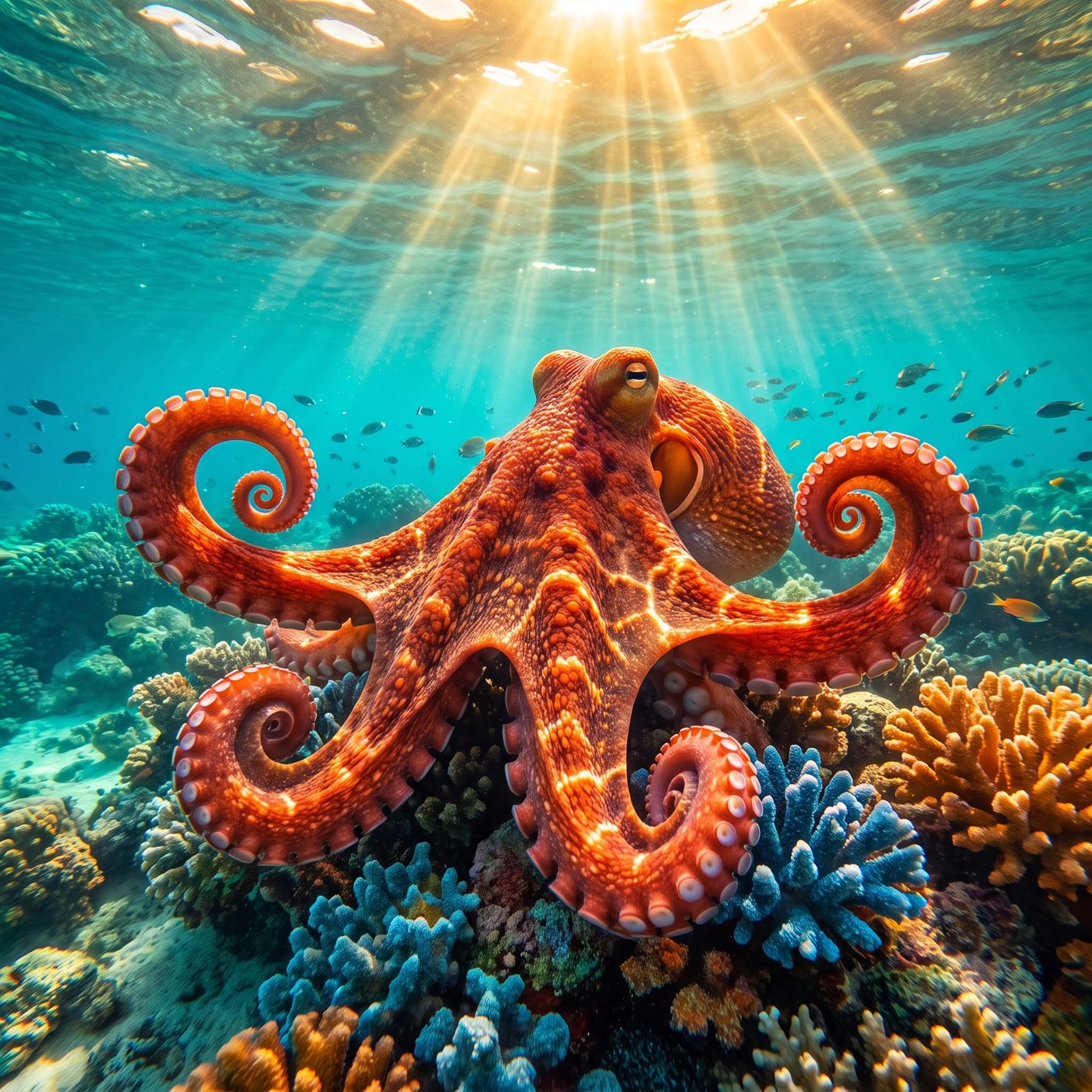
Cut every nerve from an octopus brain to its hearts, and all three keep beating — in 1980 M. J. Wells found they run without the brain.